How to Size a Mist Collector for CNC Machines

Introduction

Selecting the correct mist collector is one of the most important decisions when designing an effective air pollution control system for CNC machining operations. An undersized unit may fail to capture airborne coolant mist efficiently, while an oversized system can increase energy consumption and operating costs without providing additional benefits.

Proper mist collector sizing requires evaluating several factors, including machine enclosure volume, coolant type, machining process, airflow requirements, and production intensity. A well-designed system ensures adequate CNC mist extraction airflow, maintains cleaner machine enclosures, and supports effective machine shop ventilation design.

Whether the application involves turning, milling, grinding, or multi-axis machining, understanding oil mist collector airflow requirements helps manufacturers improve air quality, reduce maintenance, and extend equipment life.

With over 30 years of experience in industrial air pollution control, Powertech engineers customized mist collection systems that deliver optimal performance while minimizing operating costs for machining facilities.

Key Takeaways

  1. Mist collector sizing should be based on machine characteristics, not just machine horsepower.
  2. Airflow requirements vary depending on machining process and coolant type.
  3. Proper CNC mist extraction airflow improves collection efficiency and equipment cleanliness.
  4. Oversized systems waste energy, while undersized systems reduce extraction performance.
  5. Professional airflow calculations ensure reliable long-term operation.

Why Mist Collector Sizing Matters

Every CNC machine produces different volumes of airborne mist depending on the machining operation.

Incorrect sizing can lead to:

  1. Poor mist capture
  2. Residual oil deposits
  3. Reduced indoor air quality
  4. Increased maintenance
  5. Higher operating costs

Proper sizing balances extraction efficiency with energy consumption.

Factors That Influence Mist Collector Sizing

1. Machine Enclosure Size

The enclosure volume affects the amount of air that must be extracted.

Larger machining centers generally require greater airflow than compact CNC machines.

2. Machining Process

Different machining operations generate different mist levels.

Lower Mist Generation

  1. Drilling
  2. Light milling
  3. Precision finishing

Moderate Mist Generation

  1. CNC turning
  2. General milling
  3. Machining centers

High Mist Generation

  1. Grinding
  2. High-speed machining
  3. High-pressure coolant applications

3. Coolant Type

The characteristics of the machining fluid influence extraction requirements.

Water-Based Coolants

Typically produce coolant mist that responds well to centrifugal separation.

Oil-Based Lubricants

Often generate finer aerosols and may require higher-efficiency collection methods.

4. Coolant Pressure

Higher coolant pressure creates smaller airborne droplets, increasing mist concentration and airflow requirements.

5. Machine Duty Cycle

Machines operating continuously over multiple shifts generate greater cumulative mist loads than intermittently operated equipment.

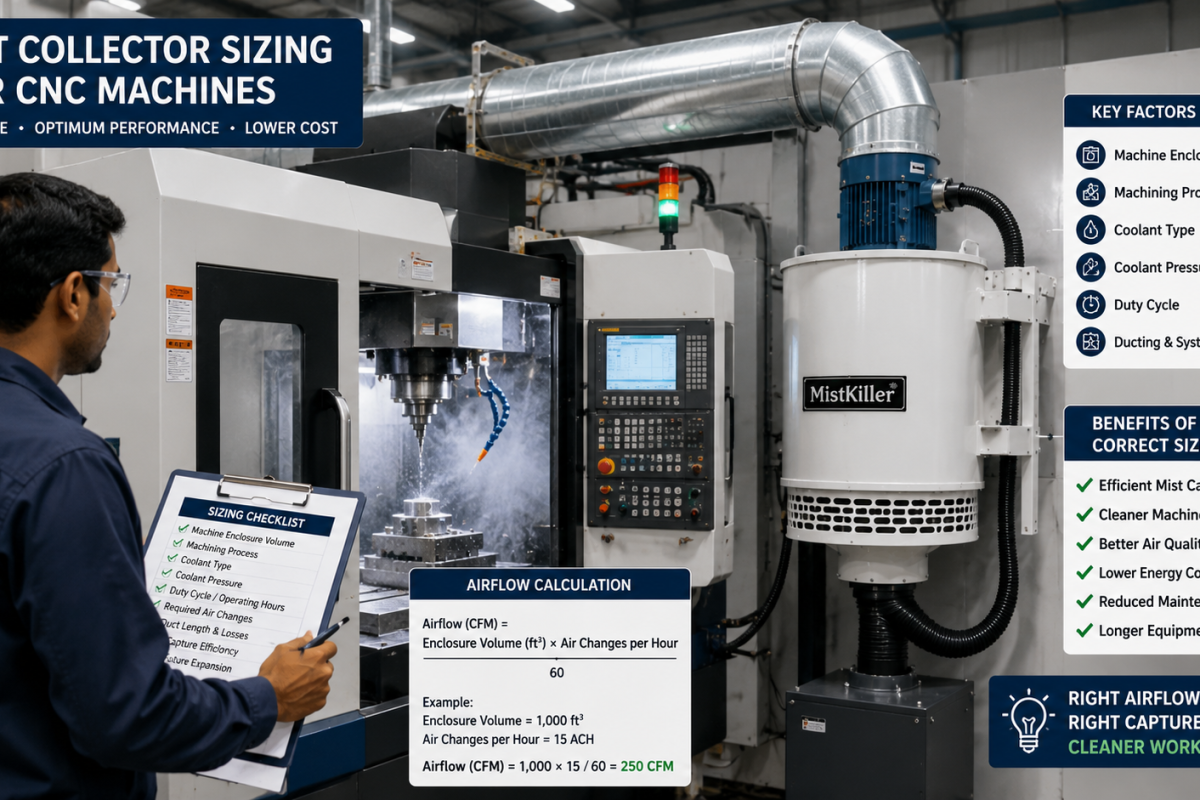
Determining CNC Mist Extraction Airflow

Airflow is typically determined by considering:

  1. Machine enclosure volume
  2. Air changes required within the enclosure
  3. Mist generation rate
  4. Capture efficiency
  5. Duct losses

Rather than relying on a fixed airflow value for every machine, airflow should be engineered for each application to ensure efficient mist removal without creating unnecessary energy consumption.

Oil Mist Collector Airflow Considerations

An effective oil mist collection system should maintain sufficient airflow to:

  1. Capture airborne mist at the source
  2. Prevent mist leakage when machine doors open
  3. Maintain slight negative pressure within the enclosure
  4. Support continuous machining operations

Excessively high airflow may disturb machining conditions, while insufficient airflow reduces collection efficiency.

Machine Shop Ventilation Design Considerations

Mist collectors should complement—not replace—the overall ventilation strategy.

A complete machine shop ventilation design should include:

  1. Local source capture
  2. Proper make-up air
  3. General building ventilation
  4. Strategic equipment placement
  5. Maintenance access

This integrated approach improves overall air quality and operational efficiency.

Common Mist Collector Sizing Mistakes

Selecting by Machine Horsepower

Horsepower alone does not determine mist generation.

Ignoring Coolant Type

Oil-based and water-based coolants behave differently.

Oversizing the Collector

Larger systems consume more power and increase operating costs without proportional performance gains.

Undersizing the Collector

Insufficient airflow allows mist to escape into the workplace.

Ignoring Future Expansion

Production increases may require additional extraction capacity.

Powertech’s Engineering Approach

Powertech evaluates multiple parameters before recommending a mist collection solution.

These include:

  1. CNC machine type
  2. Enclosure dimensions
  3. Coolant characteristics
  4. Machining process
  5. Operating hours
  6. Airflow requirements
  7. Plant layout

This engineering-based approach ensures every MistKiller installation delivers reliable performance with optimal operating efficiency.

Expert Insight

From Powertech’s experience, one of the most common mistakes is selecting a mist collector based solely on airflow capacity listed in a product catalogue.

In practice, effective mist collection depends on the interaction between machine enclosure design, contaminant generation, duct routing, and extraction efficiency.

Proper engineering frequently delivers better results with a correctly sized collector than with a larger unit operating inefficiently.

How do you size a mist collector for a CNC machine?

Sizing depends on enclosure volume, machining process, coolant type, mist generation rate, and required airflow—not simply machine horsepower.

What affects CNC mist extraction airflow?

Machine size, coolant pressure, machining operation, enclosure design, and production intensity all influence airflow requirements.

Can a mist collector be oversized?

Yes. Oversized systems increase energy consumption and operating costs without necessarily improving collection performance.

Why is airflow important in oil mist collection?

Proper airflow captures airborne mist before it escapes into the workplace while maintaining efficient machine enclosure ventilation.

Should every CNC machine have its own mist collector?

Many facilities achieve the best results with dedicated machine-mounted mist collectors, although centralized systems may be appropriate for certain production layouts.

Can Powertech help determine the correct mist collector size?

Yes. Powertech evaluates machine specifications, airflow requirements, coolant characteristics, and operating conditions to recommend appropriately sized MistKiller systems.

Conclusion

Proper mist collector sizing is essential for achieving efficient oil mist control in CNC machining operations. By considering CNC mist extraction airflow, oil mist collector airflow, machine enclosure characteristics, and overall machine shop ventilation design, manufacturers can improve air quality, reduce maintenance, and optimize operating costs. Rather than relying on standard airflow values, engineered sizing ensures that every mist collection system is matched to the specific machining application. With decades of expertise in industrial air pollution control, Powertech provides customized MistKiller solutions that deliver reliable, energy-efficient performance for modern manufacturing facilities.

Mist Collectors for CNC Machining Operations

Introduction

CNC machining operations are essential in modern manufacturing, delivering high precision and productivity across industries such as automotive, aerospace, medical devices, and precision engineering. However, the use of water-based coolants and cutting fluids during machining generates fine airborne mist that can quickly spread throughout the workspace if left uncontrolled.

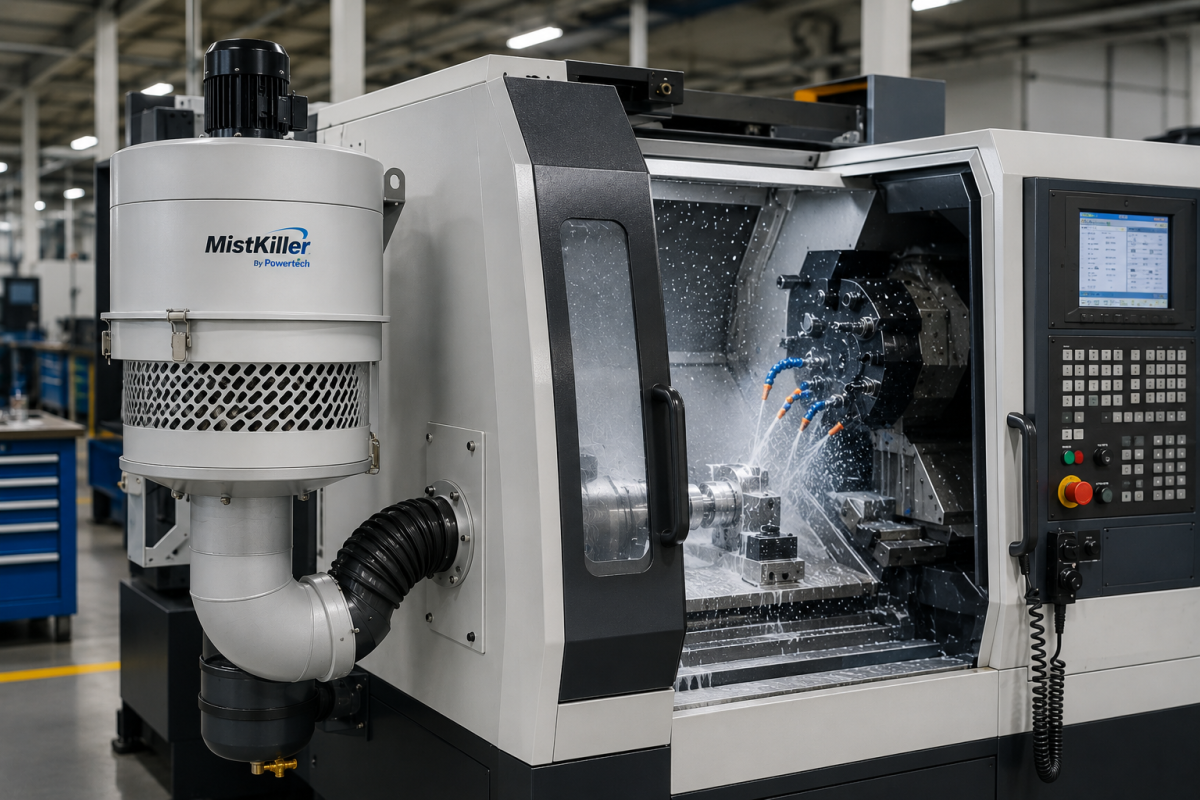
A properly designed mist collector CNC machine solution captures coolant mist directly at the source, preventing it from escaping into the surrounding environment. Effective oil mist collector systems improve air quality, protect machinery, reduce housekeeping requirements, and create a healthier workplace for machine operators.

Modern CNC machine ventilation systems are engineered to remove airborne coolant droplets before they settle on equipment or remain suspended in the air. By implementing efficient coolant mist extraction, manufacturers can improve operational efficiency while maintaining cleaner production environments.

With over 30 years of experience in industrial air pollution control, Powertech’s MistKiller centrifugal mist collectors provide reliable and energy-efficient solutions for extracting water-based coolant mist from CNC machining operations.

Key Takeaways

  1. CNC machining generates airborne coolant mist that should be captured at the source.
  2. A mist collector CNC machine improves air quality and machine cleanliness.
  3. Oil mist collectors reduce airborne contamination and slippery surfaces.
  4. Proper CNC machine ventilation enhances operator safety and equipment reliability.
  5. Effective coolant mist extraction lowers maintenance requirements and improves productivity.

The Problem: Airborne Coolant Mist in CNC Operations

During turning, milling, grinding, and machining processes, high-speed rotating tools atomize coolant into microscopic droplets.

Causes

  1. High spindle speeds
  2. Coolant spray systems
  3. Tool-workpiece interaction
  4. Enclosed machining centers opening during operation

Workplace Impact

  1. Reduced visibility around machines
  2. Oily residue on floors and equipment
  3. Increased housekeeping requirements
  4. Poor indoor air quality

Equipment Impact

  1. Electrical cabinet contamination
  2. Premature wear of machine components
  3. Build-up on sensors and controls
  4. Reduced equipment reliability

Technical Explanation: How Mist Collectors Work

Step 1: Mist Generation

During machining, coolant contacts rotating tools and workpieces.

This produces:

  1. Fine airborne droplets
  2. Larger coolant particles
  3. Aerosolized mist

Step 2: Source Capture

The mist collector draws contaminated air directly from the CNC enclosure.

Capturing mist before it escapes provides the highest efficiency.

Step 3: Centrifugal Separation

Powertech’s MistKiller uses centrifugal technology rather than disposable filters.

The rotating impeller:

  1. Separates coolant droplets
  2. Forces heavier particles outward
  3. Returns collected coolant to the machine

Centrifugal separation minimizes filter replacement costs.

Step 4: Clean Air Discharge

The cleaned air is discharged safely while recovered coolant can often be reused depending on system design.

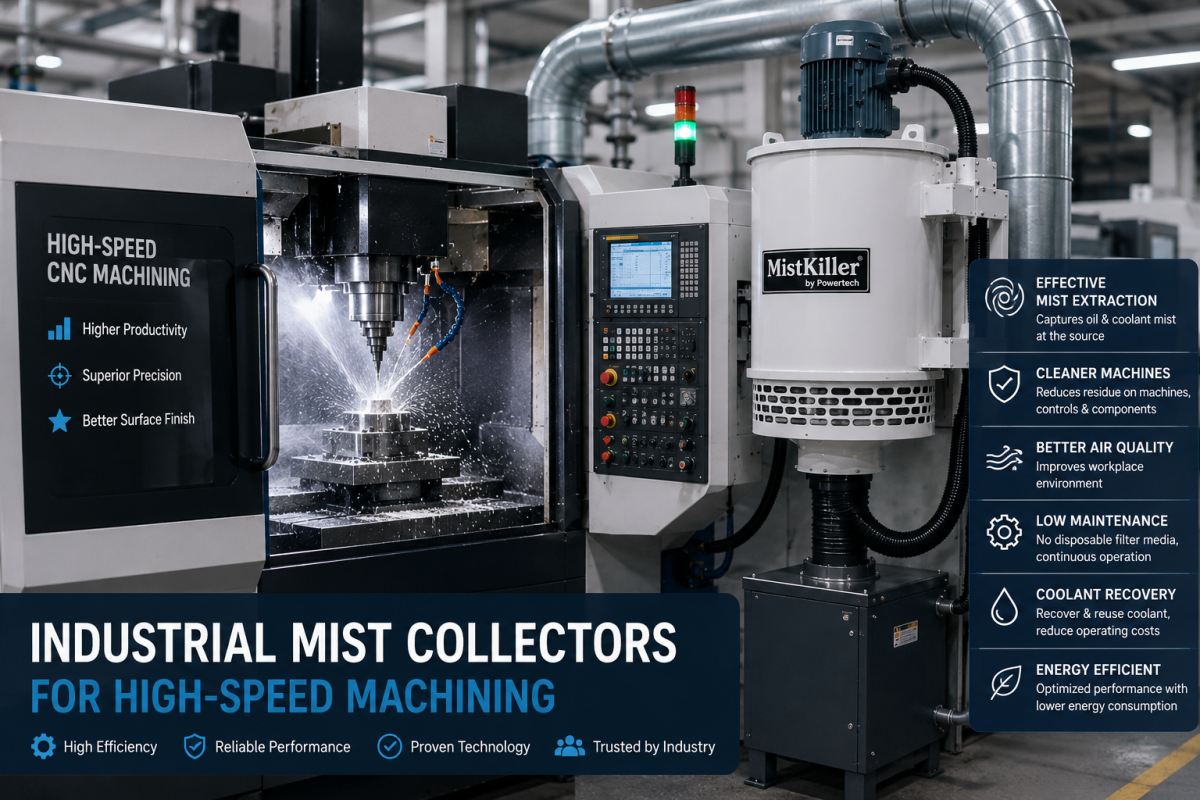
Advantages of Centrifugal Mist Collectors

FeatureBenefit
No disposable filter mediaLower operating costs
Continuous operationMinimal maintenance
Coolant recoveryReduced fluid waste
Compact designEasy machine integration
Energy efficientLower power consumption

Applications

CNC Turning Centers

Continuous coolant spray during turning operations produces fine mist requiring localized extraction.

CNC Milling Machines

High spindle speeds generate airborne coolant that must be controlled.

Machining Centers

Multiple tool changes and coolant delivery systems increase mist generation.

Grinding Operations

Fine coolant aerosols require effective source capture and separation.

Precision Engineering

Maintaining clean indoor air improves product quality and operator comfort.

MistKiller: Powertech’s Centrifugal Mist Collector

Unlike conventional filter-based systems, MistKiller utilizes centrifugal separation technology specifically designed for water-based coolant mist generated in CNC machining operations.

Key Features

  1. High-efficiency centrifugal separation
  2. No disposable filters
  3. Low maintenance operation
  4. Compact machine-mounted design
  5. Continuous extraction during machining
  6. Coolant recovery capability

This makes MistKiller particularly suitable for industries seeking reliable and cost-effective coolant mist extraction.

Expert Insight

Powertech’s field experience has shown that many CNC facilities initially underestimate the impact of airborne coolant mist.

Properly installed centrifugal mist collectors consistently deliver:

  1. Cleaner machine enclosures
  2. Reduced maintenance downtime
  3. Improved operator comfort
  4. Lower housekeeping costs
  5. Better equipment longevity

Facilities that capture mist directly from the machine enclosure typically achieve significantly better results than relying solely on general ventilation.

What is a mist collector for a CNC machine?

A mist collector removes airborne coolant droplets and aerosols generated during machining operations before they enter the workspace.

How does a centrifugal mist collector work?

It uses centrifugal force to separate coolant droplets from the air without relying on disposable filters.

Is a MistKiller suitable for water-based coolant mist?

Yes. MistKiller is specifically designed for extracting water-based coolant mist generated by CNC machining processes.

Can collected coolant be reused?

In many applications, separated coolant can be returned to the machine depending on system configuration.

Do mist collectors reduce machine maintenance?

Yes. By preventing coolant build-up on equipment and surrounding surfaces, they reduce cleaning and maintenance requirements.

Conclusion

An effective mist collector CNC machine solution is essential for maintaining clean, safe, and productive machining environments. By implementing advanced oil mist collector technology, manufacturers can significantly improve CNC machine ventilation while reducing airborne coolant contamination. Powertech’s MistKiller centrifugal technology provides an efficient and low-maintenance approach to coolant mist extraction, offering superior performance for water-based coolant applications without the ongoing cost of disposable filters. For facilities looking to improve air quality, reduce maintenance, and enhance operational efficiency, engineered mist collection is an investment that delivers long-term value.

Mist-collector

Introducing Powertech Pollution Controls: Our Mission and Vision

A Legacy of Excellence in Air Pollution Control

Since its inception in 1996, Powertech Pollution Controls has been at the forefront of the air pollution control industry. For nearly three decades, our company has specialized in designing and manufacturing high-quality equipment for the capture and control of fumes, smoke, dust, and mist from various industrial applications. Our commitment to innovation and excellence has established us as a trusted partner across multiple industries, including automotive manufacturing, heavy engineering, light engineering, food production, and pharmaceuticals.

Our Mission: Creating a Greener World, One Solution at a Time

At Powertech Pollution Controls, our mission is clear: to create a greener world, one solution at a time. We believe that every industry can operate efficiently while minimizing its environmental impact. By providing custom-built air pollution control solutions, we aim to help our clients achieve cleaner, safer work environments, thereby contributing to a sustainable future.

Our mission drives everything we do. From the initial consultation to the final installation and beyond, we are dedicated to delivering solutions that not only meet but exceed our clients’ expectations. Each product we develop is designed with the specific needs of the application in mind, ensuring optimal performance and reliability.

Our Vision: Leading the Way in Air Pollution Control

Our vision is to be the global leader in air pollution control solutions, recognized for our superior products, exceptional service, and unwavering commitment to sustainability. We envision a future where every industrial operation can effectively manage air pollutants, ensuring healthier environments for workers and surrounding communities.

To achieve this vision, we continually invest in research and development. Our team of experts stays abreast of the latest advancements in technology and industry trends, ensuring that our solutions remain at the cutting edge. By integrating smart technologies and sustainable practices into our products, we are paving the way for a cleaner, greener future.

Our Product Line: Tailored Solutions for Every Need

Powertech Pollution Controls offers a comprehensive range of air pollution control equipment, each designed to address specific industrial challenges. Our product line includes:

  1. FumeKiller – Electrostatic Fume Extraction System

The FumeKiller is a versatile fume extractor designed to handle fumes generated from processes such as welding, soldering, and oil mist collection. Its advanced electrostatic filtration system ensures efficient removal of contaminants, providing a cleaner and safer work environment. Whether you need a soldering fume extractor or a welding fume extractor, the FumeKiller is the ideal solution.

  1. DustBag – Dust Collector

The DustBag is an advanced dust collector designed for applications such as grinding, buffing, and lathe work. Its high-efficiency filtration system captures dust particles at the source, preventing them from spreading within the workspace. The DustBag is available in various configurations to suit different industrial needs, making it a reliable choice for any dust collection requirement.

  1. MistKiller – Centrifugal Mist Collector

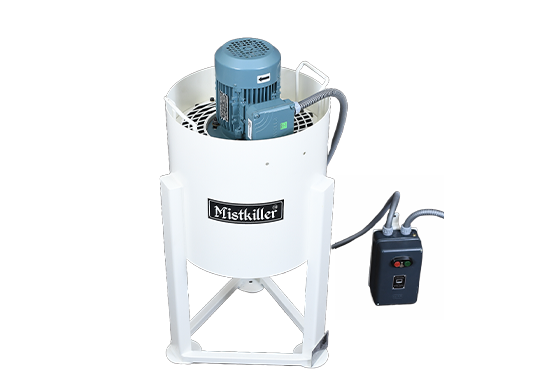
The MistKiller is a powerful mist collector designed to extract water-based coolant mist from CNC processing applications. Its centrifugal separation technology ensures effective mist removal, maintaining a clean and safe working environment. The MistKiller is essential for industries that require precise and reliable mist collection solutions.

  1. DustBag Reverse-Pulsed-Jet – Self-Cleaning Dust Collection System

The DustBag Reverse-Pulsed-Jet is a maintenance-free dust collection system designed for fine dust extraction from processes such as food production. Its self-cleaning feature ensures continuous operation without the need for manual intervention. This system is ideal for industries that demand high performance and minimal downtime.

Our Commitment to Quality and Service

At Powertech Pollution Controls, quality and service are at the core of our operations. We pride ourselves on the superior build quality of our products, ensuring durability and long-term performance. Each piece of equipment undergoes rigorous testing to meet the highest standards of quality and safety.

Our commitment to service extends beyond the sale. We offer comprehensive post-sales support to ensure that our clients get the most out of their investments. Our team of experienced technicians is always ready to provide assistance, from installation and maintenance to troubleshooting and upgrades.

Custom Solutions for Unique Challenges

Every industrial application is unique, and we understand that a one-size-fits-all approach does not work for air pollution control. That’s why we offer custom-built solutions tailored to the specific needs of our clients. Our team works closely with each client to understand their requirements and develop a solution that delivers optimal results.

From designing bespoke fume extractors to creating specialized dust and mist collectors, we have the expertise to handle any challenge. Our custom solutions not only address the immediate air pollution issues but also enhance overall operational efficiency.

Partnering for a Sustainable Future

Sustainability is at the heart of our mission and vision. We believe that by helping industries manage their air pollution, we are contributing to a healthier planet. Our products are designed to minimize energy consumption and reduce environmental impact, aligning with global sustainability goals.

We are also committed to continuous improvement. By investing in new technologies and adopting best practices, we strive to make our solutions even more efficient and eco-friendly. Our goal is to help our clients achieve their sustainability objectives while maintaining high levels of productivity and safety.

Join Us on Our Journey

As we continue to innovate and expand our product offerings, we invite you to join us on our journey toward a greener world. Whether you are looking for a reliable fume extractor, an efficient dust collector, or a powerful mist collector, Powertech Pollution Controls has the solution you need.

Explore our product range and discover how we can help you create a cleaner, safer work environment. Contact us today to learn more about our custom solutions and how we can partner with you to achieve your air pollution control goals.

Together, we can create a sustainable future, one solution at a time.

Mist Collector

Harmful Effects of Water-based Coolant Mist

Water-based coolants, commonly used in various industrial processes and machining operations, is favored for its ability to cool and lubricate machinery effectively. However, while it offers numerous benefits, water-based coolant can also have harmful effects on both human health and the environment. This article details the properties of water-based coolants, their applications, and the potential adverse impacts they can have.

What are water-based coolants?

Water-based coolants, also known as cutting fluids or metalworking fluids, are liquids used in manufacturing and metalworking processes to reduce friction and heat generated during various processes like machining, grinding, and cutting. They typically consist of a mixture of water and various additives, including lubricants, rust inhibitors, and surfactants. These additives enhance the coolant’s performance and longevity.

Applications of Water-Based Coolants:

Water-based coolants find widespread use in various industrial applications, including:

  1. Metal Cutting and Machining: Water-based coolants are crucial in metalworking operations such as milling, turning, and drilling. They help maintain the tool’s temperature, prolong tool life, and improve surface finish.
  2. Grinding: In precision grinding processes, water-based coolants prevent jobs from overheating, reduce grinding wheel wear, and aid in achieving precise tolerances.
  3. Heat Treatment: Water-based quenching fluids are used in heat treatment processes to control the cooling rate of metal parts, preventing distortion and achieving desired material properties.

Harmful Effects of Water-Based Coolants:

Despite having their advantages, water-based coolants can have several harmful effects on humans as well as the environment and machineries:

1. Health Risks:

  • Respiratory Issues: Inhalation of airborne coolant mist, which contains tiny droplets of the coolant, can lead to respiratory problems such as coughing, shortness of breath, and even lung diseases.
  • Skin Irritation: Direct skin contact with water-based coolants can cause skin irritation, dermatitis, and allergic reactions. Some coolants may contain additives that exacerbate these issues.
  • Occupational Diseases: Prolonged exposure to water-based coolant mist may lead to occupational diseases, including occupational asthma and hypersensitivity pneumonitis, which can be debilitating and affect a worker’s quality of life.

2. Environmental Impact:

  • Contamination: Improper disposal of water-based coolant can result in soil and water contamination, negatively impacting ecosystems and potentially affecting drinking water sources.
  • Bioaccumulation: Some components of water-based coolants may bioaccumulate in aquatic organisms, entering the food chain and posing risks to human and environmental health.

3. Corrosion and Maintenance:

  • Corrosion: Water-based coolants can promote corrosion in metal components, particularly if not adequately managed or if the coolant becomes contaminated.
  • Maintenance Challenges: Keeping coolant systems and equipment properly maintained can be time-consuming and costly, and neglecting maintenance can lead to operational inefficiencies and increased risks.

4. Microbial Growth:

Water-based coolants are susceptible to microbial growth, leading to issues such as unpleasant odors, degradation of coolant properties, and potential health hazards for workers exposed to contaminated coolant.

5. Waste Generation:

Disposing of used coolant can be a challenge, as it may be considered hazardous waste due to its potential to contain harmful additives and contaminants.

Mitigating the Harmful Effects:

To mitigate the harmful effects of water-based coolants, several measures can be taken:

  1. Effective Ventilation: Implementing proper ventilation systems like mist collectors in industrial settings can help reduce the concentration of airborne coolant mist, safeguarding workers’ respiratory health.
  2. Personal Protective Equipment (PPE): Workers should wear appropriate PPE, including gloves, goggles, and respiratory protection, to minimize skin contact and inhalation of mist.
  3. Safe Handling and Disposal: Follow proper procedures for handling, storing, and disposing of water-based coolant to prevent environmental contamination and reduce waste generation.
  4. Regular Maintenance: Routine maintenance of coolant systems and equipment is crucial to prevent issues like corrosion, microbial contamination, and degradation of coolant properties.
  5. Alternative Coolants: Consider using alternative cutting fluids, such as synthetic or semi-synthetic coolants, which may have fewer health and environmental impacts compared to traditional water-based coolants.

In conclusion, while water-based coolants are indispensable in various industrial processes, their use is not without risks. Understanding the potential harmful effects of these coolants is essential for adopting appropriate safety measures and practices to protect the health of workers and minimize environmental impact. Proactive management and responsible handling of water-based coolants can help strike a balance between their benefits and potential drawbacks, creating a safer and more sustainable working environment.

Visit us: https://www.powertechindia.com

Oil Mist Collectors

An oil mist collector is a vital piece of industrial equipment designed to capture and remove airborne oil mist, smoke, and other fine particulate matter generated during various machining and manufacturing processes. This innovative technology plays a crucial role in maintaining a safe and clean working environment, ensuring worker health and safety, and improving overall industrial efficiency. In this article, we’ll dwell on the key aspects and significance of oil mist collectors.

Source and Generation of Oil Mist:

Oil mist is produced in a variety of industrial processes such as machining, metalworking, and tooling. These processes involve the use of cutting fluids, coolants, or lubricants to reduce friction, dissipate heat, and extend the life of cutting tools. As these fluids come into contact with high-speed machining operations, they can atomize into tiny droplets, forming oil mist. This mist contains both oil particles and other contaminants, including fine metal dust, which can be harmful to workers’ health and safety.

Health and Safety Concerns:

Exposure to oil mist and its associated particulate matter can have severe health consequences for workers. Inhalation of oil mist can lead to respiratory issues, eye and skin irritation, and long-term health problems, including occupational asthma and lung diseases. Moreover, oil mist can accumulate on machinery, floors, and surfaces, creating slippery conditions that can lead to accidents and workplace injuries.

The Role of Oil Mist Collectors:

Oil mist collectors are specifically designed to address these concerns by effectively capturing and removing oil mist and airborne particulates from the workplace air. They employ various techniques, including mechanical filtration, centrifugal force, and electrostatic precipitation, to achieve this goal. Here’s how they work:

  • Mechanical Filtration: Many Oil mist collectors use a series of filters, often including pre-filters and main filters. The pre-filters capture larger particulate matter, while the main filters are designed to capture the smaller oil mist droplets. These filters can be made of various materials, such as fiberglass, polyester, or HEPA (High-Efficiency Particulate Air), depending on the specific application.
  • Centrifugal Force: Some mist collectors utilize centrifugal force to separate oil mist from the air stream. The mist-laden air is directed into a rotating drum or chamber, where centrifugal force causes the oil droplets to be collected for disposal.
  • Electrostatic Precipitation: In electrostatic Oil mist collectors, an electric charge is applied to the oil mist particles, causing them to be attracted to oppositely charged plates or electrodes. This technology is efficient in capturing both fine oil mist and particulate matter as these provide a higher capture efficiency proving to be a better choice for industries.

Benefits and Significance:

Oil mist collectors offer a range of benefits and are highly significant in industrial settings for several reasons:

  • Worker Health and Safety: By removing oil mist and airborne contaminants from the workplace air, these collectors help protect the health and safety of employees. This is particularly important in industries where workers are exposed to oil mist on a daily basis.
  • Environmental Compliance: Many regions have strict environmental regulations regarding the emission of oil mist and particulate matter. Oil mist collectors help industries comply with these regulations and avoid fines or penalties.
  • Machine Maintenance: Accumulated oil mist can damage machinery and lead to decreased equipment lifespan. Oil mist collectors help prevent this by reducing the presence of mist in the workspace.
  • Improved Product Quality: In industries such as metalworking and electronics manufacturing, oil mist can settle on sensitive components and affect product quality. Collectors help maintain clean production environments and ensure product consistency.
  • Energy Savings: Some oil mist collectors incorporate energy-efficient designs, such as variable-speed fans, which reduce power consumption, contributing to cost savings and environmental sustainability.

Diverse Applications:

Oil mist collectors find applications in a wide range of industries, including automotive manufacturing, aerospace, machining, and metalworking, where the generation of oil mist is common. They are used in machining centers, CNC machines, grinding operations, and other equipment to ensure a cleaner, safer working environment.

In conclusion, oil mist collectors are indispensable tools in modern industrial settings, where the control of airborne oil mist and particulate matter is crucial for worker health, environmental compliance, and efficient manufacturing processes. These devices play a significant role in mitigating health and safety risks, preserving machine integrity, and improving overall industrial productivity. As industries continue to evolve, the importance of oil mist collectors in maintaining clean and safe workspaces remains paramount.

Visit us: https://www.powertechindia.com