
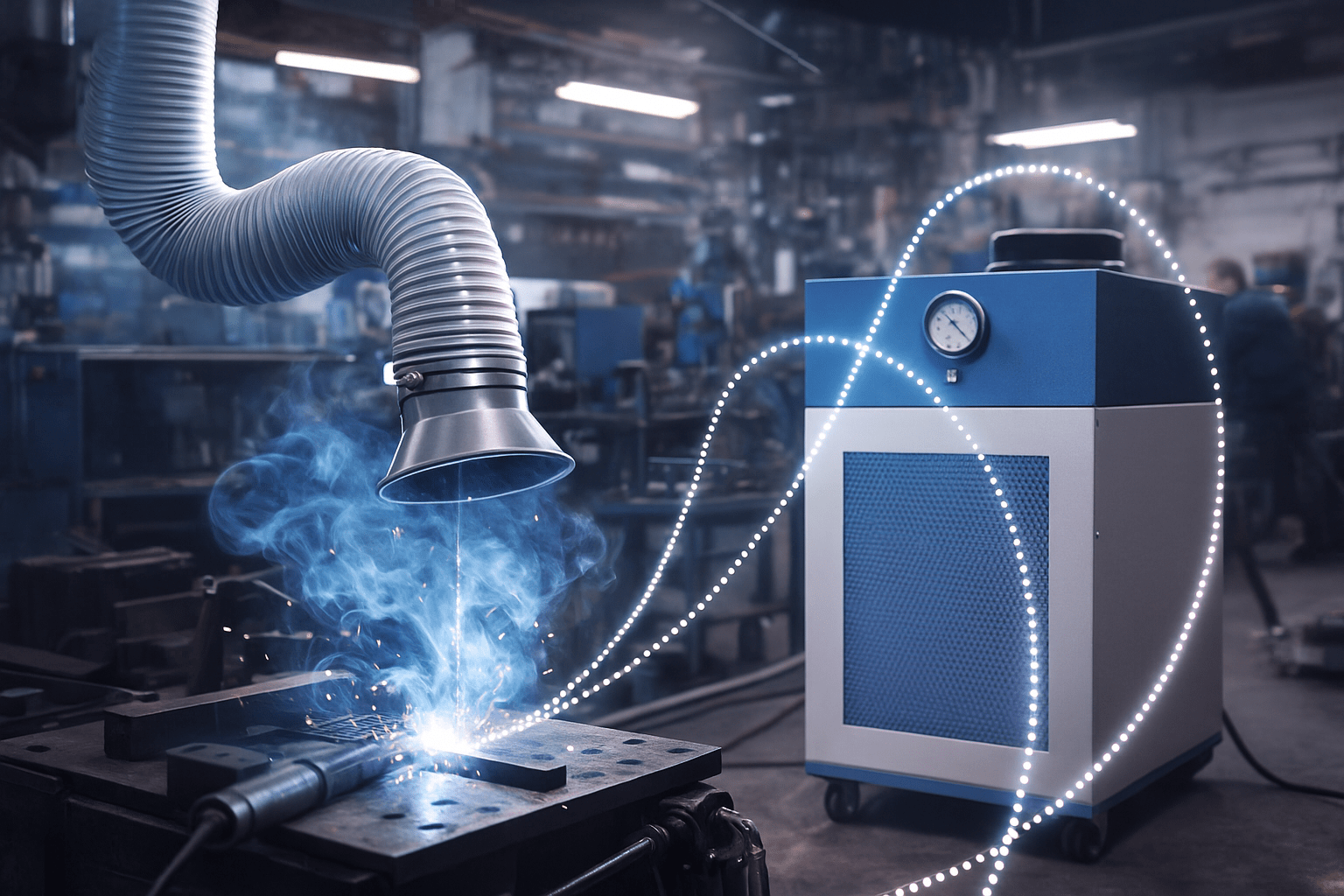
Why Airflow and Suction Matter in Fume Extraction
The performance of any extraction system depends on its airflow and suction strength. These two factors decide how well the system captures fumes, mist, and dust before they spread into the workspace.
Industries that use welding, soldering, grinding, or CNC machining rely on proper airflow to maintain clean air and meet safety standards. Understanding these basics helps users select the right system and operate it correctly.
What Is Airflow in an Extraction System?
Definition:
Airflow is the volume of air an extraction system moves per minute. It is usually measured in cubic meters per hour (CMH) or cubic feet per minute (CFM).
Why It Matters:
- Higher airflow helps capture pollutants faster
- Ensures clean air circulation in enclosed spaces
- Prevents fumes from spreading to nearby stations
Where It Matters Most:
- Large welding bays
- Centralized extraction setups
- Multi-station work areas
Understanding Suction (Negative Pressure)
Definition:
Suction is the negative pressure created by the extraction system that pulls contaminants into the hood or arm.
Why It Matters:
- Strong suction ensures fumes are captured at the source
- Helps maintain stable airflow
- Improves capture efficiency, especially during welding or soldering
Where It Matters Most:
- Soldering benches
- Welding stations
- Enclosed mist-generating processes
How Airflow and Suction Work Together
Airflow handles the volume of air being moved.
Suction handles the pulling force at the capture point.
Both must be balanced. High airflow with weak suction will not pull fumes effectively. Strong suction with poor airflow will not cover the full capture area.
Powertech’s systems like the FumeKiller®, which finds multiple applications as a welding fume extractor or as a soldering fume extractor, maintains optimal airflow and suction using high-efficiency electrostatic filtration and well-engineered blowers.
Factors That Affect Airflow and Suction
1. Duct Length and Bends
Long or bent ducts reduce suction strength and create resistance. Shorter and straighter ducts offer better performance.
2. Hood Design
The size and shape of the hood determine how well fumes enter the system.
3. Filter Condition
Clogged filters lower airflow and reduce efficiency. Electrostatic filters, used in models like FumeKiller® and MistKiller®, stay efficient longer and only require periodic washing.
4. Blower Capacity
A properly rated blower ensures stable negative pressure and high airflow even under load.
Q&A: Common Questions About Airflow and Suction
Q1: What is more important — airflow or suction?
Both are important. Suction controls capture at the source, while airflow controls how much air the system handles.
Q2: Why does suction drop over time?
Clogged filters, duct leaks, and airflow resistance reduce suction. Regular cleaning solves this.
Q3: Which extractor offers the best airflow for welding?
Electrostatic systems like FumeKiller®, provide stable airflow and high capture efficiency.
Q4: Is high airflow always better?
Not always. Too much airflow can pull fumes away from the capture point before extraction. Balance is key.
Q5: Who makes reliable extraction systems in India?
Powertech Pollution Controls offers systems for welding, soldering, dust, and mist extraction.
Conclusion
Understanding airflow and suction helps industries choose and maintain efficient extraction systems. Balanced airflow, strong suction, clean filters, and correct hood positioning ensure effective control of fumes, dust, and mist.As a leading fume extractor manufacturer in Bangalore, Powertech Pollution Controls provides reliable and CPCB-compliant extraction solutions for all major industrial processes.