How to Size a Mist Collector for CNC Machines

Introduction

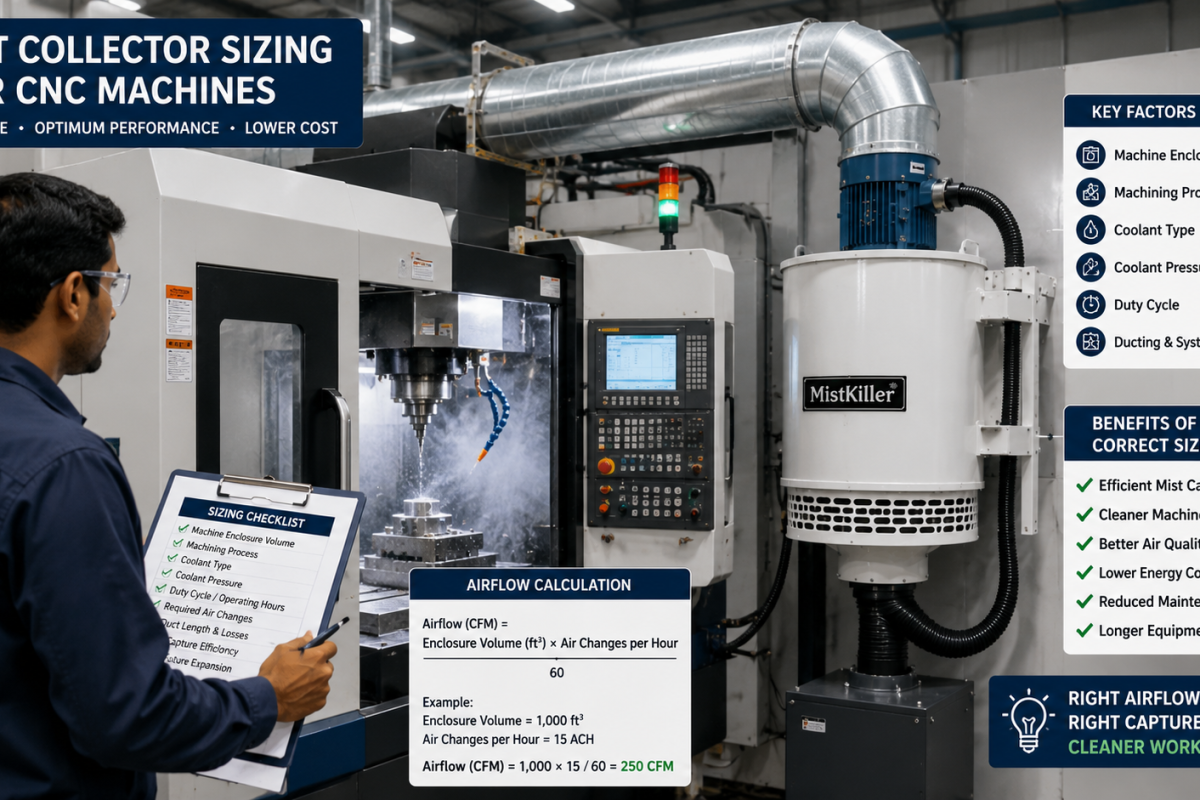
Selecting the correct mist collector is one of the most important decisions when designing an effective air pollution control system for CNC machining operations. An undersized unit may fail to capture airborne coolant mist efficiently, while an oversized system can increase energy consumption and operating costs without providing additional benefits.

Proper mist collector sizing requires evaluating several factors, including machine enclosure volume, coolant type, machining process, airflow requirements, and production intensity. A well-designed system ensures adequate CNC mist extraction airflow, maintains cleaner machine enclosures, and supports effective machine shop ventilation design.

Whether the application involves turning, milling, grinding, or multi-axis machining, understanding oil mist collector airflow requirements helps manufacturers improve air quality, reduce maintenance, and extend equipment life.

With over 30 years of experience in industrial air pollution control, Powertech engineers customized mist collection systems that deliver optimal performance while minimizing operating costs for machining facilities.

Key Takeaways

  1. Mist collector sizing should be based on machine characteristics, not just machine horsepower.
  2. Airflow requirements vary depending on machining process and coolant type.
  3. Proper CNC mist extraction airflow improves collection efficiency and equipment cleanliness.
  4. Oversized systems waste energy, while undersized systems reduce extraction performance.
  5. Professional airflow calculations ensure reliable long-term operation.

Why Mist Collector Sizing Matters

Every CNC machine produces different volumes of airborne mist depending on the machining operation.

Incorrect sizing can lead to:

  1. Poor mist capture
  2. Residual oil deposits
  3. Reduced indoor air quality
  4. Increased maintenance
  5. Higher operating costs

Proper sizing balances extraction efficiency with energy consumption.

Factors That Influence Mist Collector Sizing

1. Machine Enclosure Size

The enclosure volume affects the amount of air that must be extracted.

Larger machining centers generally require greater airflow than compact CNC machines.

2. Machining Process

Different machining operations generate different mist levels.

Lower Mist Generation

  1. Drilling
  2. Light milling
  3. Precision finishing

Moderate Mist Generation

  1. CNC turning
  2. General milling
  3. Machining centers

High Mist Generation

  1. Grinding
  2. High-speed machining
  3. High-pressure coolant applications

3. Coolant Type

The characteristics of the machining fluid influence extraction requirements.

Water-Based Coolants

Typically produce coolant mist that responds well to centrifugal separation.

Oil-Based Lubricants

Often generate finer aerosols and may require higher-efficiency collection methods.

4. Coolant Pressure

Higher coolant pressure creates smaller airborne droplets, increasing mist concentration and airflow requirements.

5. Machine Duty Cycle

Machines operating continuously over multiple shifts generate greater cumulative mist loads than intermittently operated equipment.

Determining CNC Mist Extraction Airflow

Airflow is typically determined by considering:

  1. Machine enclosure volume
  2. Air changes required within the enclosure
  3. Mist generation rate
  4. Capture efficiency
  5. Duct losses

Rather than relying on a fixed airflow value for every machine, airflow should be engineered for each application to ensure efficient mist removal without creating unnecessary energy consumption.

Oil Mist Collector Airflow Considerations

An effective oil mist collection system should maintain sufficient airflow to:

  1. Capture airborne mist at the source
  2. Prevent mist leakage when machine doors open
  3. Maintain slight negative pressure within the enclosure
  4. Support continuous machining operations

Excessively high airflow may disturb machining conditions, while insufficient airflow reduces collection efficiency.

Machine Shop Ventilation Design Considerations

Mist collectors should complement—not replace—the overall ventilation strategy.

A complete machine shop ventilation design should include:

  1. Local source capture
  2. Proper make-up air
  3. General building ventilation
  4. Strategic equipment placement
  5. Maintenance access

This integrated approach improves overall air quality and operational efficiency.

Common Mist Collector Sizing Mistakes

Selecting by Machine Horsepower

Horsepower alone does not determine mist generation.

Ignoring Coolant Type

Oil-based and water-based coolants behave differently.

Oversizing the Collector

Larger systems consume more power and increase operating costs without proportional performance gains.

Undersizing the Collector

Insufficient airflow allows mist to escape into the workplace.

Ignoring Future Expansion

Production increases may require additional extraction capacity.

Powertech’s Engineering Approach

Powertech evaluates multiple parameters before recommending a mist collection solution.

These include:

  1. CNC machine type
  2. Enclosure dimensions
  3. Coolant characteristics
  4. Machining process
  5. Operating hours
  6. Airflow requirements
  7. Plant layout

This engineering-based approach ensures every MistKiller installation delivers reliable performance with optimal operating efficiency.

Expert Insight

From Powertech’s experience, one of the most common mistakes is selecting a mist collector based solely on airflow capacity listed in a product catalogue.

In practice, effective mist collection depends on the interaction between machine enclosure design, contaminant generation, duct routing, and extraction efficiency.

Proper engineering frequently delivers better results with a correctly sized collector than with a larger unit operating inefficiently.

How do you size a mist collector for a CNC machine?

Sizing depends on enclosure volume, machining process, coolant type, mist generation rate, and required airflow—not simply machine horsepower.

What affects CNC mist extraction airflow?

Machine size, coolant pressure, machining operation, enclosure design, and production intensity all influence airflow requirements.

Can a mist collector be oversized?

Yes. Oversized systems increase energy consumption and operating costs without necessarily improving collection performance.

Why is airflow important in oil mist collection?

Proper airflow captures airborne mist before it escapes into the workplace while maintaining efficient machine enclosure ventilation.

Should every CNC machine have its own mist collector?

Many facilities achieve the best results with dedicated machine-mounted mist collectors, although centralized systems may be appropriate for certain production layouts.

Can Powertech help determine the correct mist collector size?

Yes. Powertech evaluates machine specifications, airflow requirements, coolant characteristics, and operating conditions to recommend appropriately sized MistKiller systems.

Conclusion

Proper mist collector sizing is essential for achieving efficient oil mist control in CNC machining operations. By considering CNC mist extraction airflow, oil mist collector airflow, machine enclosure characteristics, and overall machine shop ventilation design, manufacturers can improve air quality, reduce maintenance, and optimize operating costs. Rather than relying on standard airflow values, engineered sizing ensures that every mist collection system is matched to the specific machining application. With decades of expertise in industrial air pollution control, Powertech provides customized MistKiller solutions that deliver reliable, energy-efficient performance for modern manufacturing facilities.
How Coolant Mist Forms in CNC Machines

Introduction

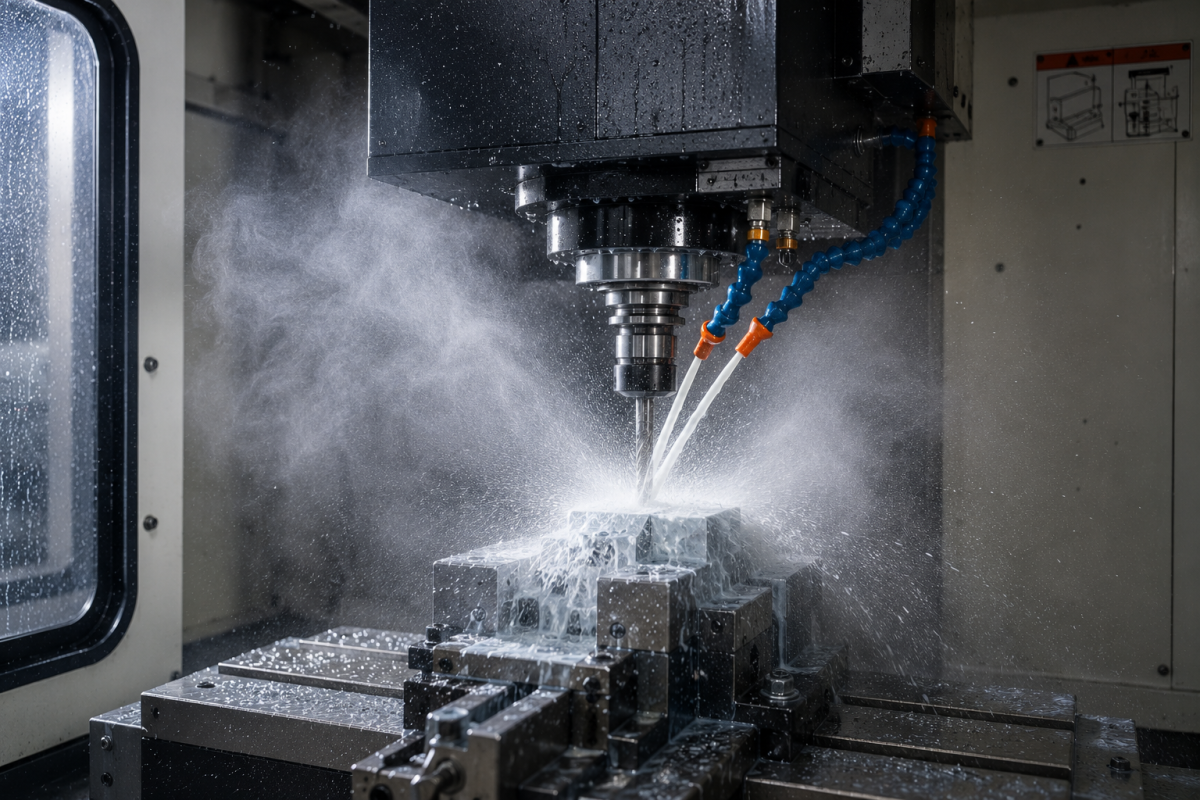
Coolant plays a critical role in CNC machining operations by reducing heat, improving tool life, enhancing surface finish, and maintaining machining accuracy. However, as machining speeds and coolant pressures increase, coolant can become atomized into microscopic airborne droplets that form what is commonly known as coolant mist.

Understanding how coolant mist CNC machines generate airborne contaminants is the first step toward implementing effective air pollution control solutions. Whether the mist originates from turning, milling, drilling, or grinding operations, uncontrolled airborne coolant can negatively affect workplace air quality, machine cleanliness, and operator comfort.

Modern manufacturing facilities increasingly rely on mist extraction CNC machining systems to control airborne contaminants and maintain cleaner working environments. Proper management of CNC coolant mist not only improves air quality but also reduces maintenance requirements and protects sensitive equipment.

With more than 30 years of experience in industrial air pollution control, Powertech’s MistKiller centrifugal mist collectors help manufacturers effectively control coolant mist generated during CNC machining operations.

Key Takeaways

  1. Coolant mist forms when machining operations atomize coolant into microscopic droplets.
  2. Higher spindle speeds and coolant pressures increase mist generation.
  3. Uncontrolled CNC coolant mist can affect air quality and equipment performance.
  4. Effective mist extraction captures contaminants before they enter the workplace.
  5. Understanding mist formation helps improve ventilation system design.

What Is Coolant Mist?

Coolant mist consists of tiny airborne droplets created when coolant interacts with rotating cutting tools, workpieces, and machine surfaces.

Unlike liquid coolant that remains within the machining process, mist becomes suspended in the air and can escape from machine enclosures if not properly controlled.

Typical Characteristics

  1. Microscopic liquid droplets
  2. Airborne aerosol formation
  3. Can remain suspended for extended periods
  4. May contain coolant additives and contaminants

How Coolant Mist Forms in CNC Machines

Step 1: Coolant Delivery

Coolant is delivered to the cutting zone to:

  1. Reduce heat
  2. Lubricate cutting surfaces
  3. Remove chips
  4. Improve machining efficiency

Modern CNC machines often use high-pressure coolant systems.

Step 2: High-Speed Tool Rotation

Machining tools operate at extremely high rotational speeds.

Examples

  1. Milling cutters
  2. End mills
  3. Grinding wheels
  4. Turning tools

As coolant contacts these rotating components, it begins to break into smaller droplets.

Step 3: Atomization

The interaction between coolant and high-speed rotating tools causes atomization.

This process creates:

  1. Fine droplets
  2. Aerosolized coolant
  3. Airborne mist particles

This is the primary source of oil mist generation machining environments.

Step 4: Air Turbulence

Inside the machine enclosure:

  1. Spindle movement
  2. Tool rotation
  3. Coolant spray
  4. Chip movement

create turbulent airflow.

This turbulence keeps droplets suspended in the air.

Step 5: Mist Escape

When machine doors open or ventilation is inadequate:

  1. Mist escapes into the workshop
  2. Airborne contaminants spread
  3. Residue accumulates on surrounding surfaces

This is where mist extraction CNC machining systems become critical.

Factors That Increase Coolant Mist Generation

High Spindle Speeds

Higher rotational speeds increase atomization.

High-Pressure Coolant Systems

Greater coolant velocity creates smaller airborne droplets.

Enclosed CNC Machines

Mist can accumulate rapidly within machine enclosures.

Continuous Production

Long machining cycles produce larger volumes of airborne mist.

Grinding Operations

Grinding processes typically generate some of the highest mist concentrations.

Effects of Coolant Mist in Manufacturing Facilities

Workplace Air Quality

Airborne coolant droplets can reduce indoor air quality.

Housekeeping Challenges

Coolant residue settles on:

  1. Floors
  2. Walls
  3. Machinery
  4. Workstations

Equipment Contamination

Mist can affect:

  1. Electrical cabinets
  2. Sensors
  3. Controls
  4. Machine components

Operator Comfort

Excessive airborne mist may contribute to:

  1. Unpleasant working conditions
  2. Reduced visibility
  3. Increased cleaning requirements

How Mist Extraction Systems Control Coolant Mist

Modern mist collectors remove airborne contaminants directly from CNC machine enclosures.

Process

  1. Capture contaminated air
  2. Separate coolant droplets
  3. Recover liquid coolant
  4. Discharge cleaned air

Benefits

  1. Cleaner air
  2. Reduced maintenance
  3. Improved equipment reliability
  4. Better workplace conditions

Why Centrifugal Mist Collection Is Effective

Powertech’s MistKiller uses centrifugal separation technology to remove coolant mist efficiently.

Advantages

  1. No disposable filters
  2. Low maintenance
  3. Continuous operation
  4. Coolant recovery capability
  5. High efficiency for water-based coolant mist

This makes centrifugal systems particularly suitable for CNC machining applications.

Expert Insight

Powertech’s experience across CNC machining facilities shows that coolant mist generation is often underestimated until visible residue appears throughout the workshop.

Facilities that implement source-capture mist collection directly at the machine enclosure typically achieve:

  1. Better indoor air quality
  2. Cleaner machinery
  3. Reduced maintenance costs
  4. Improved operator comfort
  5. Lower housekeeping requirements

Controlling mist at its source is significantly more effective than relying on general building ventilation alone.

What causes coolant mist in CNC machines?

Coolant mist forms when coolant contacts high-speed rotating tools and becomes atomized into airborne droplets.

Is coolant mist harmful to equipment?

Yes. Over time, coolant residue can contaminate sensors, electrical components, and machine controls.

Which machining operations generate the most mist?

Grinding, high-speed milling, and high-pressure coolant applications typically generate the highest levels of airborne mist.

How can coolant mist be controlled?

Mist collectors installed directly on CNC machine enclosures provide the most effective control.

What is the difference between coolant mist and coolant spray?

Coolant spray consists of larger droplets that fall quickly, while coolant mist contains microscopic droplets that remain suspended in the air.

Conclusion

Understanding how coolant mist CNC machines generate airborne contaminants helps manufacturers implement more effective air quality control strategies. Through atomization, turbulence, and high-speed machining processes, CNC coolant mist can quickly become a workplace challenge if left uncontrolled. By using properly engineered mist extraction CNC machining systems, manufacturers can significantly reduce airborne contamination, improve air quality, and protect both equipment and personnel. Powertech’s MistKiller centrifugal mist collectors provide an efficient, low-maintenance solution for controlling oil mist generation machining environments while supporting cleaner and more productive manufacturing operations.

Mist Collectors for CNC Machining Operations

Introduction

CNC machining operations are essential in modern manufacturing, delivering high precision and productivity across industries such as automotive, aerospace, medical devices, and precision engineering. However, the use of water-based coolants and cutting fluids during machining generates fine airborne mist that can quickly spread throughout the workspace if left uncontrolled.

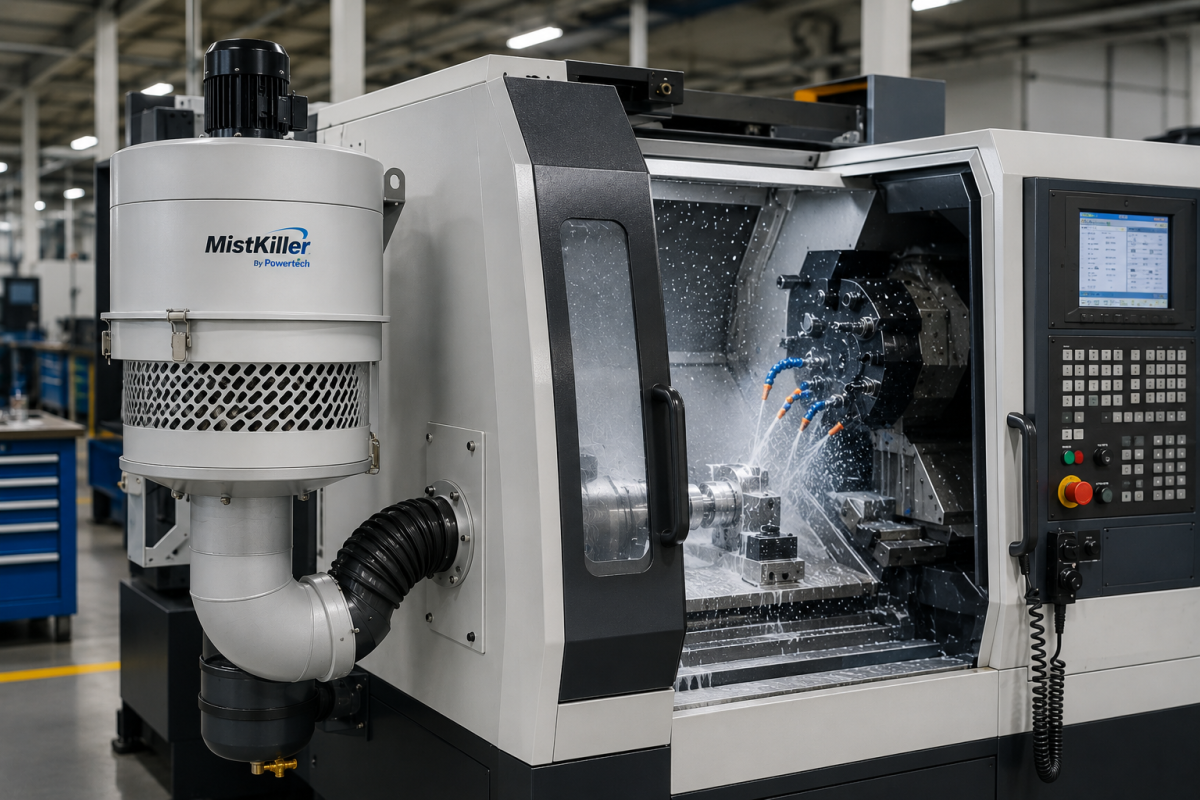
A properly designed mist collector CNC machine solution captures coolant mist directly at the source, preventing it from escaping into the surrounding environment. Effective oil mist collector systems improve air quality, protect machinery, reduce housekeeping requirements, and create a healthier workplace for machine operators.

Modern CNC machine ventilation systems are engineered to remove airborne coolant droplets before they settle on equipment or remain suspended in the air. By implementing efficient coolant mist extraction, manufacturers can improve operational efficiency while maintaining cleaner production environments.

With over 30 years of experience in industrial air pollution control, Powertech’s MistKiller centrifugal mist collectors provide reliable and energy-efficient solutions for extracting water-based coolant mist from CNC machining operations.

Key Takeaways

  1. CNC machining generates airborne coolant mist that should be captured at the source.
  2. A mist collector CNC machine improves air quality and machine cleanliness.
  3. Oil mist collectors reduce airborne contamination and slippery surfaces.
  4. Proper CNC machine ventilation enhances operator safety and equipment reliability.
  5. Effective coolant mist extraction lowers maintenance requirements and improves productivity.

The Problem: Airborne Coolant Mist in CNC Operations

During turning, milling, grinding, and machining processes, high-speed rotating tools atomize coolant into microscopic droplets.

Causes

  1. High spindle speeds
  2. Coolant spray systems
  3. Tool-workpiece interaction
  4. Enclosed machining centers opening during operation

Workplace Impact

  1. Reduced visibility around machines
  2. Oily residue on floors and equipment
  3. Increased housekeeping requirements
  4. Poor indoor air quality

Equipment Impact

  1. Electrical cabinet contamination
  2. Premature wear of machine components
  3. Build-up on sensors and controls
  4. Reduced equipment reliability

Technical Explanation: How Mist Collectors Work

Step 1: Mist Generation

During machining, coolant contacts rotating tools and workpieces.

This produces:

  1. Fine airborne droplets
  2. Larger coolant particles
  3. Aerosolized mist

Step 2: Source Capture

The mist collector draws contaminated air directly from the CNC enclosure.

Capturing mist before it escapes provides the highest efficiency.

Step 3: Centrifugal Separation

Powertech’s MistKiller uses centrifugal technology rather than disposable filters.

The rotating impeller:

  1. Separates coolant droplets
  2. Forces heavier particles outward
  3. Returns collected coolant to the machine

Centrifugal separation minimizes filter replacement costs.

Step 4: Clean Air Discharge

The cleaned air is discharged safely while recovered coolant can often be reused depending on system design.

Advantages of Centrifugal Mist Collectors

FeatureBenefit
No disposable filter mediaLower operating costs
Continuous operationMinimal maintenance
Coolant recoveryReduced fluid waste
Compact designEasy machine integration
Energy efficientLower power consumption

Applications

CNC Turning Centers

Continuous coolant spray during turning operations produces fine mist requiring localized extraction.

CNC Milling Machines

High spindle speeds generate airborne coolant that must be controlled.

Machining Centers

Multiple tool changes and coolant delivery systems increase mist generation.

Grinding Operations

Fine coolant aerosols require effective source capture and separation.

Precision Engineering

Maintaining clean indoor air improves product quality and operator comfort.

MistKiller: Powertech’s Centrifugal Mist Collector

Unlike conventional filter-based systems, MistKiller utilizes centrifugal separation technology specifically designed for water-based coolant mist generated in CNC machining operations.

Key Features

  1. High-efficiency centrifugal separation
  2. No disposable filters
  3. Low maintenance operation
  4. Compact machine-mounted design
  5. Continuous extraction during machining
  6. Coolant recovery capability

This makes MistKiller particularly suitable for industries seeking reliable and cost-effective coolant mist extraction.

Expert Insight

Powertech’s field experience has shown that many CNC facilities initially underestimate the impact of airborne coolant mist.

Properly installed centrifugal mist collectors consistently deliver:

  1. Cleaner machine enclosures
  2. Reduced maintenance downtime
  3. Improved operator comfort
  4. Lower housekeeping costs
  5. Better equipment longevity

Facilities that capture mist directly from the machine enclosure typically achieve significantly better results than relying solely on general ventilation.

What is a mist collector for a CNC machine?

A mist collector removes airborne coolant droplets and aerosols generated during machining operations before they enter the workspace.

How does a centrifugal mist collector work?

It uses centrifugal force to separate coolant droplets from the air without relying on disposable filters.

Is a MistKiller suitable for water-based coolant mist?

Yes. MistKiller is specifically designed for extracting water-based coolant mist generated by CNC machining processes.

Can collected coolant be reused?

In many applications, separated coolant can be returned to the machine depending on system configuration.

Do mist collectors reduce machine maintenance?

Yes. By preventing coolant build-up on equipment and surrounding surfaces, they reduce cleaning and maintenance requirements.

Conclusion

An effective mist collector CNC machine solution is essential for maintaining clean, safe, and productive machining environments. By implementing advanced oil mist collector technology, manufacturers can significantly improve CNC machine ventilation while reducing airborne coolant contamination. Powertech’s MistKiller centrifugal technology provides an efficient and low-maintenance approach to coolant mist extraction, offering superior performance for water-based coolant applications without the ongoing cost of disposable filters. For facilities looking to improve air quality, reduce maintenance, and enhance operational efficiency, engineered mist collection is an investment that delivers long-term value.