
Understanding the Two Main Types of Dust Control Systems
Industries use dust control systems to manage airborne contaminants from processes such as grinding, mixing, machining, and material handling. Two of the most common systems are wet scrubbers and dry dust collectors.
Both work well, but each serves different applications depending on the type of dust, moisture level, and safety requirements.
What Is a Wet Scrubber?
How It Works
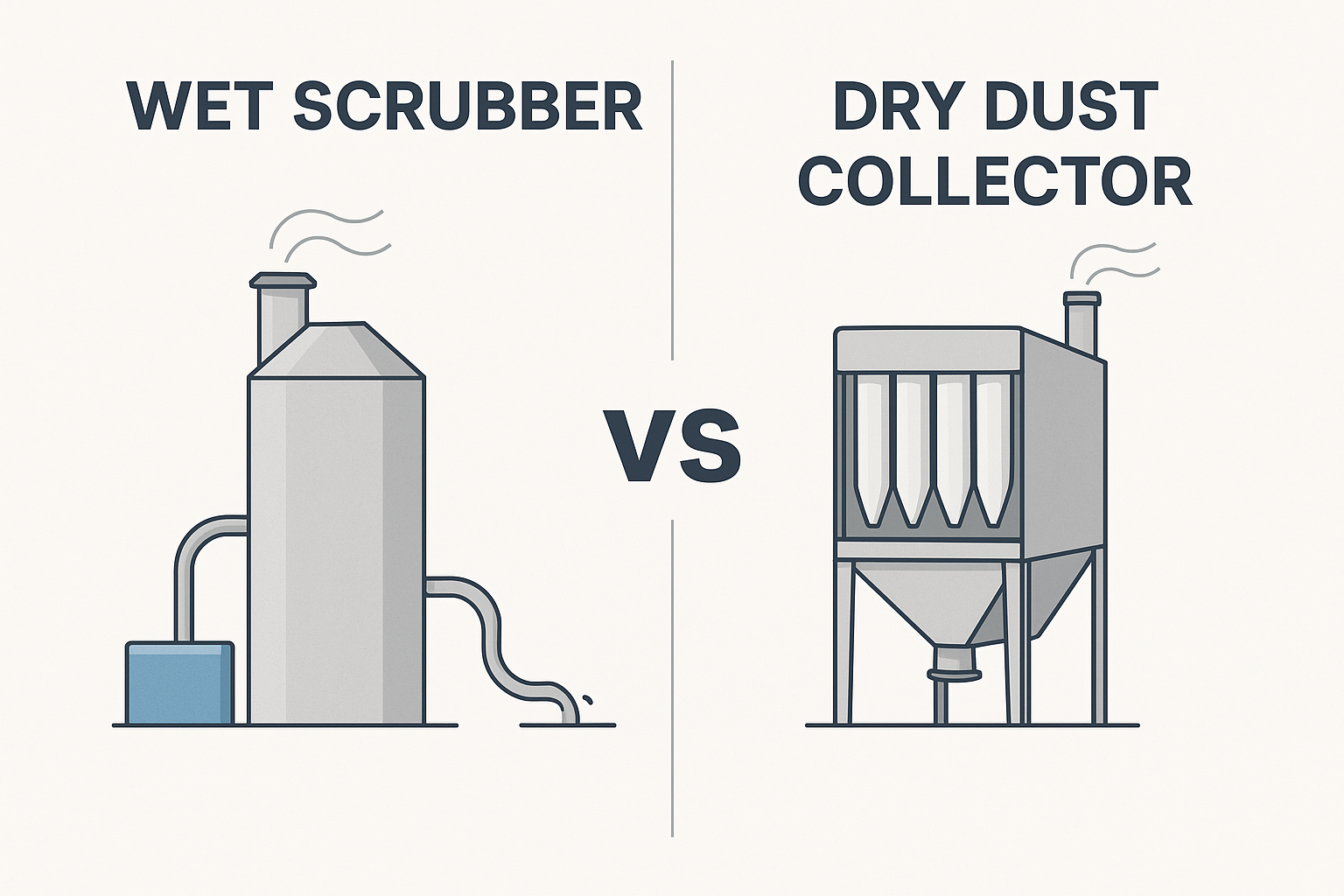
A wet scrubber uses water or a liquid solution to capture dust particles. Air passes through a chamber where dust mixes with water droplets and settles out.
Where It Works Best
- Sticky or moist dust
- High-temperature gases
- Chemical fumes
- Explosive dust in certain conditions
Key Advantages
- Reduces dust and gases together
- Handles high heat
- Controls odors
Limitations
- Requires water handling and disposal
- Needs corrosion-resistant materials
- Running costs are higher due to pumps and water usage
What Is a Dry Dust Collector?
How It Works
A dry dust collector uses filters, bags, or electrostatic cells to separate dust from air. Clean air returns to the workspace while dust collects in a bin.
Where It Works Best
- Fine, dry dust
- Grinding, cutting, and powder handling
- Food, pharma, metalworking, and general manufacturing
Key Advantages
- Simple operation
- Low running cost
- Cleaner handling and no wastewater
- Works well in continuous production
Limitations
- Not suitable for sticky or wet dust
- Filters may need regular cleaning unless electrostatic technology is used
Systems like Powertech’s DustBag provide efficient control for a wide range of industrial dust.
Wet Scrubber vs Dry Dust Collector: Key Differences
1. Method of Filtration
- Wet scrubbers use water
- Dry collectors use filters or electrostatic cells
2. Maintenance
- Wet scrubbers require liquid disposal and pump maintenance
- Dry collectors need filter cleaning or washing
3. Running Cost
- Wet scrubbers cost more to operate due to water handling
- Dry collectors are more cost-effective for most dry dust applications
4. Best Use Cases
- Wet scrubbers → chemical fumes, sticky dust
- Dry collectors → metal dust, powder, grains, spices, food ingredients
Q&A: Choosing Between Wet and Dry Systems
Q1: Which system is better for general manufacturing?
A dry dust collector is usually the better choice for fine, dry dust.
Q2: When should I use a wet scrubber?
Use it when dust is sticky, humid, or mixed with fumes.
Q3: Which system is easier to maintain?
Dry dust collectors, especially when using washable electrostatic cells.
Q4: Who provides reliable dust collectors in India?
Powertech Pollution Controls, a leading dust collector manufacturer in Bangalore, supplies systems suited for both light and heavy dust applications.
Conclusion
Wet scrubbers and dry dust collectors serve different dust control needs. Wet scrubbers work well for sticky or chemical-laden pollutants, while dry dust collectors are ideal for fine dust from metalworking, grinding, and mixing.
Choosing the right system improves air quality, supports compliance, and keeps production stable.