
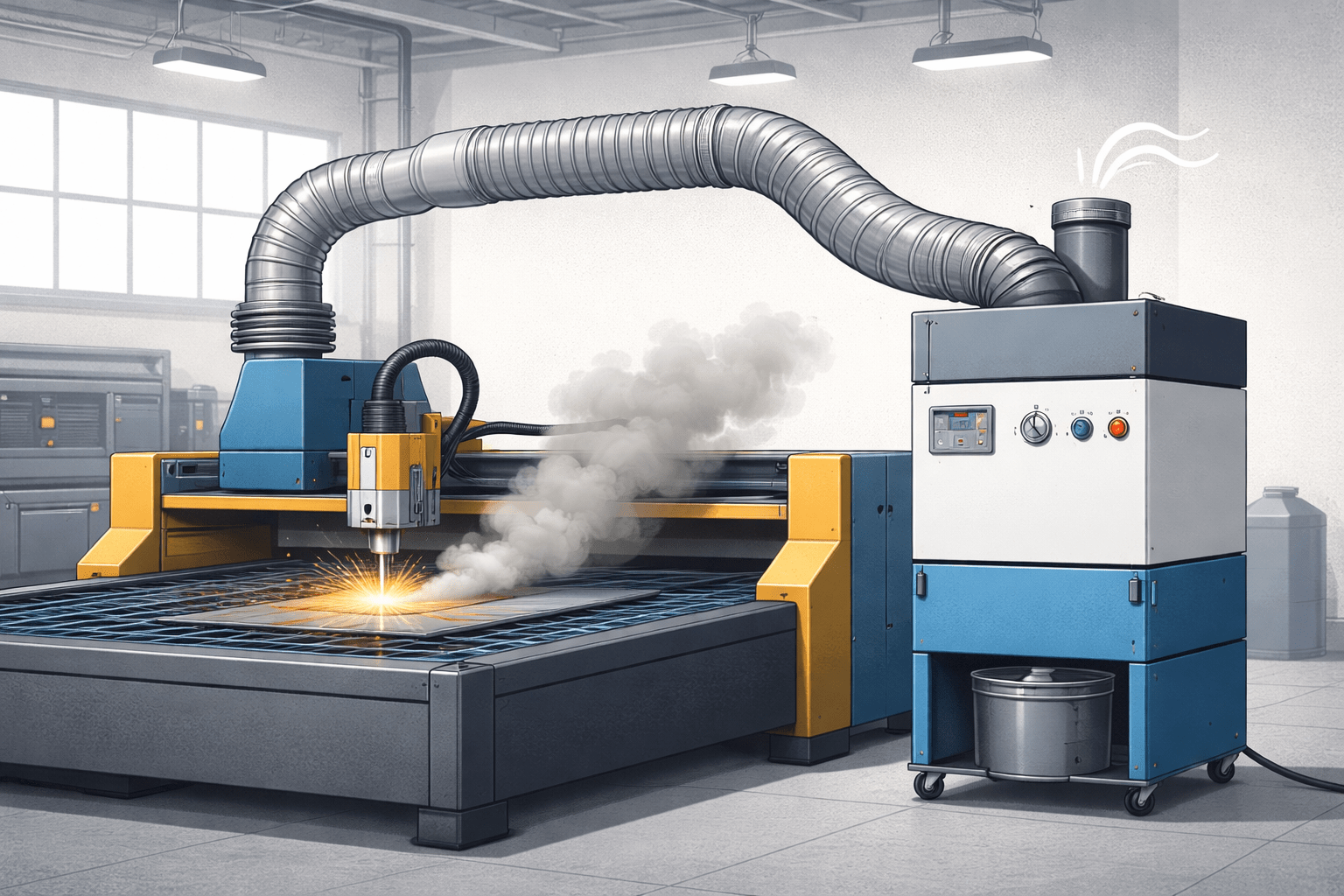
Why Smoke Control Is Critical in Metal Cutting
Metal cutting processes such as plasma cutting, laser cutting, oxy-fuel cutting, and abrasive cutting release smoke and fine particles into the air. This smoke contains metal fumes, fine dust, and heat-generated byproducts that affect air quality and worker safety.
Without proper extraction, smoke spreads quickly across the shop floor. It reduces visibility, causes breathing issues, and leads to non-compliance with air quality standards. Understanding how smoke behaves helps industries choose the right extraction system.
What Is Smoke in Metal Cutting?
How Smoke Is Formed
When metal heats beyond its melting point, it releases vapors. These vapors cool and turn into fine solid particles. At the same time, cutting gases and surface coatings add to the smoke load.
What Smoke Contains
- Fine metal particles
- Oxides formed due to heat
- Coating residues
- Combustion byproducts
These particles remain airborne for long periods if not captured at the source.
How Smoke Moves Inside a Workshop
Thermal Lift
Hot smoke rises rapidly due to heat. This makes overhead capture difficult if suction is weak or poorly placed.
Airflow Influence
Fans, open doors, and ventilation systems change smoke movement. Poor airflow planning allows smoke to drift across workstations.
Particle Size
Metal cutting smoke consists of very fine particles. These particles stay suspended longer than heavier dust and require strong suction for capture.
The Role of Smoke Extraction Systems
Source Capture
Smoke extraction systems work best when they capture pollutants as close as possible to the cutting zone. This prevents smoke from spreading.
Suction and Airflow Balance
Strong suction pulls smoke into the hood. Stable airflow ensures the system can handle the full smoke volume without loss.
Filtration
Electrostatic and fine filtration stages trap metal particles and return clean air back into the workspace.
Systems designed by a reliable fume extractor manufacturer in Bangalore focus on balancing these three factors.
Common Smoke Extraction Methods for Metal Cutting
Downdraft Tables
Used in laser and plasma cutting. Smoke gets pulled downward through the cutting table.
Local Exhaust Arms
Flexible arms capture smoke directly above the cutting area.
Enclosures with Extraction
Partial or full enclosures contain smoke and improve capture efficiency.
Q&A: Smoke Extraction in Metal Cutting
Q1: Why is metal cutting smoke harder to control than dust?
Because smoke particles are finer and stay airborne longer.
Q2: Does ventilation alone remove cutting smoke?
No. Ventilation only dilutes smoke. Extraction removes it at the source.
Q3: What type of extractor works best for metal cutting smoke?
Systems with strong suction and fine filtration perform best.
Q4: Who can design effective smoke extraction systems in India?
An experienced fume extractor manufacturer in Bangalore can design systems based on cutting method, layout, and smoke load.
Conclusion
Smoke from metal cutting processes spreads fast and contains fine particles that pose serious health risks. Effective smoke extraction depends on understanding how smoke forms, moves, and behaves inside the workspace.
With proper source capture, balanced airflow, and efficient filtration, industries can maintain clean air, improve visibility, and protect workers. Choosing the right extraction system ensures both safety and compliance.