
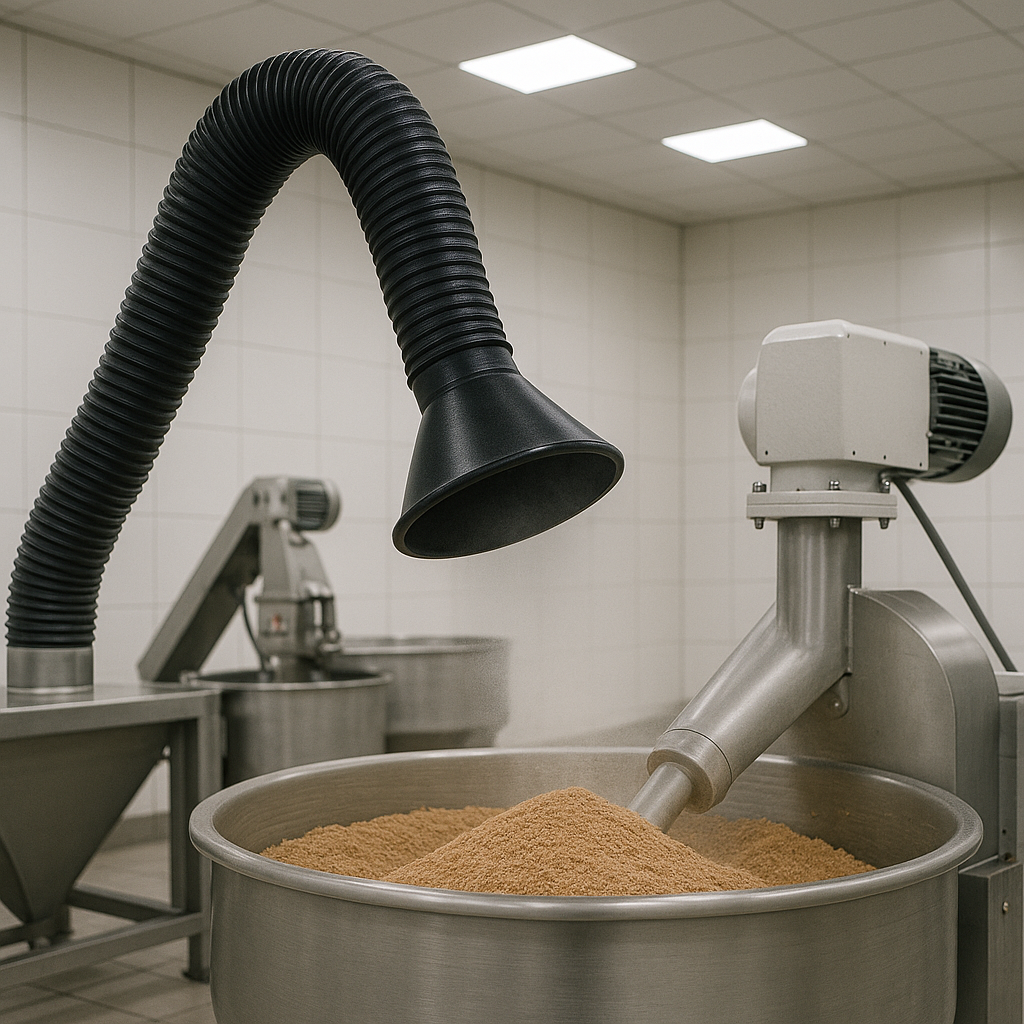
Understanding Air Quality Challenges in Food Production
Food production facilities must meet strict hygiene and safety standards. While focus is often placed on controlling contamination from raw materials and handling, air pollution inside the facility can be just as harmful. Dust, fumes, vapors, and other airborne particles can affect product quality, worker health, and compliance with regulations.
Common Sources of Air Pollution in Food Production
Several processes in food production like mixing and grinding can release various airborne pollutants.
- Dust from Raw Materials: Grains, flour, sugar, spices, and powdered ingredients release fine dust during handling, mixing, or packaging. This dust can linger in the air and settle on products and equipment. Additionally fine dust from particles like sugar can be hygroscopic and absorb the atmospheric moisture, making it sticky and difficult to clean.
- Steam and Cooking Vapors: Cooking processes when used in food production can generate steam, oil vapors, and sometimes smoke. Without a proper ventilation system, these pollutants can create condensation, increase humidity, and spread odors within the shopfloor. Additionally, the commonly used equipment like boilers and baking ovens can release gases like carbon dioxide, carbon monoxide and nitrogen oxides.
- Cleaning and Sanitizing Chemicals: Cleaning processes are done regularly in food processing plants to ensure high levels of cleanliness during the production. Many cleaning agents release fumes that can be harmful if inhaled. Over time, exposure can affect both worker health and the quality of stored products.
Risks of Poor Air Quality in Food Production
Poor air quality can lead to several problems in food production facilities:
- Product Contamination: Generated dust particles can settle on the raw material used in food production. This can lead to contamination of the final product, affecting taste, texture and safety.
- Health Issues for Workers: Dust, fumes, or chemical vapors can cause respiratory irritation or long-term health problems.
- Equipment Damage: Dust and moisture buildup can reduce machine efficiency and lifespan.
- Lack of Visibility: The floating dust generated during the processes can spread across the shopfloor and severely affect the visibility.
- Regulatory Non-Compliance: Failure to meet air quality standards can result in penalties or production shutdowns.
How to Prevent Air Pollution in Food Production
- Install Effective Dust Collection Systems: Making use of a dust collector that employs bag filters or, if necessary, a reverse-pulsed jet dust collector. These systems are capable of capturing fine particles from various food production processes. Additionally a reverse-pulsed jet system is a self-cleaning dust collector which requires less maintenance.
- Use Proper Ventilation for Cooking Areas: Local exhaust hoods and fume extraction systems can remove steam, smoke, and oil vapors before they spread into the workspace.
- Control Chemical Fumes: When using cleaning agents, ensure proper ventilation or make use of a chemical fume extractor to keep chemical vapors at safe levels.
- Maintain Combustion Equipment: Regular inspection and maintenance of ovens, boilers, and burners prevent leaks and ensure that gases are vented safely.
- Regular Air Quality Monitoring: Testing air quality helps identify problem areas and ensure that control systems are working effectively.
Conclusion
Air pollution in food production is a serious risk to product safety, worker health, and regulatory compliance. By identifying the sources of pollution and installing the right control systems, facilities can maintain clean air, protect their workforce, and ensure the quality of their products. Effective air management is not just a safety requirement — it is a key part of maintaining trust and efficiency in food manufacturing.