
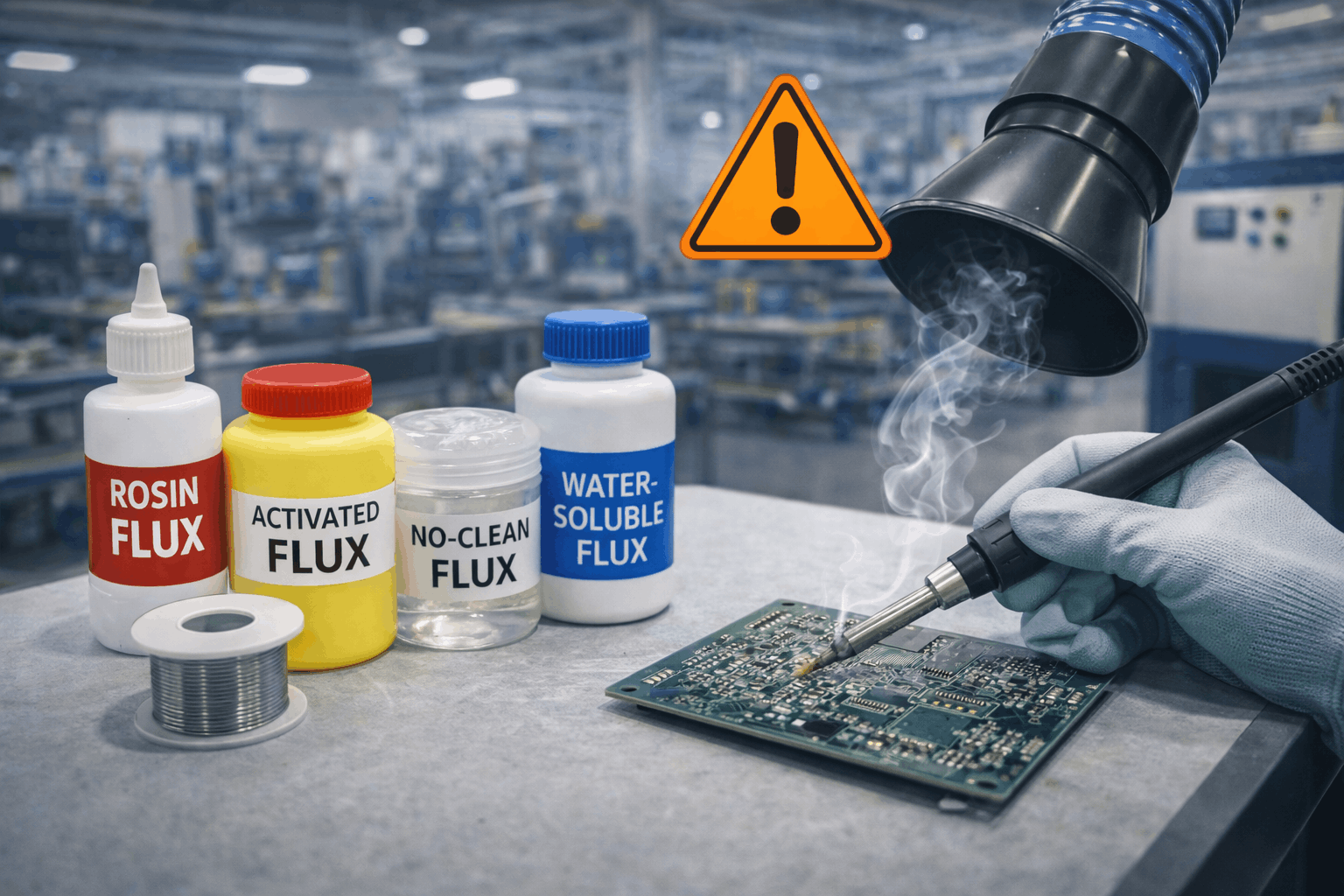
Why Flux Choice Matters for Air Quality
Flux plays a critical role in soldering. It cleans metal surfaces and helps solder flow correctly. However, when flux heats up, it releases fumes. These fumes directly affect indoor air quality, especially in electronics assembly areas with continuous soldering.
Understanding different flux types helps facilities control exposure and choose the right fume extraction approach.
What Happens When Flux Is Heated
Fume Generation
During soldering, flux burns and releases smoke made of fine particles and gases. These fumes rise quickly and stay close to the operator’s breathing zone.
Accumulation in Enclosed Areas
Electronics assembly lines often operate indoors with limited ventilation. Without proper extraction, fumes build up and spread to nearby stations.
Common Flux Types Used in Soldering
Rosin-Based Flux
Rosin flux is widely used in electronics soldering. When heated, it releases thick white fumes that cause eye and throat irritation. Long-term exposure affects breathing comfort.
Water-Soluble Flux
This flux type produces fumes that contain active chemicals. These fumes spread quickly and require effective source capture to prevent buildup.
No-Clean Flux
No-clean flux leaves minimal residue, but it still releases fumes during heating. Operators often underestimate its impact because the smoke appears lighter.
Activated Flux
Activated flux types clean aggressively but release stronger fumes. These fumes affect air quality faster than standard fluxes.
Impact of Flux Fumes on Indoor Air Quality
Breathing Discomfort
Operators inhale fumes directly during soldering. This leads to coughing, throat irritation, and shortness of breath over time.
Eye and Skin Irritation
Flux fumes irritate eyes and exposed skin, especially during long shifts.
Reduced Work Comfort
Poor air quality causes fatigue and reduces focus. This affects productivity and soldering accuracy.
Surface Contamination
Fumes settle on circuit boards, tools, and work surfaces. This increases cleaning effort and rework risk.
How a Soldering Fume Extractor Controls Flux Fumes
Source-Level Capture
A soldering fume extractor captures fumes directly at the soldering point. This prevents fumes from entering the breathing zone.
Consistent Air Quality
Continuous extraction keeps air quality stable across all soldering stations.
Cleaner Workstations
Effective fume control reduces residue buildup on boards and equipment.
A reliable soldering fume extractor manufacturer in Bangalore designs systems suited for different flux types and soldering densities.
Q&A: Flux and Air Quality in Soldering
Q1: Do all flux types produce harmful fumes?
Yes. All flux types release fumes when heated, even no-clean flux.
Q2: Is general ventilation enough for soldering fumes?
No. Ventilation only dilutes fumes. Extraction removes them at the source.
Q3: Does flux type affect extractor selection?
Yes. Stronger flux fumes require efficient source capture and filtration.
Q4: When should a soldering fume extractor be mandatory?
Any indoor soldering operation with repeated or continuous soldering needs extraction.
Conclusion
Different flux types produce different levels of fumes, but all impact indoor air quality. In high-density electronics assembly, these fumes build up quickly and affect health, comfort, and product quality.Using a soldering fume extractor ensures fumes stay away from workers and sensitive components. Effective fume control starts with understanding flux behavior and capturing fumes at the source.