
Why Proper Installation Matters
Installing a fume extraction system is one of the most effective steps an industry can take to improve air quality and worker safety. However, even the best fume extractor can underperform if installed incorrectly. Small installation errors can lead to poor suction, high energy use, and incomplete fume capture. This post explains the most common installation mistakes and how to avoid them.
1. Incorrect Placement of Suction Hoods
The Problem:
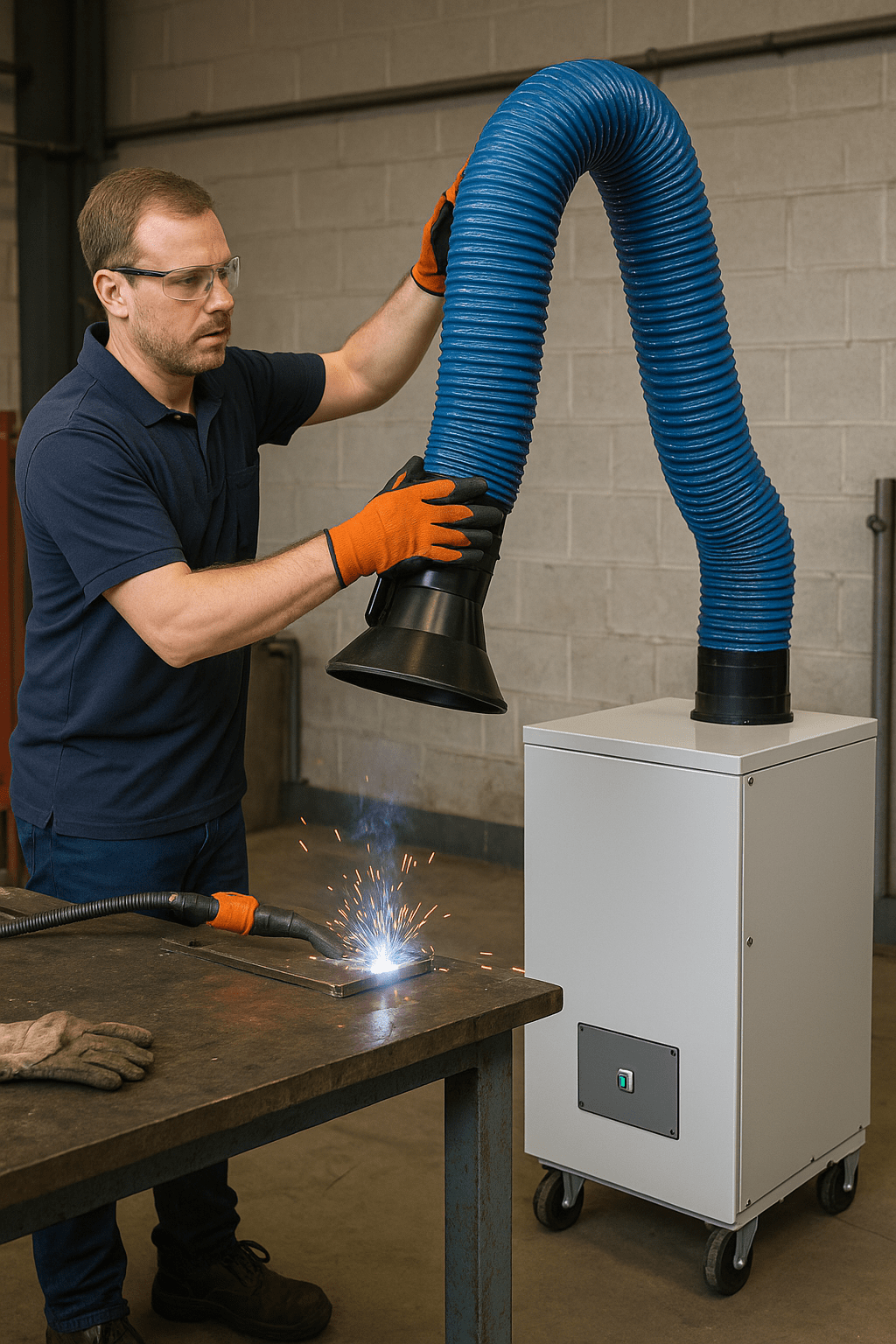
Placing the suction hood too far from the fume source drastically reduces capture efficiency. In welding, soldering, or grinding applications, fumes disperse quickly — and once they mix with room air, they become difficult to extract.
The Fix:
Position the suction hood as close as possible to the emission source. Adjustable or flexible arms allow precise placement without interfering with the work process. Powertech’s Fume Extraction Arm offers such flexibility, making it ideal to be paired with welding and soldering fume extractors.
2. Undersized or Oversized System Selection
The Problem:
Choosing a system with incorrect airflow capacity leads to inefficiency. An undersized unit will not capture all fumes, while an oversized one wastes energy.
The Fix:
Consult an experienced fume extractor manufacturer like Powertech Pollution Controls. They assess your process type, fume volume, and workspace layout before recommending a system with the right capacity.
3. Poor Duct Design
The Problem:
Sharp bends, long ducts, or narrow pipes increase air resistance and reduce suction power. This can cause uneven extraction or noise issues.
The Fix:
Use smooth, short duct paths with gradual bends. Duct sizing should match the extractor’s airflow specifications. Proper design ensures steady airflow and better energy efficiency.
4. Ignoring Filter Accessibility
The Problem:
In some installations, filters or electrostatic cells are placed in areas that are hard to reach. This makes cleaning and maintenance inconvenient, leading to system neglect and poor performance.
The Fix:
Ensure that filter housings are accessible from the front or side of the unit. Experienced welding fume extractor manufacturers like Powertech design systems that are easy to service, keeping maintenance simple and efficient.
5. Inadequate Ventilation or Exhaust Design
The Problem:
Releasing filtered air into a poorly ventilated space can lead to air recirculation and lingering contaminants.
The Fix:
Make sure your extraction system vents clean air in a well-ventilated area or outside the facility, depending on your process and compliance requirements.
Q&A: Common Questions About Installation
Q1: Who should handle fume extractor installation?
Installation should always be handled by trained technicians or directly by the fume extractor manufacturer to ensure proper setup and testing.
Q2: Can one fume extractor handle multiple workstations?
Yes, but it depends on the model and airflow. Powertech offers custom designed systems that are tailor-made for each specific requirement.
Q3: What happens if installation errors are not corrected?
Poor installation leads to incomplete fume capture, reduced filter life, and higher energy costs — often negating the benefits of the system.
Q4: How do I verify proper installation?
Check airflow at each extraction point, ensure smooth duct design, and confirm that suction hoods are positioned close to the fume source.
Conclusion
A fume extractor performs best only when installed correctly. Avoiding mistakes such as poor hood placement, improper duct design, and difficult filter access ensures long-term efficiency and safety. Powertech Pollution Controls is an experienced fume extractor manufacturer in Bangalore and partnering with us ensures your system is designed and installed right the first time.