
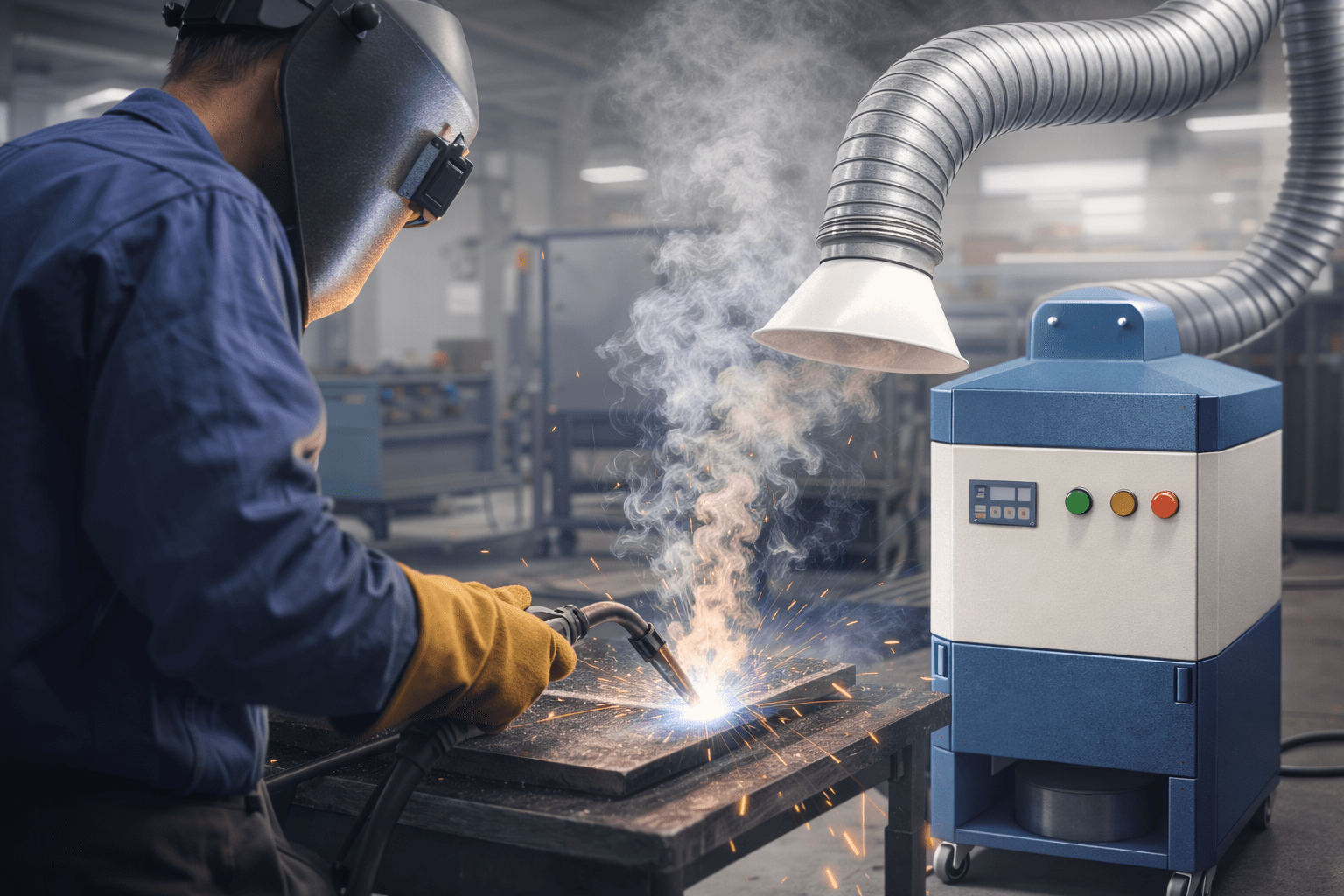
Why Welding Fumes Are a Serious Health Concern
Welding creates fumes that contain fine metal particles and gases. These fumes enter the lungs when workers breathe. Over time, repeated exposure causes serious health problems. Many of these risks do not appear immediately. They build slowly and affect workers years later.
This makes fume control a critical part of workplace safety.
What Welding Fumes Contain
Common Components
Welding fumes usually contain:
- Fine metal particles
- Metal oxides formed during heating
- Gases released from coatings and fillers
These particles are small enough to reach deep into the lungs. Once inside, the body struggles to remove them.
Long-Term Health Risks from Welding Fumes
Respiratory Problems
Long-term exposure damages lung tissue. Workers may develop chronic cough, breathing difficulty, and reduced lung capacity.
Metal Exposure Effects
Certain metals affect the nervous system and internal organs. Continuous exposure increases the risk of long-term illness.
Reduced Immune Response
Poor air quality weakens the body’s ability to fight infections. This leads to frequent illness and slower recovery.
Increased Absenteeism
Health issues result in more sick leave and lower productivity across teams.
How a Welding Fume Extractor Reduces These Risks
Source Capture
A welding fume extractor captures fumes directly at the welding point. This prevents fumes from spreading across the workspace.
Reduced Inhalation
By removing fumes at the source, the system limits how much contaminated air workers breathe.
Consistent Air Quality
Extraction systems maintain stable air conditions throughout the shift. This reduces long-term exposure.
Cleaner Work Environment
Less airborne fume means cleaner floors, machines, and work surfaces. This improves overall hygiene.
Why Long-Term Protection Matters More Than Short-Term Comfort
Many welding fumes do not cause immediate discomfort. Workers may not notice the damage until years later. Long-term protection prevents hidden risks from becoming permanent health problems.
Installing a welding fume extractor protects both current workers and future employees.
Q&A: Welding Fumes and Worker Health
Q1: Are welding fumes dangerous even at low levels?
Yes. Long-term exposure to low levels still increases health risks.
Q2: Can general ventilation replace a welding fume extractor?
No. Ventilation only dilutes fumes. Extraction removes them at the source.
Q3: Does fume extraction improve productivity?
Yes. Cleaner air improves focus, comfort, and attendance.
Q4: When should fume extraction be mandatory?
Any indoor welding operation should use source-level extraction.
Conclusion
Welding fumes pose serious long-term health risks when left uncontrolled. These risks affect lungs, overall health, and productivity. A welding fume extractor removes fumes before workers inhale them. This protects health, improves air quality, and supports safer operations.
Long-term safety starts with clean air at the source.