
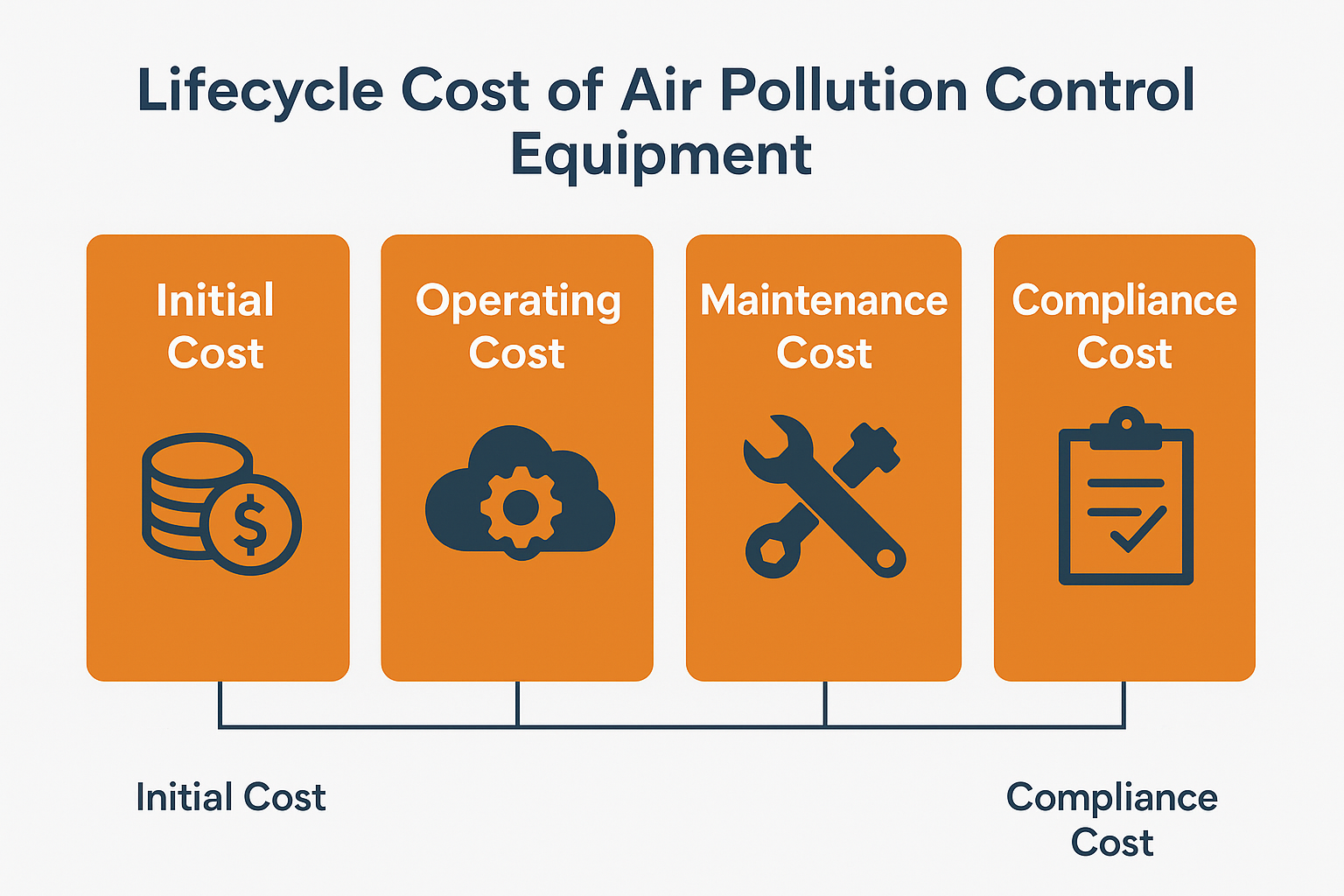
Why Lifecycle Cost Matters More Than Initial Cost
Most industries focus on the purchase price when selecting air pollution control equipment. However, the real expense comes from operating, maintaining, and servicing the system over several years. A lifecycle cost analysis (LCCA) helps companies evaluate the total cost of ownership and choose equipment that offers long-term savings and performance.
For systems such as fume extractors, dust collectors, and mist collectors, understanding lifecycle cost is essential to keeping operations efficient and compliant with air quality standards.
1. Initial Equipment Cost
What It Includes:
- Purchase price
- Installation cost
- Ducting and electrical work
- Optional accessories (flexible arms, hoods, etc.)
Why It’s Only One Part of the Equation:
A lower upfront cost may seem attractive, but ongoing maintenance and frequent filter changes can make the system more expensive in the long run.
2. Operating Costs
Key Operating Expenses:
- Power consumption
- Fan and motor performance
- Extraction capacity over time
Systems like Powertech’s FumeKiller® run with stable airflow and low power usage, reducing operational costs year after year.
3. Maintenance Costs
What Drives Maintenance Costs:
- Filter replacements
- Cleaning frequency
- Downtime for servicing
Electrostatic systems such as FumeKiller® and MistKiller® have washable components, reducing the cost of consumables and minimizing downtime. Over several years, this creates substantial savings.
4. Filter Replacement Costs
Why This Is Important:
Many mechanical systems use HEPA or cartridge filters that require frequent replacement. These recurring costs add up quickly.
Cost Advantage With Electrostatic Filtration:
Electrostatic filters used in Powertech systems are reusable. This reduces long-term expenses for industries using:
5. Downtime and Productivity Loss
How Poor Filtration Increases Costs:
If systems fail or clog often, production stops for cleaning and repair. Each hour lost increases the actual cost of ownership.
Reliable units help maintain uninterrupted operations.
6. Compliance Costs and Penalties
Why Compliance Matters:
Failing to meet CPCB air quality norms may result in penalties, legal action, or forced shutdowns. High-quality extraction systems reduce this risk.
Investing in robust air filtration helps industries avoid compliance-related costs altogether.
Q&A: Common Questions About Lifecycle Cost
Q1: Why is lifecycle cost analysis important?
It helps companies understand the long-term value of equipment instead of only focusing on the purchase price.
Q2: Are electrostatic systems cheaper in the long run?
Yes. Washable filtration cells reduce replacement costs and maintain steady airflow.
Q3: What equipment has the lowest lifecycle cost?
Systems like the FumeKiller® and MistKiller®, developed by Powertech, are designed for low maintenance and high efficiency, making them cost-effective over many years.
Q4: Who manufactures cost-efficient fume extractors in Bangalore?
Powertech Pollution Controls, a trusted manufacturer of welding fume extractors and soldering fume extractors in Bangalore, offers systems built for long-term performance and low lifecycle cost.
Conclusion
A lifecycle cost analysis helps industries make informed decisions about their air pollution control equipment. The true cost extends far beyond the initial purchase and includes power usage, filter replacements, maintenance, downtime, and compliance.As a leading fume extractor manufacturer in Bangalore, Powertech Pollution Controls designs systems that reduce operating and maintenance costs while delivering reliable performance for welding, soldering, dust, and mist extraction needs.