
Clearing Misconceptions About Mist Collectors
Mist collectors have a wide range of uses in engineering and manufacturing units to capture oil mist, coolant mist, and fine droplets produced during machining. However, there are still many misconceptions with regard to these systems and believing these myths often leads to poor decisions about installation, operation, and maintenance. Understanding the facts helps industries make better use of mist collectors and keep workplaces safe.
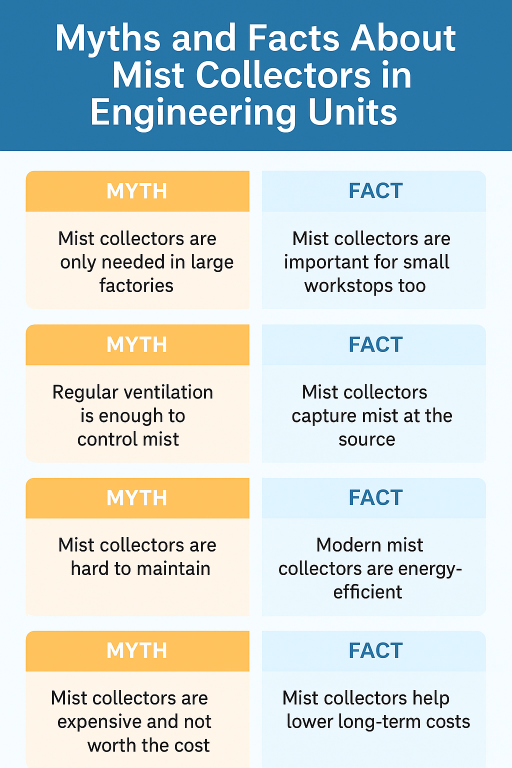
Myth 1: Mist Collectors Are Only Needed in Large Factories
Fact:
Mist collectors are important for both small workshops and large plants. Even a single CNC machine can release enough mist to affect the air quality within the shopfloor. Installing a compact mist collector in a small unit can prevent exposure and protect both the health of the workers and the equipment.
Myth 2: Regular Ventilation Is Enough to Control Mist
Fact:
General ventilation can dilute pollutants but cannot capture fine oil or coolant mist at the source. Mist collectors are designed to pull contaminated air directly from machining areas and filter it before releasing clean air. Relying only on ventilation leaves pollutants in circulation.
Myth 3: Mist Collectors Consume Too Much Power
Fact:
Modern mist collectors are energy-efficient and designed to run continuously without high power costs. In fact, by preventing mist buildup on machines and surfaces, they reduce maintenance downtime and save energy in the long run.
Myth 4: Mist Collectors Are Hard to Maintain
Fact:
Maintenance is simple if done on schedule. Most mist collectors have reusable or washable filters, while others use self-cleaning mechanisms. Routine checks and cleaning keep the system working efficiently without requiring heavy effort.
Myth 5: Mist Collectors Are Expensive and Not Worth the Cost
Fact:
While there is an initial investment, mist collectors reduce long-term costs by protecting machines, improving worker health, and lowering the chance of accidents caused by slippery floors. Over time, the system pays for itself through reduced maintenance and higher productivity.
Conclusion
Mist collectors are not just optional equipment but an essential part of air quality management in engineering units. Clearing the myths around their use highlights the real value they provide in safety, compliance, and cost savings. Choosing the right mist collector and maintaining it properly ensures clean air and smoother operations in any engineering setup.