
Introduction
The performance of any fume extraction system depends not only on its design but also on how well it is maintained over time. In industrial environments, welding fume extractors are continuously exposed to particulate loading, pressure fluctuations, and operational wear. Without proper upkeep, even a well-designed system can lose efficiency, leading to poor air quality and increased operational costs.
Effective welding fume extractor maintenance ensures consistent airflow, optimal filtration efficiency, and long-term system reliability. Neglecting maintenance often results in clogged filters, reduced suction, and increased energy consumption.
A structured approach to industrial fume extraction maintenance helps identify issues early and prevents system failure. With over 30 years of experience, Powertech has observed that regular maintenance practices significantly improve welding ventilation maintenance outcomes and extend equipment life across industrial applications.
Key Takeaways
- Regular welding fume extractor maintenance ensures consistent system performance.
- Filter condition is the most critical factor in maintaining efficiency.
- Preventive maintenance reduces downtime and operational costs.
- Monitoring airflow and pressure drop helps detect issues early.
The Problem: Neglected Maintenance
Many industrial facilities install extraction systems but fail to maintain them properly.
Causes
- Lack of scheduled maintenance routines
- Delayed fume extractor filter replacement
- Ignoring pressure drop indicators
- Poor inspection practices
Workplace Impact
- Reduced airflow and suction efficiency
- Accumulation of fumes in the workspace
- Increased energy consumption
- Frequent system breakdowns
Safety Risks
According to the Occupational Safety and Health Administration (OSHA), inadequate ventilation maintenance can expose workers to hazardous airborne contaminants.
The National Institute for Occupational Safety and Health (NIOSH) highlights the importance of maintaining ventilation systems to ensure effective contaminant control.
Technical Explanation: Maintenance Process
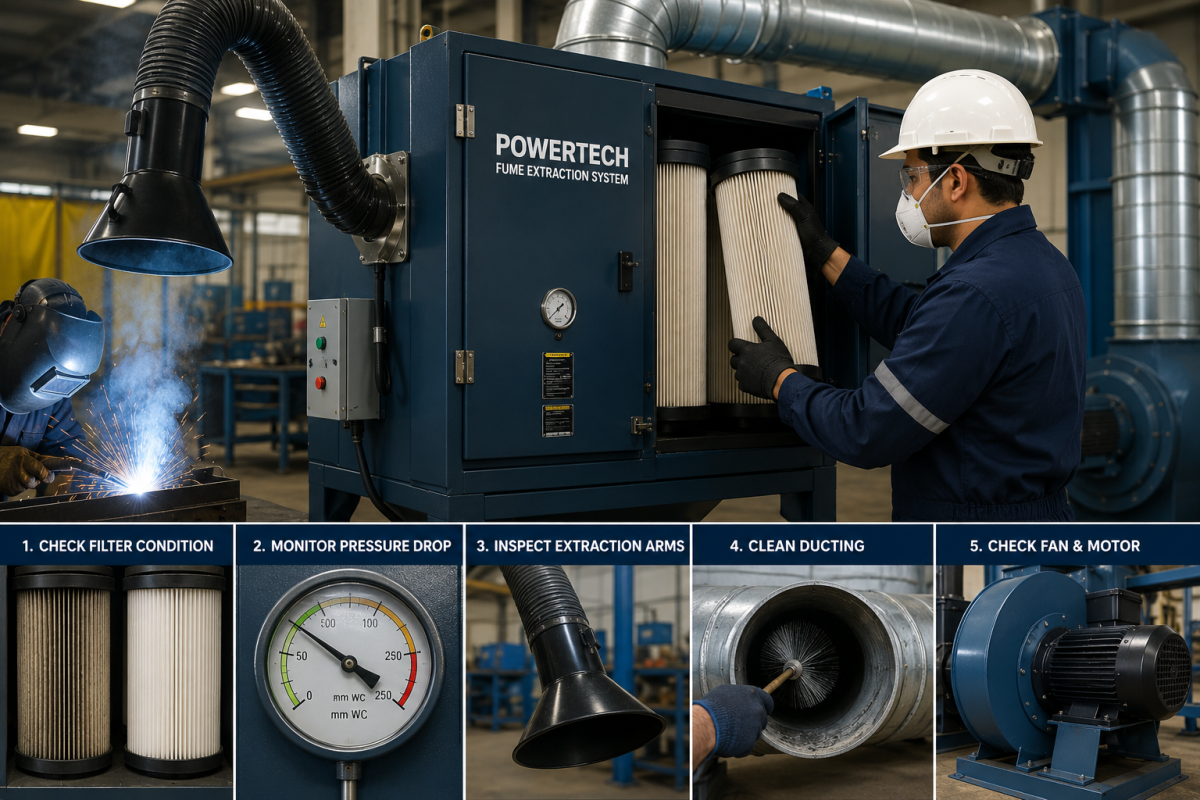
Step 1: Monitor Filter Condition
Filters are the core component of the system.
- Check pressure drop across filters
- Inspect for clogging or damage
- Replace filters when required
Fume extractor filter replacement should be based on performance, not just time intervals.
Step 2: Inspect Airflow Performance
Ensure the system is delivering the required airflow.
- Measure airflow at extraction points
- Check suction levels
- Identify any drop in performance
Step 3: Clean Ducting and Components
Ducts can accumulate dust over time.
- Inspect for buildup
- Clean ducts periodically
- Ensure no blockages
Step 4: Check Fans and Motors
Fans are critical for maintaining airflow.
- Inspect for wear and vibration
- Check motor performance
- Ensure proper alignment
Step 5: Inspect Extraction Arms and Hoods
Proper positioning and condition are essential.
- Check for damage or leaks
- Ensure correct positioning
- Verify flexibility and stability
Maintenance Schedule Guidelines
| Component | Frequency | Action |
|---|---|---|
| Filters | Monthly / as required | Inspect & replace |
| Ducting | Quarterly | Clean & inspect |
| Fans & Motors | Monthly | Check performance |
| Extraction Arms | Weekly | Inspect positioning |
| System Performance | Continuous | Monitor airflow |
Practical Industrial Applications
Fabrication Shops
- Frequent filter checks due to high usage
- Regular cleaning of extraction arms
Automotive Manufacturing
- Scheduled preventive maintenance programs
- Monitoring of centralized systems
Maintenance Workshops
- Portable system checks
- Periodic filter replacement
Heavy Engineering
- High dust load requires frequent maintenance
- Focus on duct cleaning and filter performance
Expert Insight
From Powertech’s experience, the most common issue in welding ventilation maintenance is delayed filter replacement.
Key observations:
- A clogged filter reduces airflow significantly
- Increased energy consumption is often a sign of maintenance issues
- Preventive maintenance is more cost-effective than reactive repairs
In multiple industrial installations, implementing structured maintenance schedules has improved system efficiency and reduced downtime.
Based on pressure drop and usage, typically when airflow performance starts to decline.
Filter condition and airflow monitoring.
Yes, it can significantly reduce efficiency and increase operational costs.
By measuring suction and monitoring pressure drop.
Yes, it ensures consistent performance and extends system life.
Effective welding fume extractor maintenance is essential for ensuring consistent performance, safety, and efficiency in industrial environments. Without proper upkeep, even the best-designed systems can fail to deliver the required results. By implementing structured industrial fume extraction maintenance practices, ensuring timely fume extractor filter replacement, and maintaining proper airflow, industries can significantly improve system reliability. With decades of experience, Powertech emphasizes preventive maintenance as a key factor in achieving long-term performance and effective welding ventilation maintenance.