
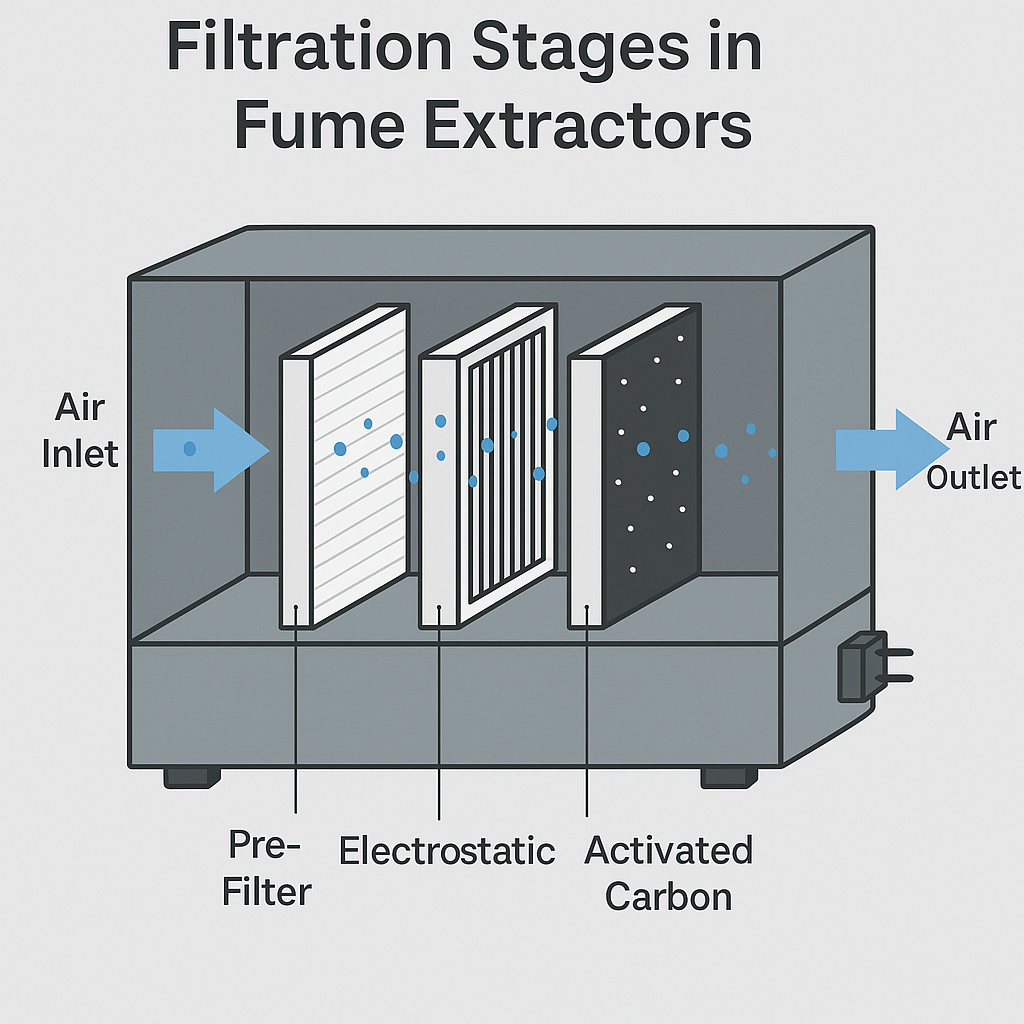
Why Filtration Stages Matter in Fume Extraction
Every industrial process that involves welding, soldering, grinding, or machining releases airborne pollutants. A fume extractor removes these contaminants and returns clean air to the workspace.
What makes a fume extractor effective is not just its suction power, but also the quality and sequence of its filtration stages.
Each filtration stage targets a specific type of pollutant — from large dust particles to fine fumes and smoke. Understanding how these stages work helps industries choose the right system for their process.
1. Pre-Filter Stage – Capturing Large Particles
Purpose:
The pre-filter removes larger dust and debris before they reach the main filter. This extends the life of finer filters and ensures steady airflow.
Used In:
- Welding and grinding operations
- Applications with visible dust or metal flakes
Maintenance Tip:
Clean or replace pre-filters regularly to prevent airflow blockage and maintain system efficiency.
2. Electrostatic or Mechanical Filtration Stage – Capturing Fine Fumes
Purpose:
At this stage, fine fumes, smoke, and mist particles are captured. Depending on the system design, this may involve:
- Electrostatic filtration (as used in Powertech’s FumeKiller®): Electrostatic filters charge airborne particles and trap them on collector plates.
- Mechanical filtration: Uses layered filters like HEPA or activated carbon to trap fine particles.
Used In:
- Soldering, welding, and CNC machining
- Processes generating oil mist, flux smoke, or chemical vapors
3. Activated Carbon Stage – Removing Odors and Gases
Purpose:
Activated carbon filters absorb odors and gaseous pollutants that other filters cannot capture. This makes the air safer and more comfortable for workers.
Used In:
- Electronics manufacturing
- Chemical soldering and coating applications\
4. Final Stage – Air Polishing and Recirculation
Purpose:
The last filtration stage ensures that the air released back into the workspace meets safety and environmental standards. Systems built by Powertech Pollution Controls, a leading fume extractor manufacturer in Bangalore, achieve CPCB-compliant air purity through multi-stage filtration.
Q&A: Common Questions About Filtration in Fume Extractors
Q1: How many filtration stages should a good fume extractor have?
A: Most industrial extractors have two to four stages, depending on the type of pollutant and industry requirements.
Q2: What’s the difference between electrostatic and HEPA filters?
A: Electrostatic filters are washable and reusable, while HEPA filters are disposable but capture even finer particles. Powertech’s FumeKiller® uses electrostatic technology for low-maintenance operation.
Q3: Do all extractors include activated carbon filters?
A: Not all. They’re mainly used when odor and gas removal are important, such as in soldering applications.
Q4: Who manufactures reliable multi-stage fume extractors in India?
A: Powertech Pollution Controls, a welding fume extractor manufacturer in Bangalore, designs advanced multi-stage extractors like the FumeKiller, MistKiller, and DustBag to meet various industrial needs.
Conclusion
The effectiveness of a fume extractor depends on how well its filtration stages work together. From pre-filters that catch larger particles to electrostatic and carbon filters that handle fine fumes and odors, every stage plays a crucial role in maintaining clean air.As a leading fume extractor manufacturer in India, Powertech Pollution Controls continues to provide reliable and CPCB-compliant air filtration systems for welding, soldering, and general manufacturing applications.