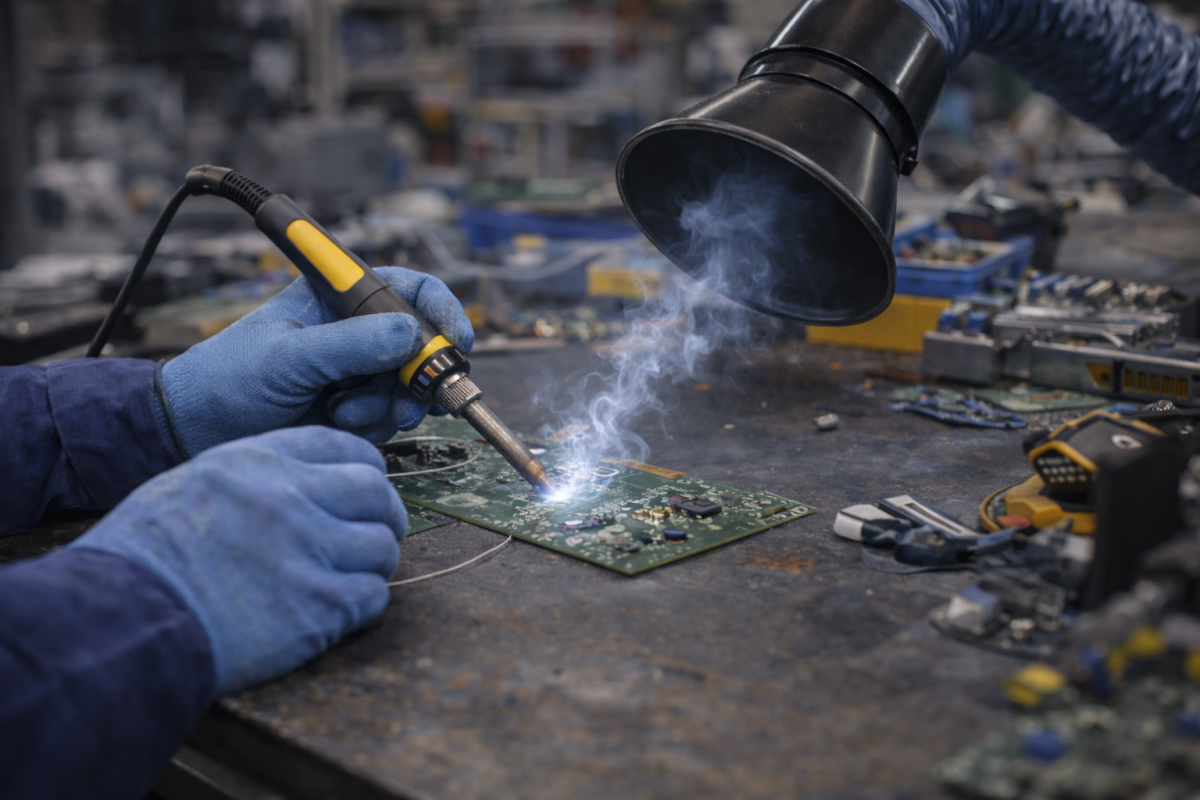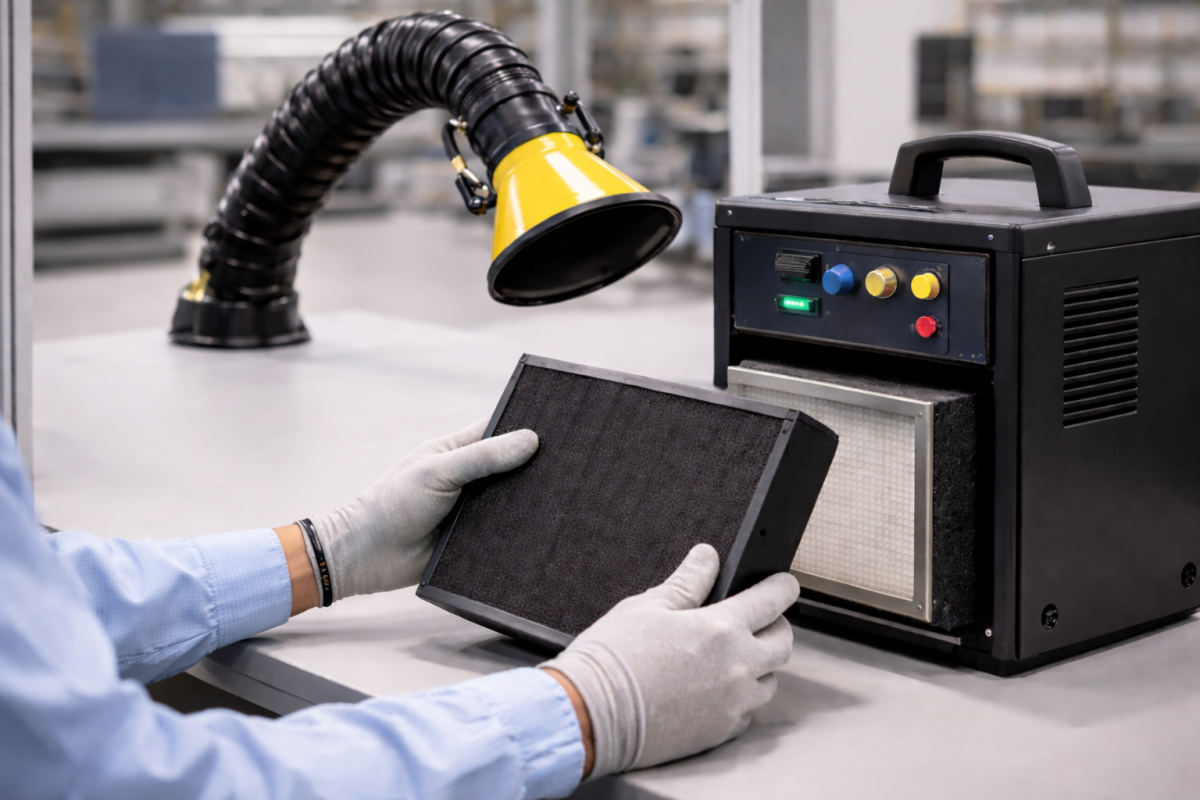
Soldering fume extractors get rid of smoke and flux fumes from places where electronics are worked on. Over time, filters gather dust and other particles, which slows down the flow of air. The system will slowly lose its ability to catch fumes if it is not maintained.
Regular maintenance makes sure the system works well and gets rid of fumes before they get to the operator’s breathing zone.
A soldering fume extractor that is maintained in good running condition helps keep the air clean, the airflow steady, and the workstation running smoothly.
Why Maintenance is Important
Most of the fumes that come out during soldering come from flux. These fumes have very small particles in them that get stuck in filters. If filters get clogged:
- The air flow rate drops.
- Fumes escape from getting captured.
- Smoke spreads all over the work area.
Operators might see smoke hanging around the soldering tip. This is often the first sign that maintenance is overdue.
Check the airflow often
Keep an eye on the suction at the nozzle
There should be a steady flow of air at the capture nozzle. If the suction isn’t strong, the filters might be partly blocked.
An easy way to check is to watch how quickly smoke moves toward the nozzle while soldering.
Keep an eye on changes in airflow noise
The impeller may have to work harder when the filters get clogged. This could make strange sounds or cause vibrations.
Any sudden change in the sound of the airflow should be checked at the earliest.
Change the filters on a schedule
The most important part of a soldering fume extractor is the filters. A lot of systems have more than one stage of filtration, like:
- Pre-filters for bigger bits
- HEPA filters for small particles
- Filters made of activated carbon for flux fumes
The manufacturer has a maintenance schedule that tells you when to replace each stage. For example, Powertech Pollution Controls is a soldering fume extractor manufacturer in Bangalore that regularly helps various facilities in figuring out the right replacement cycle based on how much soldering is done.
Clean the Extraction Arms and Nozzles
Inside nozzles and flexible arms, flux residue can build up.
Inspect the Capture Hood
Dust and other things may block the airflow at the hood opening. Clean the hood surface often.
Check the movement of the flexible arm
Operators need to be able to move the extraction arms easily so they can get them close to the soldering point.
If the arm gets stiff, the operators might have put it too far away from the joint. This makes it less effective at capturing.
Check the connections between the ducts
Duct joints must stay sealed in systems that are connected to central extraction units. Loose connections can:
- Reduce airflow
- Allow fumes to escape
- Put more load on the system fan
Regular checks help find leaks early.
Keep the fan and motor in good shape.
The fan moves air through the whole extraction system.
Checks for maintenance should include:
- Cleaning the fan blades
- Checks on the motor
- Checks of electrical connections
If the fan stops working, the airflow at the soldering point will also stop.
Train Operators How to Properly Position the Nozzle
Maintenance is not just a technical job. The way an operator does their job also affects performance.
The extraction nozzle should stay close to the soldering point but not get in the way of hand movement. Fumes escape before they can be captured if the nozzle is too far away.
Simple training for operators helps keep the system running well.
Q&A
Q1. How often do you need to change the filters in a soldering fume extractor?
- The amount of soldering and the size of the filter will determine when it needs to be replaced. Regular checks help figure out the right time.
Q2. What is the first sign that something isn’t being taken care of?
- Smoke that stays near the soldering joint instead of moving toward the extractor.
Q3. Can filters that are full of dirt hurt the system?
- Yes. Blocked filters put more strain on the fan and may shorten the life of the system.
Q4. Do small soldering stations need to be taken care of as well?
- Yes. Even small, portable units need to have their filters checked and changed on a regular basis.
Conclusion
In places where electronics are put together, soldering fume extractors work all the time. As time goes on, filters collect particles and the flow of air slows down.
The system works best when it is checked regularly, the filters are changed on time, and it is cleaned properly.
A soldering fume extractor that is well-maintained keeps the air clean, protects workers, and helps with consistent soldering.