
Why Preventive Maintenance Is Important
Mist collectors and dust collectors play a key role in keeping industrial air clean. They control oil mist from machining and dust from grinding, mixing, and material handling. When these systems do not receive regular care, their performance drops. This leads to poor air quality, higher energy use, and unexpected downtime.
Preventive maintenance helps systems run efficiently and extends equipment life.
Common Problems Caused by Poor Maintenance
Reduced Suction
Clogged filters or collection elements restrict airflow. This reduces capture efficiency.
Higher Power Consumption
Fans work harder when airflow is blocked. This increases energy usage.
Dust or Mist Leakage
Worn seals and overfilled bins allow pollutants to escape back into the workspace.
Unplanned Breakdowns
Neglected systems fail without warning, causing production delays.
Preventive Maintenance Tips for Mist Collectors
Clean Collection Cells Regularly
Oil mist builds up on collection surfaces. Clean electrostatic cells or filter elements as per the operating schedule.
Check Drain Lines
Blocked drains cause oil to re-enter the airflow. Ensure drain paths remain clear.
Inspect Fan and Motor Operation
Listen for unusual noise and check for vibration. These signs often point to imbalance or wear.
Monitor Airflow
A sudden drop in airflow usually indicates fouling or blockage. Address it early.
Preventive Maintenance Tips for Dust Collectors
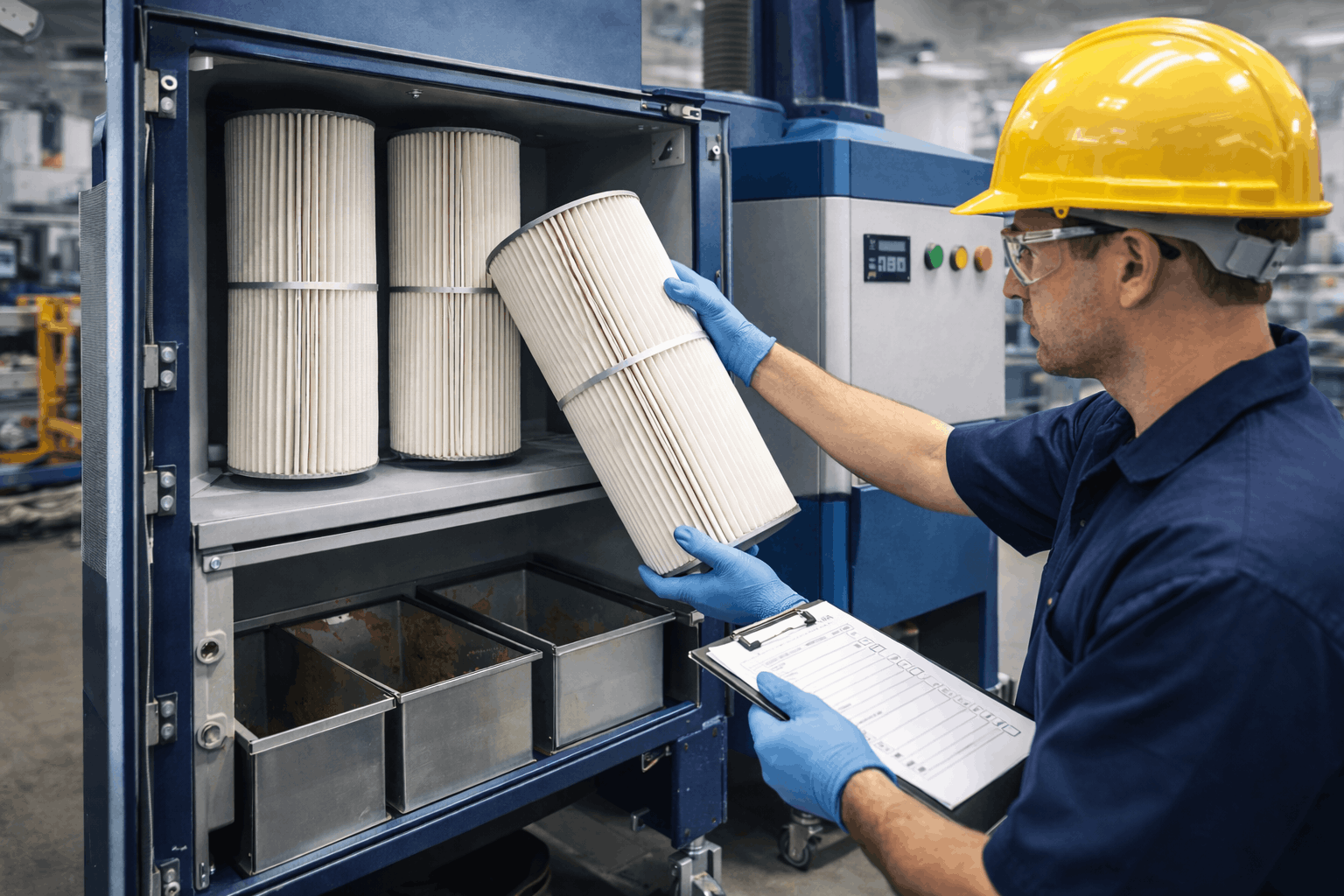
Inspect Filters or Bags
Check for tears, clogging, or uneven dust loading. Replace damaged elements promptly.
Empty Dust Bins on Time
Overfilled bins cause dust re-entrainment and system strain.
Check Pulse Cleaning Systems
For a pulse-jet dust collector, inspect solenoid valves, air pressure, and timing controls.
Inspect Duct Connections
Loose joints reduce suction and allow dust leakage. Tighten and seal as needed.
Systems supplied by a reliable dust collector manufacturer in Bangalore are designed for easy access and routine servicing.
Creating a Simple Maintenance Schedule
Daily
- Visual check for leaks or abnormal noise
Weekly
- Inspect filters and collection areas
- Check dust or oil levels
Monthly
- Clean filters or electrostatic cells
- Inspect fans, motors, and ducts
A written schedule ensures consistency and accountability.
Q&A: Maintenance of Mist and Dust Collectors
Q1: How often should mist collectors be cleaned?
Cleaning frequency depends on mist load, but regular inspection prevents buildup.
Q2: Can poor maintenance affect air quality audits?
Yes. Clogged or leaking systems often cause audit failures.
Q3: Do clean filters improve energy efficiency?
Yes. Clean systems maintain airflow with lower power use.
Q4: Who can help with maintenance planning?
An experienced mist collector manufacturer in Bangalore can recommend service intervals based on your process.
Conclusion
Preventive maintenance keeps your mist collector or dust collector working at their best. Regular cleaning, inspection, and timely replacement prevent performance loss and unexpected downtime. Well-maintained systems protect workers, reduce costs, and support compliance.
A planned maintenance approach ensures clean air and stable operations over the long term.