Introduction
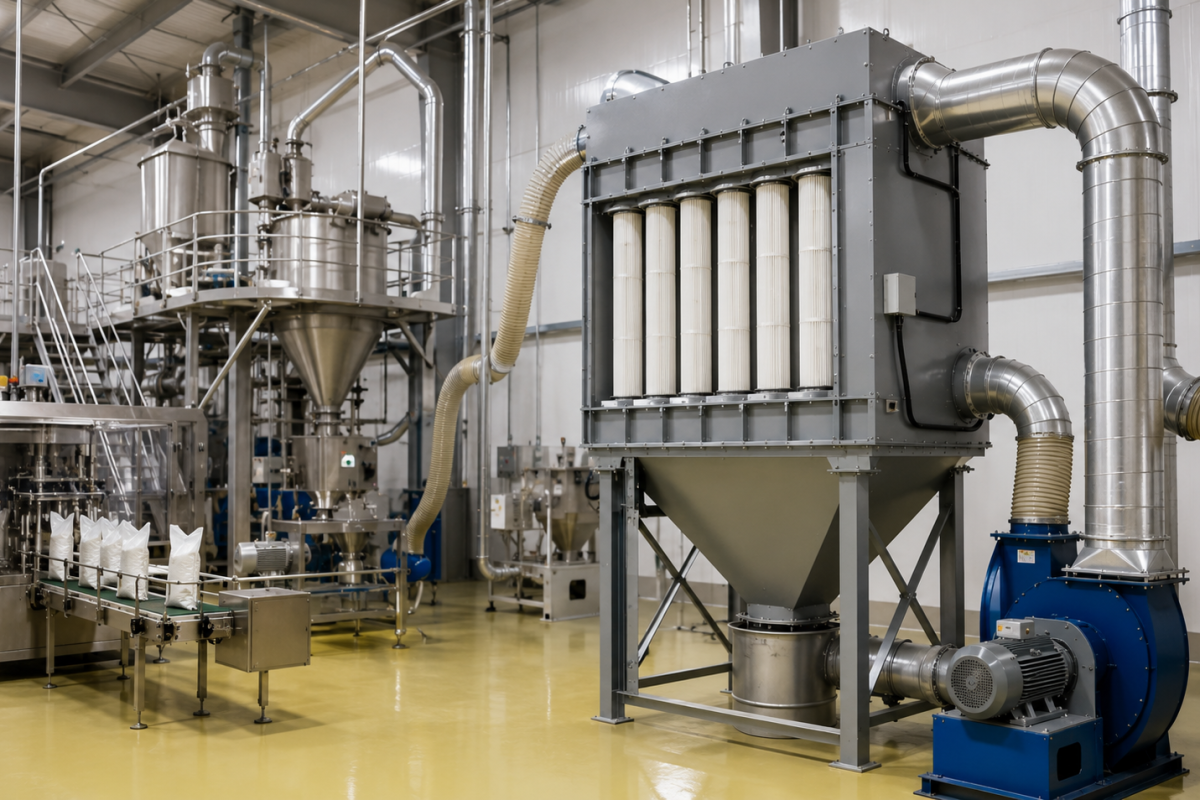
Powder handling is an essential part of many manufacturing processes, including food processing, pharmaceuticals, chemicals, plastics, minerals, and specialty materials. Activities such as conveying, transferring, weighing, mixing, blending, loading, unloading, and packaging can release fine airborne particles into the production environment.
Because many powders are lightweight and easily dispersed, controlling them at the source is critical. A properly selected powder dust collector can capture airborne particles before they spread throughout the facility, helping maintain cleaner production areas, reduce product loss, protect equipment, and improve workplace air quality.
Effective powder handling dust control requires more than installing a filtration unit. The extraction hood, airflow, ductwork, filtration system, and dust discharge arrangement must be designed around the characteristics of the powder and the process generating it.
This article explains the key considerations for effective fine dust extraction and industrial powder ventilation in powder handling operations.
Key Takeaways
- Powder handling can generate significant quantities of airborne fine dust.
- Source capture is generally more effective than trying to remove dust after it has dispersed.
- Powder characteristics must be considered when selecting a dust collector.
- Correct airflow and duct design are essential for reliable extraction.
- Filtration technology should match the particle size and loading conditions.
- Properly designed dust control can reduce housekeeping, product loss, and equipment contamination.
Why Does Powder Handling Generate Dust?
Powders can become airborne whenever material is disturbed or transferred.
Common dust-generating activities include:
- Bag unloading
- Bulk material transfer
- Pneumatic conveying
- Weighing and dispensing
- Mixing and blending
- Milling and grinding
- Sieving
- Screening
- Filling and packaging
- Hopper loading
- Drum and container filling
Fine particles can remain suspended in the air for extended periods and may travel beyond the immediate process area.
This makes early capture particularly important.
What Is a Powder Dust Collector?
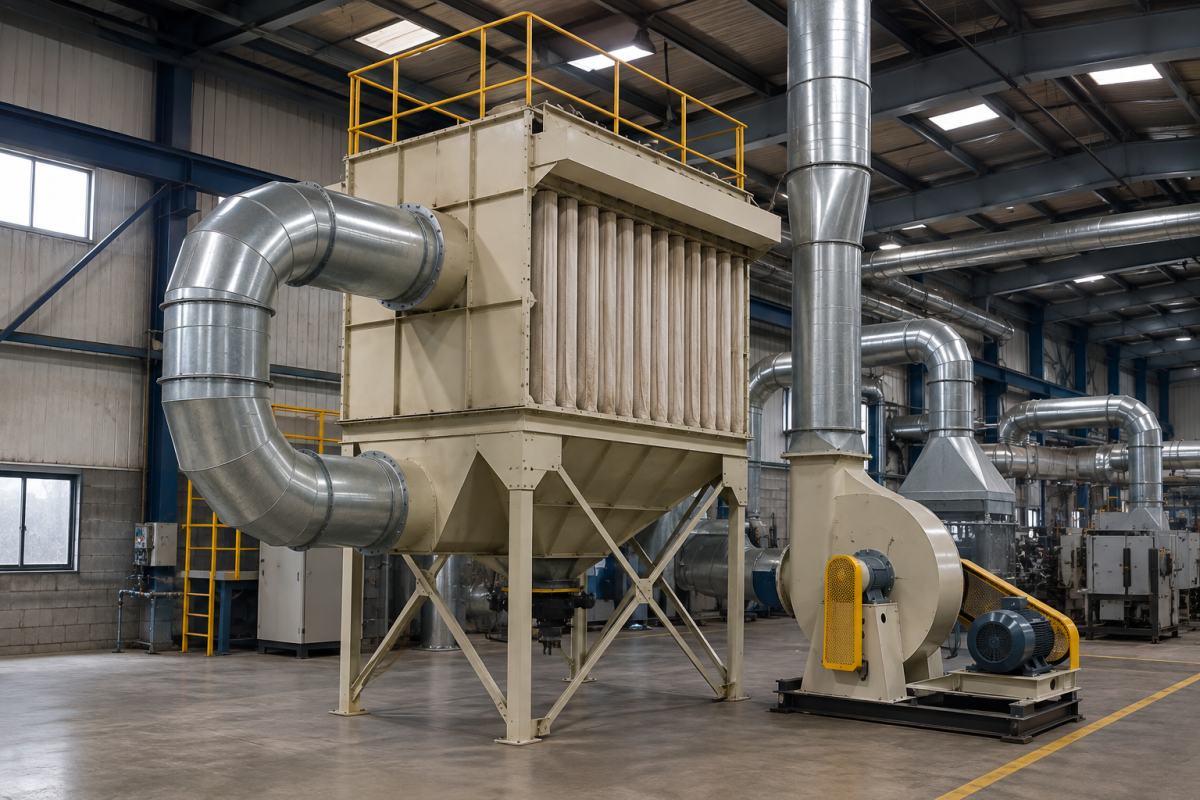
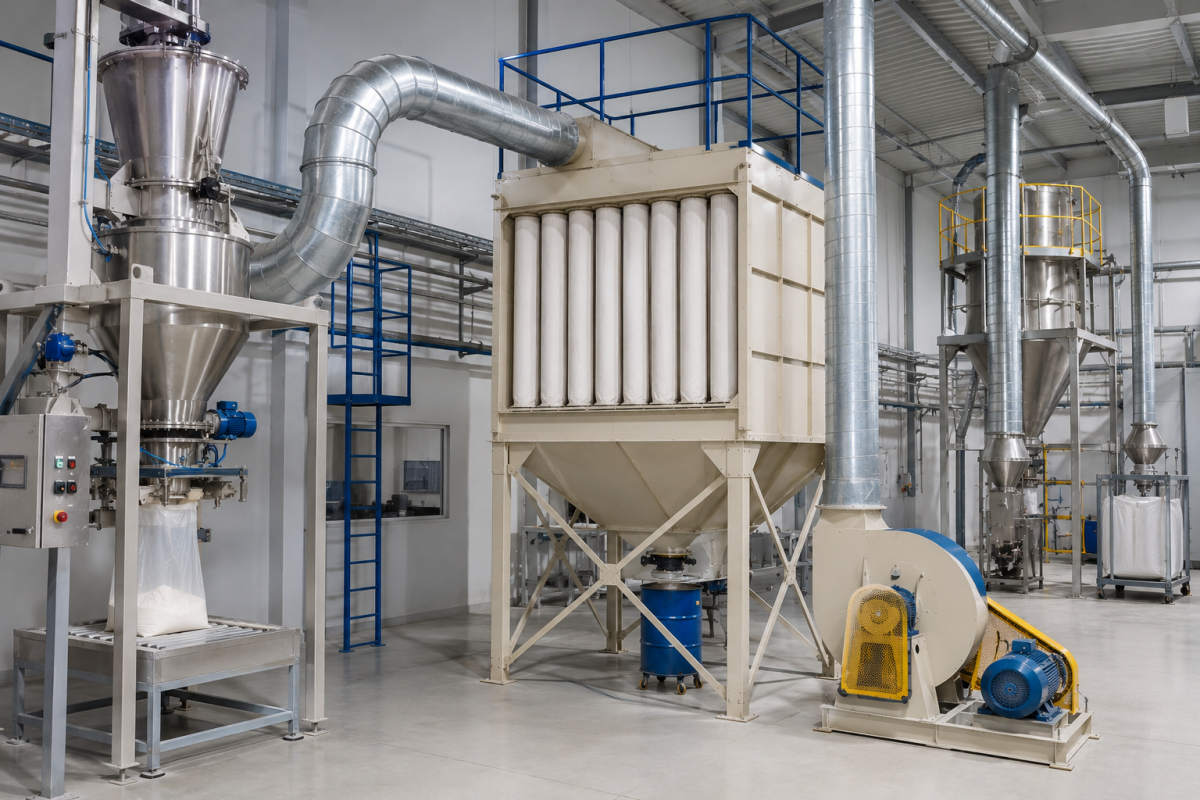
A powder dust collector is an industrial filtration system designed to capture airborne particulate generated during powder processing and handling.
A typical system consists of:
- Extraction hood or enclosure
- Ductwork
- Dust collector
- Filter media
- Exhaust blower
- Dust discharge system
- Control system
The extraction system draws contaminated air away from the process, separates the powder from the air using filtration media, and collects the material for appropriate handling.
Why Source Capture Matters
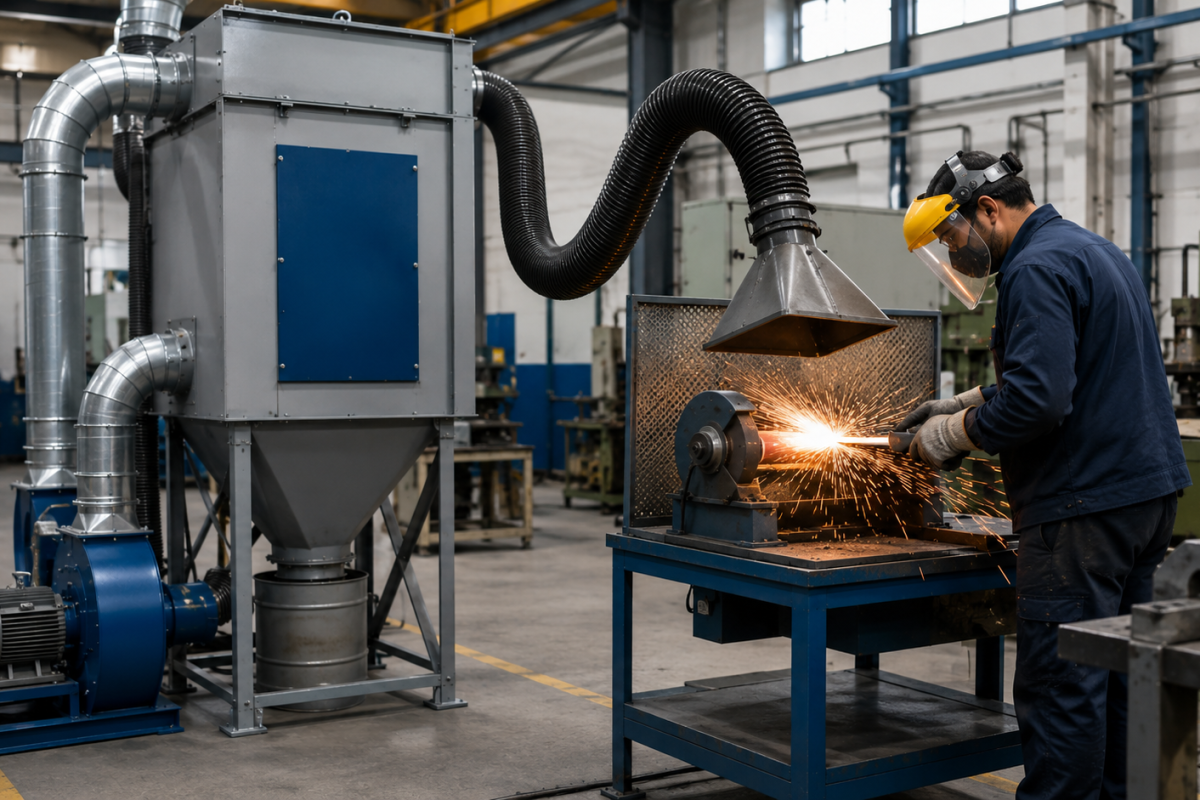
The most effective dust control strategy is generally to capture particles as close as possible to their point of generation.
For example, consider a powder being discharged from a bag into a mixing vessel.
If extraction is installed directly around the charging point, airborne powder can be captured before it spreads into the surrounding workspace.
If extraction is positioned far away, the same dust may already have dispersed throughout the room, requiring substantially more airflow to control it.
Source capture provides several advantages:
- Better contaminant control
- Lower required room airflow
- Reduced dust dispersion
- Less equipment contamination
- Lower housekeeping requirements
- Improved operator working conditions
Common Powder Handling Applications
Bag Dumping
Opening and emptying bags can release a cloud of fine powder.
A properly designed extraction hood or enclosed bag-dump station can capture the dust generated during unloading.
Bulk Bag Unloading
Large bags used for bulk ingredients and raw materials can generate dust during connection, discharge, and bag replacement.
Extraction should be integrated into the unloading station.
Mixing and Blending
Opening mixers or adding dry ingredients can release significant quantities of powder.
Local extraction around charging points can reduce airborne emissions.
Weighing and Dispensing
Small quantities of powders may be weighed or manually transferred at open workstations.
Compact extraction hoods can provide localized fine dust extraction.
Screening and Sieving
Mechanical agitation can release fine particles around screening equipment.
Enclosures combined with extraction can help contain these emissions.
Packaging
Powder can become airborne during filling, bag sealing, container transfer, and product handling.
Extraction at the filling point can help control fugitive emissions.
Powder Handling Dust Control: Key Design Factors
1. Powder Characteristics
The material being handled is one of the most important factors in system design.
Engineers should evaluate:
- Particle size
- Particle density
- Moisture content
- Flow characteristics
- Abrasiveness
- Temperature
- Chemical properties
- Dust loading
- Combustibility
Different powders can require substantially different collection approaches.
2. Required Airflow
The dust collector must provide sufficient airflow to capture the powder at the source.
Required airflow depends on:
- Hood design
- Opening size
- Capture distance
- Process energy
- Dust characteristics
- Number of extraction points
Simply selecting a collector with a high CFM rating does not guarantee effective capture.
The airflow must be appropriate for the complete extraction system.
3. Hood and Enclosure Design
The extraction hood is the first point of control.
Where practical, enclosing the dust-generating process can significantly improve containment.
Examples include:
- Enclosed transfer points
- Bag-dump stations
- Hooded filling machines
- Enclosed mixers
- Extraction booths
The closer the extraction point is to the dust source, the easier it generally is to control the contaminant.
4. Ductwork Design
Ductwork transports contaminated air from the process to the collector.
Poor duct design can lead to:
- Airflow losses
- Dust settling
- Uneven extraction
- Increased energy consumption
- Frequent maintenance
Duct diameter, airflow velocity, length, bends, branches, and transitions should all be considered during system design.
5. Filter Selection
The filtration technology should be selected based on the powder characteristics and required performance.
Cartridge Filters
Pleated cartridges provide a large filtration area in a compact housing and can be suitable for many fine, dry powder applications.
Bag Filters
Fabric filter bags can provide reliable filtration for applications involving larger dust loads and continuous industrial operation.
Multi-Stage Filtration
Some applications may benefit from pre-separation or multiple filtration stages before final air discharge.
The correct approach depends on the material and process.
Fine Dust Extraction for Different Industries
Food Processing
Common dust sources include:
- Flour
- Sugar
- Starch
- Spices
- Cocoa
- Milk powder
- Seasonings
Dust control can help maintain cleaner production areas and reduce product contamination.
Pharmaceutical Manufacturing
Powder handling may occur during:
- Ingredient dispensing
- Blending
- Tablet production
- Material transfer
- Packaging
Containment and filtration requirements can be particularly important because of the characteristics and value of pharmaceutical materials.
Chemical Processing
Chemical powders can be generated during:
- Mixing
- Charging
- Bag unloading
- Material transfer
- Packaging
The chemical characteristics of the dust should be considered when selecting filtration and construction materials.
Plastics and Polymer Processing
Powdered polymers and additives can become airborne during weighing, conveying, and blending.
Source extraction can help prevent accumulation around processing equipment.
Mineral and Industrial Materials
Mineral powders and other abrasive materials can generate heavy dust loads during crushing, screening, conveying, and transfer.
These applications may require robust industrial dust collection equipment.
Industrial Powder Ventilation vs Local Extraction
General industrial powder ventilation and local exhaust serve different purposes.
General Ventilation
General ventilation manages air throughout a facility by introducing clean air and removing or diluting contaminated air.
Local Extraction
Local extraction captures dust directly at its source.
For powder handling, source extraction is generally the preferred primary control method because it prevents the contaminant from spreading throughout the workspace.
General ventilation can complement local extraction but should not be considered a substitute for effective source capture.
Problems Caused by Poor Powder Dust Control
Inadequate dust extraction can result in:
Dust Accumulation
Powder settles on floors, machinery, structures, and other surfaces.
Increased Housekeeping
More frequent manual cleaning may be required.
Equipment Contamination
Fine particles can accumulate on motors, electrical components, sensors, and production equipment.
Product Loss
Material escaping during transfer or processing may represent unnecessary product loss.
Reduced Visibility
High airborne dust concentrations can affect visibility around the process.
Inconsistent Extraction
Poorly balanced systems may provide adequate airflow at one point while leaving another poorly controlled.
How to Improve Powder Dust Collection
Manufacturers can improve performance by:
- Capturing dust at the source.
- Enclosing the process wherever practical.
- Keeping extraction points close to emission sources.
- Correctly sizing airflow and ductwork.
- Selecting filtration media appropriate for the powder.
- Monitoring filter condition.
- Inspecting ductwork and extraction points.
- Maintaining the dust discharge system.
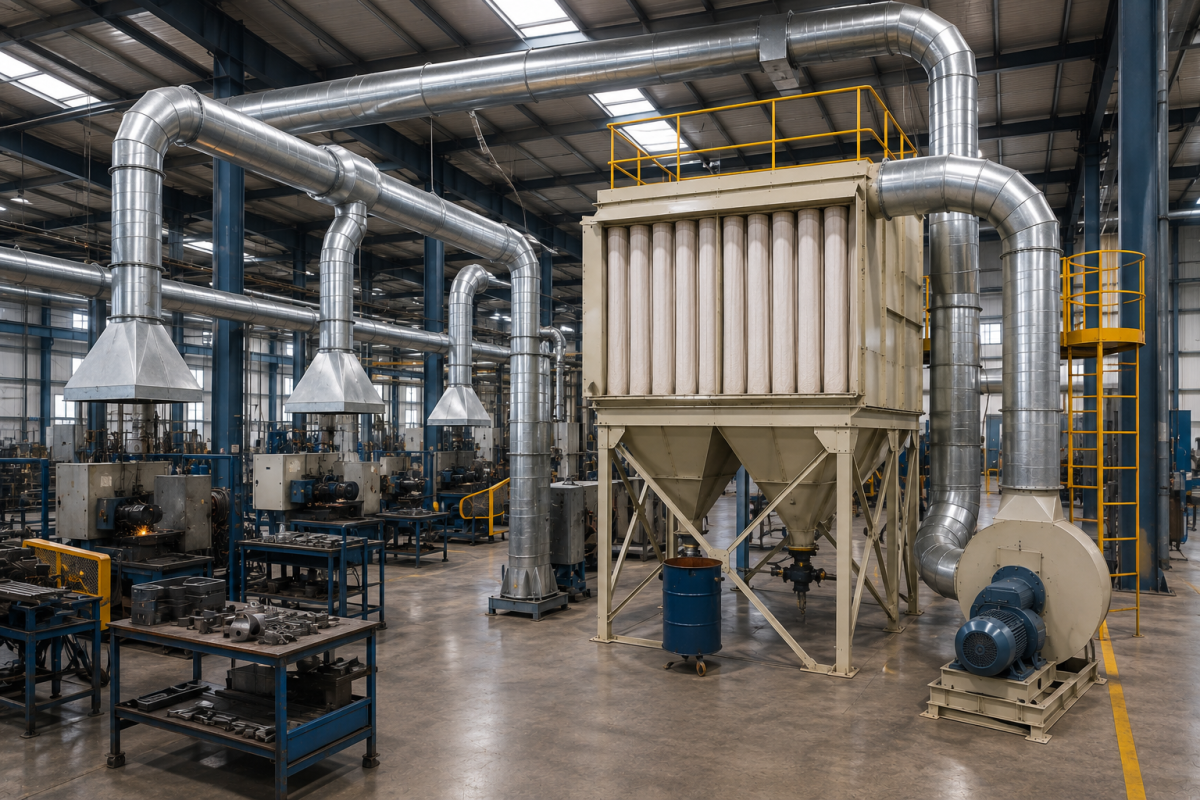
- Balancing centralized extraction networks.
- Reviewing the system when production processes change.
Choosing the Right Powder Dust Collector
Before selecting a powder dust collector, consider:
Material
What type of powder is being handled?
Particle Size
Is the material coarse, fine, or extremely fine?
Dust Loading
How much material becomes airborne during normal operation?
Process
Is the dust generated during mixing, transfer, filling, grinding, or packaging?
Airflow
How much extraction airflow is required at each capture point?
Temperature
Is the process operating at ambient or elevated temperatures?
Filtration
Which filter media and filtration arrangement are appropriate?
Dust Discharge
How will the collected powder be removed from the collector?
Future Requirements
Will production volumes or extraction points increase?
Powertech’s Approach to Powder Dust Collection
Powertech approaches powder extraction as an application-specific engineering problem.
The design of a DustBag system can be based on:
- Powder characteristics
- Dust generation rate
- Required airflow
- Capture point configuration
- Ductwork layout
- Filtration requirements
- Operating conditions
- Dust discharge requirements
- Plant layout
- Future expansion
This ensures the collector is designed around the actual production process rather than relying on a generic dust collection configuration.
A powder dust collector is an industrial filtration system designed to capture airborne particles generated during powder handling, processing, transfer, mixing, and packaging.
Powder handling dust control typically combines source-capture hoods or enclosures, ductwork, a filtration system, a blower, and a suitable dust discharge arrangement.
Source capture close to the point where fine dust is generated is generally the most effective approach. The filtration technology should then be selected based on the powder’s characteristics and the process conditions.
Yes. A centralized system can serve multiple stations when the airflow, ductwork, filtration capacity, and operating conditions are properly engineered.
General ventilation can supplement local extraction, but it is generally less effective than source capture for controlling concentrated powder emissions.
Selection should consider the powder’s particle size, density, moisture, dust loading, process conditions, required airflow, filtration requirements, and method of dust discharge.
Effective powder handling dust control starts with preventing airborne particles from spreading. A properly engineered powder dust collector, combined with effective source capture, correctly sized ductwork, appropriate filtration, and reliable dust discharge, can significantly improve control of airborne powders. For applications involving flour, spices, pharmaceutical ingredients, chemicals, polymers, minerals, and other fine materials, effective fine dust extraction should be designed around the specific characteristics of the process. Powertech’s application-focused approach to industrial dust collection enables manufacturers to develop DustBag systems tailored to their powder handling requirements, helping create cleaner, more efficient, and better-controlled production environments.