
Introduction
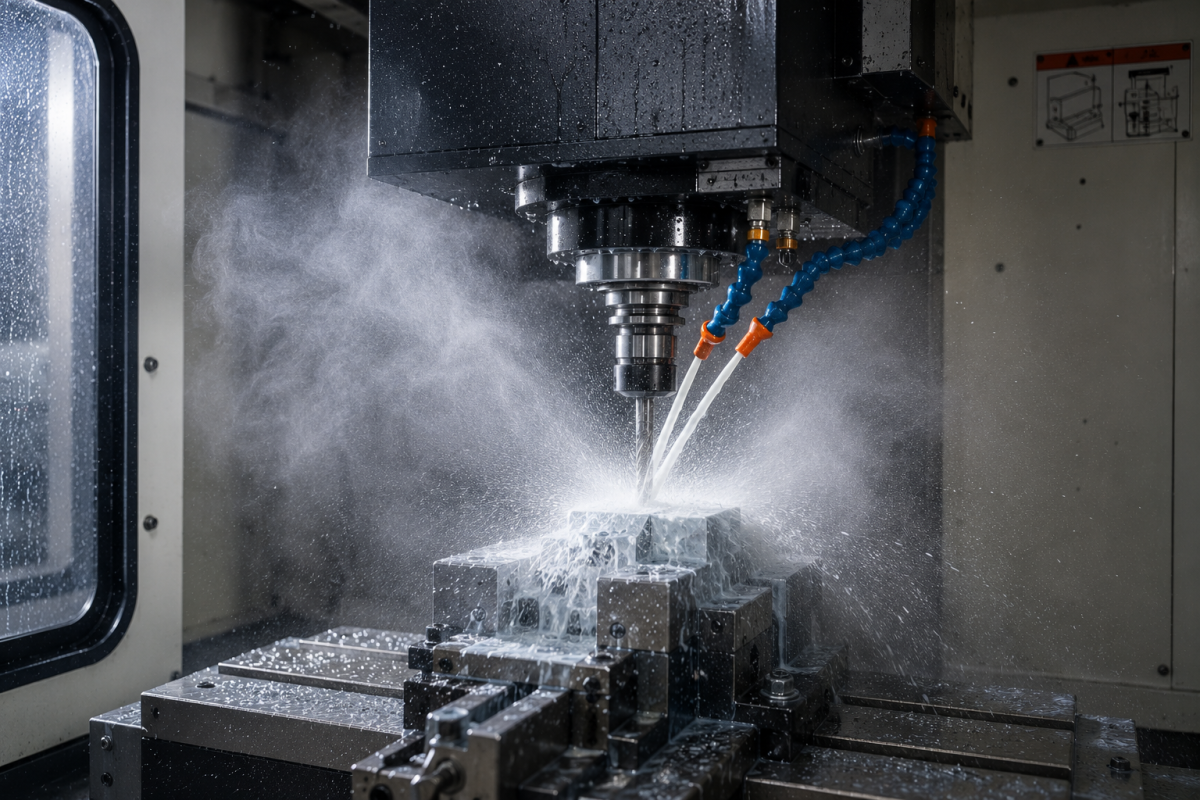
Coolant plays a critical role in CNC machining operations by reducing heat, improving tool life, enhancing surface finish, and maintaining machining accuracy. However, as machining speeds and coolant pressures increase, coolant can become atomized into microscopic airborne droplets that form what is commonly known as coolant mist.
Understanding how coolant mist CNC machines generate airborne contaminants is the first step toward implementing effective air pollution control solutions. Whether the mist originates from turning, milling, drilling, or grinding operations, uncontrolled airborne coolant can negatively affect workplace air quality, machine cleanliness, and operator comfort.
Modern manufacturing facilities increasingly rely on mist extraction CNC machining systems to control airborne contaminants and maintain cleaner working environments. Proper management of CNC coolant mist not only improves air quality but also reduces maintenance requirements and protects sensitive equipment.
With more than 30 years of experience in industrial air pollution control, Powertech’s MistKiller centrifugal mist collectors help manufacturers effectively control coolant mist generated during CNC machining operations.
Key Takeaways
- Coolant mist forms when machining operations atomize coolant into microscopic droplets.
- Higher spindle speeds and coolant pressures increase mist generation.
- Uncontrolled CNC coolant mist can affect air quality and equipment performance.
- Effective mist extraction captures contaminants before they enter the workplace.
- Understanding mist formation helps improve ventilation system design.
What Is Coolant Mist?
Coolant mist consists of tiny airborne droplets created when coolant interacts with rotating cutting tools, workpieces, and machine surfaces.
Unlike liquid coolant that remains within the machining process, mist becomes suspended in the air and can escape from machine enclosures if not properly controlled.
Typical Characteristics
- Microscopic liquid droplets
- Airborne aerosol formation
- Can remain suspended for extended periods
- May contain coolant additives and contaminants
How Coolant Mist Forms in CNC Machines
Step 1: Coolant Delivery
Coolant is delivered to the cutting zone to:
- Reduce heat
- Lubricate cutting surfaces
- Remove chips
- Improve machining efficiency
Modern CNC machines often use high-pressure coolant systems.
Step 2: High-Speed Tool Rotation
Machining tools operate at extremely high rotational speeds.
Examples
- Milling cutters
- End mills
- Grinding wheels
- Turning tools
As coolant contacts these rotating components, it begins to break into smaller droplets.
Step 3: Atomization
The interaction between coolant and high-speed rotating tools causes atomization.
This process creates:
- Fine droplets
- Aerosolized coolant
- Airborne mist particles
This is the primary source of oil mist generation machining environments.
Step 4: Air Turbulence
Inside the machine enclosure:
- Spindle movement
- Tool rotation
- Coolant spray
- Chip movement
create turbulent airflow.
This turbulence keeps droplets suspended in the air.
Step 5: Mist Escape
When machine doors open or ventilation is inadequate:
- Mist escapes into the workshop
- Airborne contaminants spread
- Residue accumulates on surrounding surfaces
This is where mist extraction CNC machining systems become critical.
Factors That Increase Coolant Mist Generation
High Spindle Speeds
Higher rotational speeds increase atomization.
High-Pressure Coolant Systems
Greater coolant velocity creates smaller airborne droplets.
Enclosed CNC Machines
Mist can accumulate rapidly within machine enclosures.
Continuous Production
Long machining cycles produce larger volumes of airborne mist.
Grinding Operations
Grinding processes typically generate some of the highest mist concentrations.
Effects of Coolant Mist in Manufacturing Facilities
Workplace Air Quality
Airborne coolant droplets can reduce indoor air quality.
Housekeeping Challenges
Coolant residue settles on:
- Floors
- Walls
- Machinery
- Workstations
Equipment Contamination
Mist can affect:
- Electrical cabinets
- Sensors
- Controls
- Machine components
Operator Comfort
Excessive airborne mist may contribute to:
- Unpleasant working conditions
- Reduced visibility
- Increased cleaning requirements
How Mist Extraction Systems Control Coolant Mist
Modern mist collectors remove airborne contaminants directly from CNC machine enclosures.
Process
- Capture contaminated air
- Separate coolant droplets
- Recover liquid coolant
- Discharge cleaned air
Benefits
- Cleaner air
- Reduced maintenance
- Improved equipment reliability
- Better workplace conditions
Why Centrifugal Mist Collection Is Effective
Powertech’s MistKiller uses centrifugal separation technology to remove coolant mist efficiently.
Advantages
- No disposable filters
- Low maintenance
- Continuous operation
- Coolant recovery capability
- High efficiency for water-based coolant mist
This makes centrifugal systems particularly suitable for CNC machining applications.
Expert Insight
Powertech’s experience across CNC machining facilities shows that coolant mist generation is often underestimated until visible residue appears throughout the workshop.
Facilities that implement source-capture mist collection directly at the machine enclosure typically achieve:
- Better indoor air quality
- Cleaner machinery
- Reduced maintenance costs
- Improved operator comfort
- Lower housekeeping requirements
Controlling mist at its source is significantly more effective than relying on general building ventilation alone.
Coolant mist forms when coolant contacts high-speed rotating tools and becomes atomized into airborne droplets.
Yes. Over time, coolant residue can contaminate sensors, electrical components, and machine controls.
Grinding, high-speed milling, and high-pressure coolant applications typically generate the highest levels of airborne mist.
Mist collectors installed directly on CNC machine enclosures provide the most effective control.
Coolant spray consists of larger droplets that fall quickly, while coolant mist contains microscopic droplets that remain suspended in the air.
Understanding how coolant mist CNC machines generate airborne contaminants helps manufacturers implement more effective air quality control strategies. Through atomization, turbulence, and high-speed machining processes, CNC coolant mist can quickly become a workplace challenge if left uncontrolled. By using properly engineered mist extraction CNC machining systems, manufacturers can significantly reduce airborne contamination, improve air quality, and protect both equipment and personnel. Powertech’s MistKiller centrifugal mist collectors provide an efficient, low-maintenance solution for controlling oil mist generation machining environments while supporting cleaner and more productive manufacturing operations.