
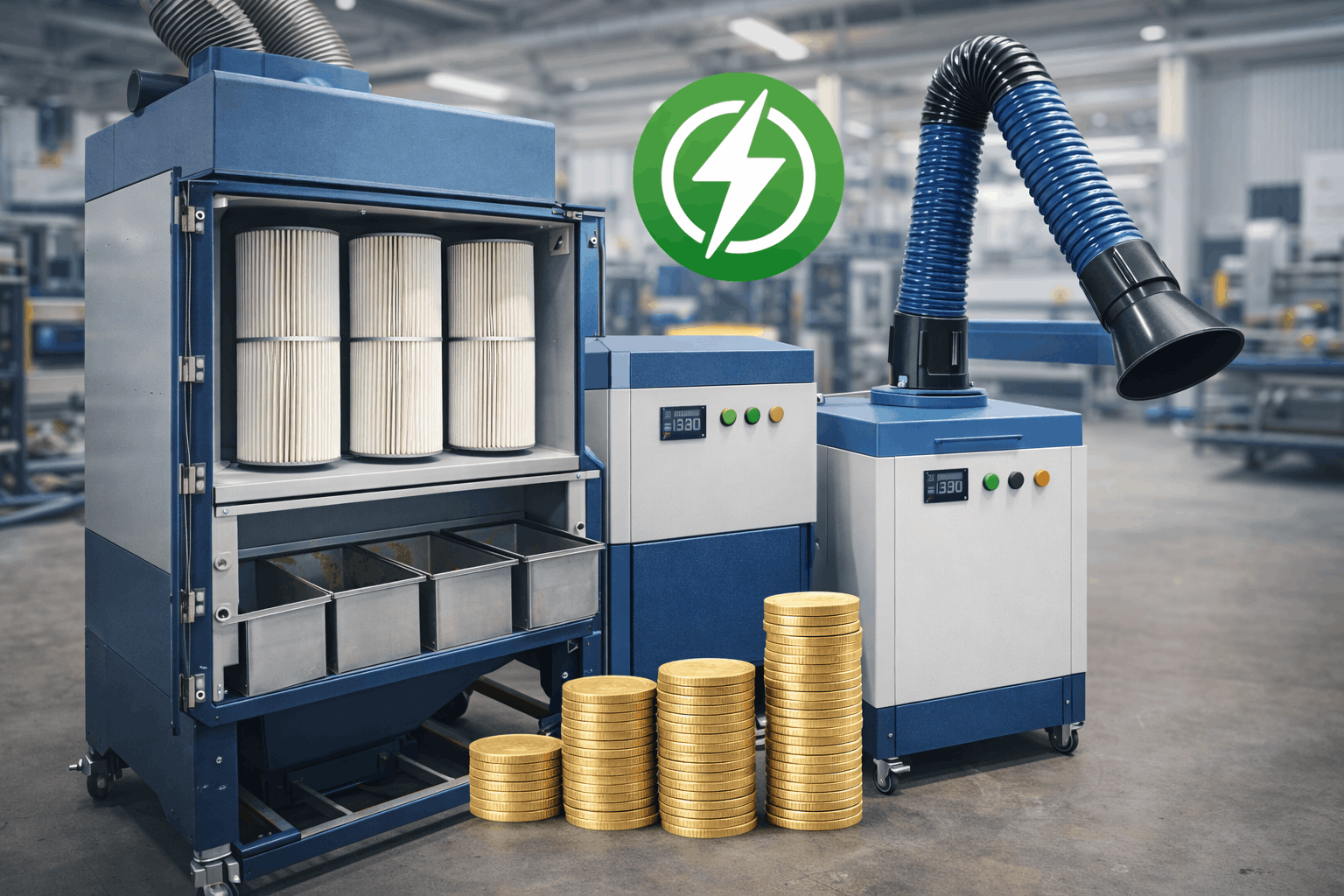
Why Energy Efficiency Matters in Air Pollution Control
Air pollution control systems run for long hours in most industrial facilities. Equipment that consumes excessive power increases operating costs and strain electrical infrastructure. Energy-efficient systems can reduce this burden while maintaining effective pollution control.
Choosing efficient systems helps industries control emissions without increasing energy bills.
What Makes Air Pollution Control Equipment Energy Efficient
Optimized Airflow Design
Efficient systems move only the required volume of air. Proper duct sizing and hood design reduce pressure loss and avoid wasted energy.
Low-Resistance Filtration
Advanced filtration methods reduce airflow resistance. This allows fans to operate at lower speeds while maintaining capture efficiency.
Efficient Motors and Fans
High-efficiency motors and well-balanced fans reduce power draw during continuous operation.
Key Benefits of Energy-Efficient Systems
Lower Operating Costs
Reduced power consumption directly lowers monthly electricity bills, especially in facilities running multiple extraction units.
Stable Extraction Performance
Energy-efficient systems maintain consistent airflow. This prevents performance drops caused by overloaded fans or blocked filters.
Reduced Heat Generation
Lower energy use means less heat buildup in motors and blowers. This improves equipment reliability and service life.
Smaller Electrical Load
Efficient systems place less demand on power infrastructure. This reduces the risk of overloads and electrical failures.
Energy Efficiency Across Different Equipment Types
Fume Extractors
An energy-efficient fume extractor can capture pollutants at the source using optimized suction rather than high airflow volumes.
Dust Collectors
A dust collector with low-pressure-drop filters and effective cleaning systems reduces fan load and energy use.
Mist Collectors
Electrostatic mist collectors operate with minimal airflow resistance, making them more energy efficient than many mechanical systems.
A reliable fume extractor manufacturer in Bangalore designs systems with energy performance considered at the design stage.
Impact on Sustainability and Compliance
Lower energy consumption reduces indirect emissions from power generation. This supports sustainability goals and helps facilities meet environmental targets.
Energy-efficient equipment also operates more quietly and with fewer breakdowns, improving overall workplace conditions.
Q&A: Energy-Efficient Air Pollution Control
Q1: Does energy efficiency reduce extraction performance?
No. Proper design improves efficiency without reducing capture effectiveness.
Q2: Can energy-efficient systems handle heavy pollution loads?
Yes. When correctly sized, they perform reliably even in demanding applications.
Q3: Do energy-efficient systems require special maintenance?
No. Regular preventive maintenance keeps them operating efficiently.
Q4: Who can help select energy-efficient extraction systems?
An experienced fume extractor manufacturer in Bangalore can recommend solutions based on process and airflow needs.
Conclusion
Energy-efficient air pollution control equipment reduces operating costs while maintaining clean air and stable performance. These systems protect workers, support compliance, and lower long-term expenses.
Investing in energy efficiency improves both environmental responsibility and operational reliability without compromising air quality.