Introduction
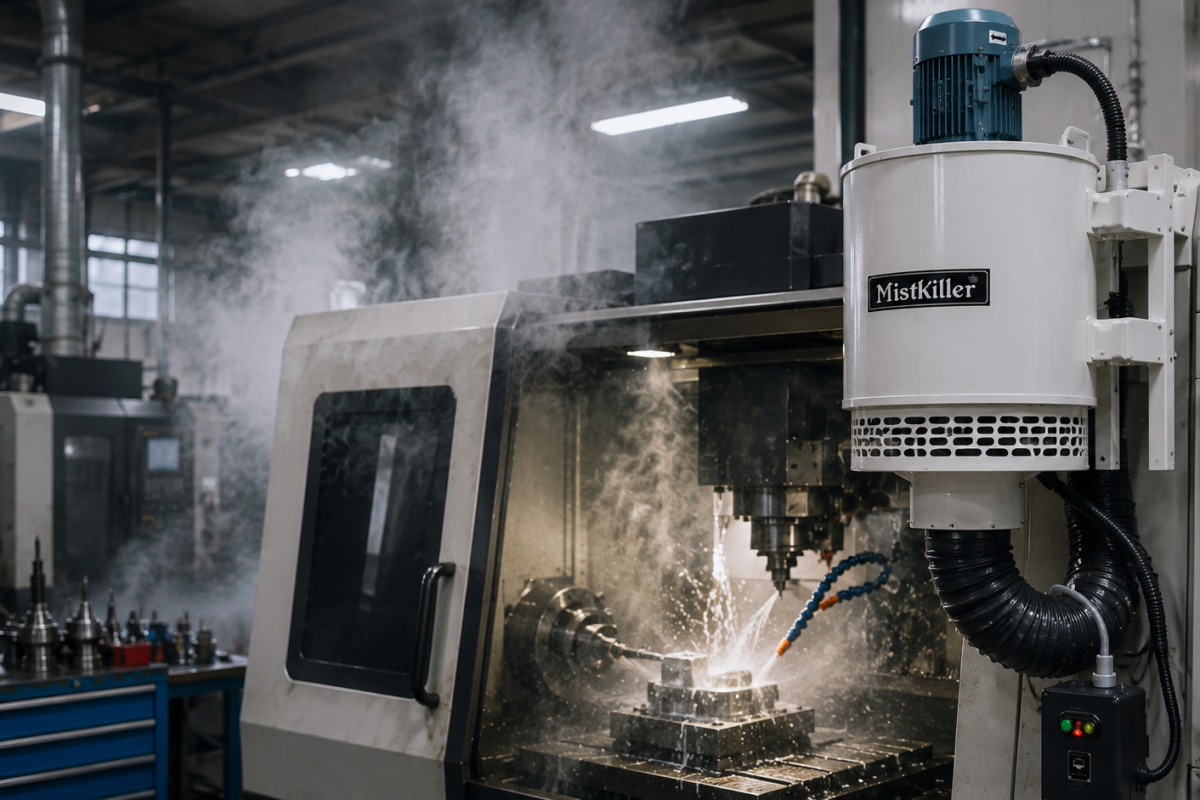
High-speed machining has transformed modern manufacturing by enabling faster production rates, improved precision, and superior surface finishes. Industries such as automotive, aerospace, medical device manufacturing, and precision engineering increasingly rely on high spindle speeds and high-pressure coolant systems to maximize productivity. However, these same processes generate significant volumes of airborne oil and coolant mist that must be effectively controlled.
An efficient industrial mist collector is essential for maintaining clean air in high-speed machining environments. During machining, cutting fluids become atomized into microscopic droplets that can remain suspended in the air, increasing contamination levels throughout the workshop. Without proper high speed machining mist extraction, these airborne contaminants can affect equipment, reduce workplace cleanliness, and compromise overall production efficiency.
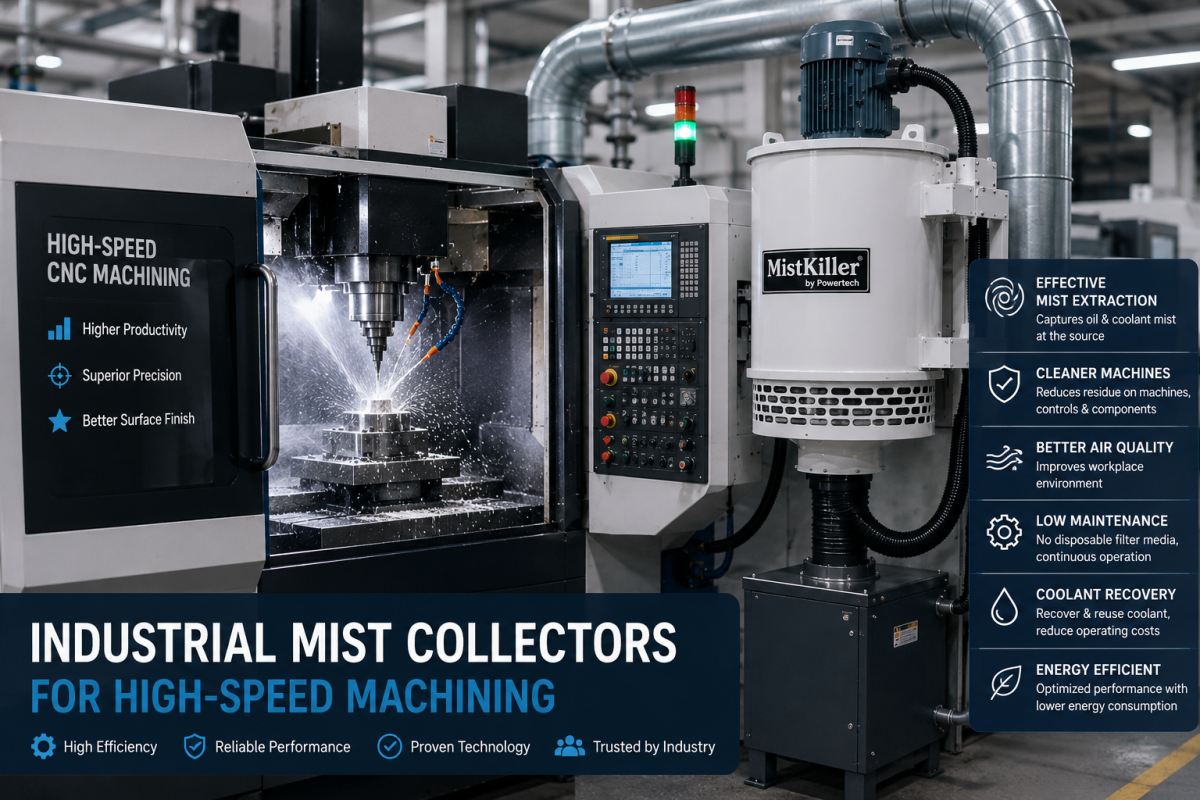
Modern CNC oil mist collector systems are engineered to capture contaminants directly from machine enclosures before they escape into the workplace. Combined with effective machine shop air filtration, they help manufacturers improve indoor air quality, reduce maintenance, and create cleaner production environments.
With over 30 years of expertise in industrial air pollution control, Powertech’s MistKiller centrifugal mist collectors provide reliable, low-maintenance solutions for high-speed machining applications across a wide range of industries.
Key Takeaways
- High-speed machining produces large volumes of airborne coolant and oil mist.
- An industrial mist collector captures contaminants directly at the source.
- Proper mist extraction improves machine cleanliness and workplace air quality.
- CNC oil mist collectors reduce maintenance and extend equipment life.
- Engineered machine shop air filtration systems support safer and more efficient manufacturing.
Why High-Speed Machining Generates More Mist
As spindle speeds increase, machining fluids are subjected to greater centrifugal forces and turbulence.
This results in:
- Finer airborne droplets
- Greater mist concentration
- Longer suspension times
- Increased contaminant spread
Processes that commonly generate high levels of mist include:
- High-speed milling
- CNC turning
- Grinding
- Multi-axis machining
- Precision machining
- High-pressure coolant applications
Challenges in High-Speed Machining
Increased Airborne Contaminants
Microscopic oil and coolant droplets remain suspended in the air and can spread throughout the machine shop.
Equipment Contamination
Mist settles on:
- CNC controls
- Electrical cabinets
- Sensors
- Machine surfaces
leading to increased maintenance requirements.
Reduced Workplace Cleanliness
Airborne mist contributes to:
- Oily floors
- Dirty workstations
- Residue on equipment
- Increased housekeeping
Higher Maintenance Costs
Contamination can result in:
- More frequent machine cleaning
- Increased downtime
- Higher operating costs
How an Industrial Mist Collector Works
Step 1: Source Capture
Air containing oil and coolant mist is extracted directly from the CNC machine enclosure.
Step 2: Mist Separation
Powertech’s MistKiller uses centrifugal separation to remove airborne droplets from the airflow.
This process eliminates the need for disposable filter media in many machining applications.
Step 3: Coolant Recovery
Separated coolant drains into a collection chamber where it can often be recovered and reused depending on the system design.
Step 4: Clean Air Discharge
Cleaned air is safely discharged, improving workplace air quality while reducing airborne contamination.
Benefits of High Speed Machining Mist Extraction
Improved Air Quality
Capturing mist at the source significantly reduces airborne contaminants.
Cleaner Machines
Reduced residue accumulation protects CNC equipment and controls.
Lower Maintenance
Cleaner equipment requires less frequent servicing and cleaning.
Longer Equipment Life
Minimizing contamination helps extend the life of electrical and mechanical components.
Improved Productivity
Cleaner environments support more efficient machining operations.
CNC Oil Mist Collector Applications
Industrial mist collectors are commonly used in:
CNC Turning Centers
Continuous oil mist generation from rotating workpieces.
High-Speed Milling Machines
High spindle speeds create fine coolant aerosols.
Grinding Machines
Fine oil mist requires efficient source capture.
Multi-Axis Machining Centers
Multiple cutting operations increase airborne mist generation.
Precision Engineering
Maintaining clean machining environments improves product quality.
Machine Shop Air Filtration Best Practices
Effective air filtration should include:
- Source-capture mist extraction
- Proper machine enclosure sealing
- Routine equipment maintenance
- Regular inspection of extraction systems
- Correct mist collector sizing
General building ventilation alone should never be relied upon to control machining-generated oil mist.
Why Choose Powertech MistKiller
Powertech’s MistKiller centrifugal mist collectors are specifically engineered for demanding industrial machining environments.
Key Features
- High-efficiency centrifugal separation
- No disposable filter media
- Low maintenance
- Continuous operation
- Compact machine-mounted design
- Coolant recovery capability
- Energy-efficient operation
These features make MistKiller an excellent solution for modern high-speed machining applications.
Expert Insight
From Powertech’s experience, facilities that increase machining speeds often experience a sharp rise in airborne mist generation without realizing that existing extraction systems may no longer be adequate.
Rather than increasing general workshop ventilation, the most effective approach is to upgrade source-capture mist collection at individual machining centers. Properly engineered mist collectors consistently deliver cleaner equipment, improved operator comfort, lower maintenance costs, and better overall production efficiency.
Higher spindle speeds increase coolant atomization, producing finer airborne droplets that remain suspended for longer periods.
An industrial mist collector is a system that captures airborne oil and coolant mist directly from machining equipment before contaminants spread into the workplace.
Yes. Properly sized CNC oil mist collectors are specifically designed to handle the increased mist generation associated with high-speed machining operations.
Many centrifugal mist collectors separate coolant from the air stream, allowing the recovered liquid to be reused where appropriate.
No. Local source-capture mist extraction is far more effective than relying solely on general building ventilation for controlling machining-generated mist.
Automotive, aerospace, medical device manufacturing, precision engineering, heavy engineering, and general metalworking facilities all benefit from effective mist collection systems.
An industrial mist collector is an essential component of modern high-speed machining operations. As spindle speeds and coolant pressures continue to increase, effective high speed machining mist extraction becomes increasingly important for maintaining clean air, protecting valuable equipment, and improving workplace efficiency. By combining properly engineered CNC oil mist collector technology with effective machine shop air filtration, manufacturers can significantly reduce airborne contamination, lower maintenance costs, and create safer, more productive machining environments. With decades of experience in industrial air pollution control, Powertech’s MistKiller centrifugal mist collectors continue to provide reliable, energy-efficient mist extraction solutions for demanding manufacturing applications.