The Ultimate Solution in Air Pollution Control for Robotic Welding

We’ll explore its application as a welding fume extractor in a case study involving robotic welding of an excavator’s chassis. Its ability to effectively manage a wide range of emissions, including Oil or Coolant Mist and Welding Fumes, has made it an indispensable tool. We’ll explore its application in a case study involving robotic welding of an excavator’s chassis.

Task at Hand:

In a challenging scenario, our client in the heavy industries sector required a solution to control welding fumes during the automated welding of an excavator’s chassis. Key concerns included:

  1. Protecting a multitude of sensors within the welding torch housing from fume damage.
  2. Dealing with the large size of the excavator chassis, especially since welding occurred at height.
  3. Working within limited floor space, which was further restricted by the need for machine maintenance access.

Addressing these issues required careful consideration in selecting the right fume extractor model, its placement, and fume extraction routing.

Solution:

After a comprehensive site analysis and collaboration with our design team, we recommended the FumeKiller® model FK3600VEM. This model boasts a 4000 cubic meter per hour suction velocity, is vertically oriented, and includes a 3hp motor and a 3-meter-long self-balanced extractor arm. The FK3600VEM’s vertical design, coupled with its mobility and compact footprint, made it ideal for the restricted space and the high welding point of the chassis.

Why the FK3600VEM with Self-Balanced Extractor Arm:

The FK3600VEM was chosen for several reasons:

  • The welding fumes were more intense than those in manual welding, necessitating a robust fume extraction system.
  • The long, self-balanced extractor arm provided necessary reach and flexibility.
  • The unit’s vertical orientation and mobility facilitated easy movement and adaptation to plant layout changes.

Outcome:

This customized air pollution control solution not only met regulatory compliance but also offered several additional benefits:

  1. As a filtration unit, the FumeKiller® eliminated the need for expensive ducting installations. Its electrostatic filters capture various particle sizes efficiently, ensuring clean air discharge directly into the shop floor.
  2. The 3hp motor ensured efficient operation with minimal power consumption, compared to larger motors required for traditional extraction units.
  3. The durability and efficiency of the electrostatic filters significantly reduced maintenance costs compared to mechanical or HEPA filters.

Conclusion:

The effectiveness and reliability of the FumeKiller® led our client to implement this solution in multiple areas. With over 25 years in the industry, the FumeKiller® has proven to be one of the best air pollution control equipment available. Let M/s. Powertech Pollution Controls Pvt. Ltd., backed by a skilled technical team, assist you in meeting your air pollution control needs with our top-notch fume extractors.
Top Advantages of Using Fume Extraction Systems

The industrial landscape is teeming with processes that emit fumes, from welding and soldering to laser cutting and chemical processing. These fumes are not just a nuisance; they pose significant health risks and contribute to environmental pollution. As a result, there is an ever-growing emphasis on air pollution control in industrial environments. One of the most effective solutions to this challenge is the implementation of fume extraction systems. In this blog post, we will delve into the top advantages of using fume extraction systems, with a focus on their varied applications such as welding fume extractors and soldering fume extractors.

  • Enhanced Worker Health and Safety: The most significant advantage of using a fume extractor is the protection it offers to workers’ health. Fume extraction systems are designed to capture a wide array of hazardous particles and gases at the source, preventing them from entering the breathing zones of employees. This is critical in welding applications where a welding fume extractor can significantly reduce the exposure to harmful substances like manganese, nickel, and chromium, which are known carcinogens.
  • Compliance with Health and Safety Regulations: Adhering to occupational health and safety regulations is not just ethical but also a legal requirement. Fume extraction systems help businesses comply with strict air quality standards set by various health and safety organizations. By doing so, companies can avoid costly fines and legal issues while demonstrating their commitment to providing a safe workplace.
  • Improvement in Air Quality: Air pollution control is not just about the air outside; it’s also about maintaining the quality of indoor air. Fume extractors play a crucial role in filtering out toxic particles and gases, thereby improving the overall air quality within the facility. This is essential not only for health reasons but also for maintaining product quality, as contaminants in the air can affect manufacturing processes.
  • Increased Productivity: When employees are healthy and work in a comfortable environment, their productivity naturally increases. Fume extraction systems contribute to creating a cleaner, safer, and more pleasant working environment, which can lead to enhanced performance and reduced downtime due to health-related absences.
  • Long-term Cost Savings: Investing in a high-quality fume extraction system can lead to substantial long-term cost savings. By maintaining a cleaner working environment, companies can save on health care costs, avoid productivity losses, and extend the lifespan of their equipment. Moreover, such systems can prevent the accumulation of combustible dust, which poses a significant fire risk.
  • Versatility in Applications: Modern fume extraction systems come in various designs to suit different applications. For instance, a soldering fume extractor might be compact and designed to be placed on a workbench, whereas a welding fume extractor may be larger and more robust to handle the intense fumes from welding operations. This versatility ensures that businesses can find a solution that fits their specific needs.
  • Energy Efficiency: Many fume extraction systems are designed with energy efficiency in mind. By using energy-efficient motors and smart systems that adjust the extraction rate based on the volume of fumes produced, businesses can minimize their energy consumption. This not only reduces costs but also supports sustainability efforts.
  • Protection of Equipment: Fumes and particulate matter can damage sensitive machinery and electronic components. By removing these airborne contaminants, fume extraction systems can prolong the life of equipment, which can be particularly crucial in high-tech industries where precision and reliability are paramount.
  • Reduction of Environmental Impact: Fume extraction systems don’t just protect people and products; they also play a role in environmental protection. By capturing harmful emissions before they can be released into the atmosphere, these systems contribute to reducing a company’s carbon footprint and promoting cleaner manufacturing processes.

The implementation of fume extraction systems presents a multitude of advantages for any industry where air quality is a concern. From protecting worker health to ensuring compliance with regulations, and from increasing productivity to saving on long-term costs, the benefits are clear. Whether it’s a welding fume extractor for heavy-duty applications or a soldering fume extractor for precision work, there is a fume extraction solution out there that can significantly improve both the working environment and the bottom line. Investing in such systems is not just a regulatory necessity; it’s a strategic decision that can lead to a healthier, more productive, and more sustainable business.

Custom Solutions for Industry-Specific Pollution Control Needs

In today’s rapidly evolving industrial landscape, the need for efficient air pollution control cannot be overstated. Industries, in their quest for progress and production, often emit pollutants that pose significant threats to the environment and public health. Addressing these pollution concerns requires tailored solutions. Companies like Powertech Pollution Controls Pvt Ltd understand this necessity and have pioneered custom solutions catering to industry-specific requirements. This article dives deep into how specialized solutions, from fume extraction systems to mist collection, are revolutionizing the way industries manage pollutants.

The Spectrum of Pollution Challenges

Different industries present distinct pollution challenges. For example, the metal industry grapples with welding and soldering fumes, while woodworking industries battle with sawdust. Recognizing these differences is the first step toward effective air pollution control.

  • Welding & Soldering Operations: These release metallic fumes and gases. Welding fume extractors and soldering fume extractors are vital to ensure clean air and protect workers’ health.
  • Woodworking & Manufacturing Units: Fine dust particles are often released, demanding efficient dust extraction solutions.
  • Machining & Metalworking: These processes can produce oil mists, necessitating the need for efficient mist collection.

Custom Solutions by Powertech Pollution Controls Pvt Ltd

We have consistently been at the forefront of designing and manufacturing innovative solutions tailored to address the unique challenges posed by diverse industries.

  • Fume Extraction Systems: Our state-of-the-art electrostatic fume extraction systems not only tackle welding and soldering fumes but are also adept at handling chemical fumes and vapours. They ensure that harmful gases are swiftly removed from workspaces, guaranteeing a safer environment.
  • Dust Extraction: The company’s dust collectors are a testament to their commitment to safeguarding the environment. Designed for maximum efficiency, these systems capture fine particles, preventing them from becoming respiratory hazards or environmental contaminants.
  • Mist Collection: Powertech’s mist collectors stand out due to their advanced design, ensuring that even the finest mist particles are effectively removed. This is crucial in metalworking industries where oil mists can pose significant health risks and degrade air quality.

Why Custom Solutions Matter

Standardized solutions, though effective to an extent, may not offer optimal performance for specialized industrial needs. Custom solutions like those provided we provide address specific industry challenges with precision.

  • Efficiency:Custom-designed systems ensure that the exact type and amount of pollutants are managed effectively, optimizing energy use and guaranteeing clean air.
  • Longevity: Tailored solutions tend to have a longer operational life since they’re designed for specific challenges, reducing wear and tear.
  • Cost-Effective: In the long run, custom solutions, by virtue of their efficiency and longevity, prove to be more cost-effective than generic systems.

Conclusion

Air pollution control is not just about meeting regulatory standards; it’s about protecting the planet and ensuring the health and safety of workers. In this context, the approach of companies like Powertech Pollution Controls Pvt Ltd, where we emphasize custom solutions for each requirement, from fume extractors to dust and mist collectors, sets a benchmark for industries worldwide. As industries evolve, so too must the solutions that keep their environmental impact in check. Customization is not just a luxury—it’s a necessity for sustainable industrial progress.

Electrostatic vs Mechanical Filtration: A Comparative Study

The pressing need for cleaner, breathable air has given rise to numerous air pollution control mechanisms. Amidst this arsenal of tools, two stand out due to their popularity and efficiency: electrostatic filtration and mechanical filtration. Both these systems have their unique advantages, especially when applied to environments where pollutants like fumes from welding or soldering are prominent. This article delves into the comparative study of these two filtration techniques, shedding light on their mechanisms, applications, and suitability.

Mechanical Filtration: The Basics

Mechanical filtration operates on a simple principle: physically trapping particles using a filter. The air, laden with contaminants, is forced through a medium-often a fibrous material-where the pollutants are physically trapped. One of the most common applications of this technology is seen in the welding fume extractor and soldering fume extractor systems, where metal fumes and particulates are effectively removed to safeguard workers’ health.

Advantages:

  • Straightforward in design and operation.
  • Can trap large particles effectively.
  • Readily available and widely used in multiple industries.

Limitations:

  • The efficiency can drop as the filter gets clogged.
  • Regular maintenance and filter replacements are needed.
  • May not effectively remove ultra-fine particles.
  • Requires a higher power consumption because of the larger pressure drop.

Electrostatic Filtration: Charged Cleaning

Electrostatic filtration harnesses the power of electrical charges to remove pollutants. As the air passes through, particles are ionized (given a charge). These charged particles are then attracted to oppositely charged plates, ensuring they do not re-enter the atmosphere. This system is particularly efficient when it comes to capturing smoke, mist, and fine particulates, making it an optimal choice for a fume extractor in environments with volatile pollutants.

Advantages:

  • High efficiency of 90–95% in capturing small particles.
  • Less airflow resistance, resulting in significant energy savings.
  • Long-lasting filters with little to no replacements in the lifetime of the system.

Limitations:

  • Efficiency can be affected by humidity and certain types of particles.
  • Initial costs may be higher than mechanical filters.

Which is Right for You?

Choosing between electrostatic and mechanical filtration often hinges on the specific application and the nature of the pollutants.

For environments like welding or soldering stations where there’s a mix of large and ultra-fine particles, a hybrid approach might be ideal. For instance, utilizing a welding fume extractor with mechanical filters to capture larger debris and an electrostatic stage to handle the finer particulates can offer comprehensive air pollution control.

On the other hand, in environments where ultra-fine particles dominate, an electrostatic fume extractor is the best bet, offering high efficiency and longer-lasting filtration.

Conclusion:

Both electrostatic and mechanical filtration have their places in the toolkit of air pollution control. Understanding the nuances of each, their strengths, and limitations, is key to deploying the right solution for your environment. Whether you’re soldering delicate electronics or welding large metal structures, there’s a filtration solution optimized for your needs.

With the increasing importance of ensuring clean, pollutant-free air in our workspaces, investments in efficient and effective filtration systems are not just beneficial but crucial. Make sure to consider the type of pollutants, their sizes, and the frequency of exposure when making your choice between these two stalwarts of filtration technology.

Individual Soldering Fume Extractors for Single Soldering Stations

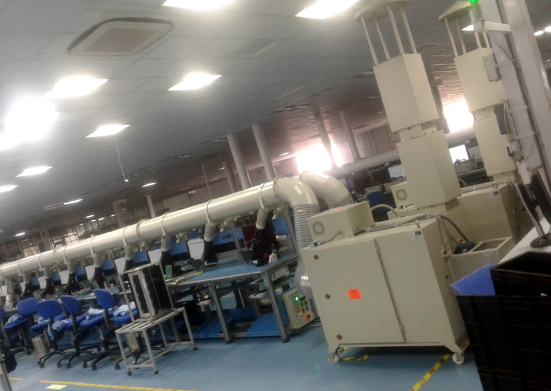
Even though the number of individual hand soldering or dip tinning stations are several in any assembly floor, many users prefer to use individual fume extractors for each station. This is for maximum flexibility during re-organising the stations according to the requirement of the day. The soldering station can be located elsewhere along with its dedicated fume extractor.

For individual soldering stations where relatively smaller components are soldered, we suggest the use of our Fumekiller® electrostatic soldering fume extractor model FK250 single pass filtration unit or the recommended FK250DP, dual pass fitration unit to be placed below the soldering station table. To capture the soldering fumes during soldering, we suggest the use of our self-balanced segmented extractor mini arm fitted to the edge of the table opposite to the operator seat.

The segmented self-balanced mini arm can be positioned as close as 3 to 4 inches from the fume generation spot to optimise the capture of fumes as well as operator comfort. During soldering the fumes are captured by the mini arm and routed to the Fumekiller® unit. Suction is provided using a low noise, high efficiency suction fan in the Fumekiller® unit.

Soldering fumes consists of fine particulates such as lead, flux, carbon, etc which are trapped in the Electrostatic filter modules and the clean air is released through the exhaust port.

For soldering of relatively larger components, possibly with multiple soldering spots such as larger PCBs, we suggest the use of a specially designed small SS booth with in-built lighting and an exhaust port on top of the booth. Here there is no requirement of the mini arm for capture of fumes. The exhaust port is connected to the Fumekiller® unit using PVC flexible hose.

The soldering is carried out within the booth confines. The fumes are sucked through the exhaust port and the particulates are filtered by the Fumekiller® unit.

Please note that the above are arrangements for soldering fume extraction using individual fume extractors each dedicated to a single soldering station.