Introduction
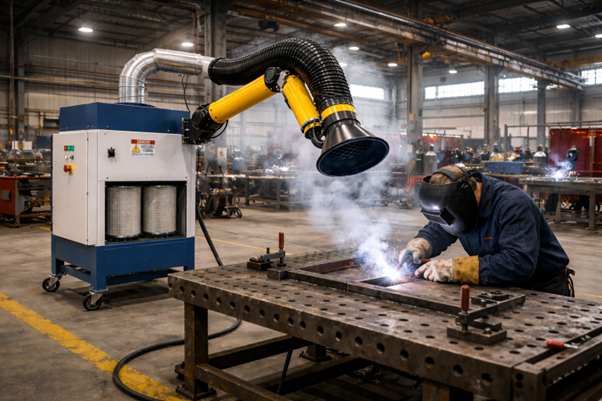
Welding operations in industrial workshops generate fumes that contain fine particulate matter and hazardous gases. These fumes, if not effectively controlled, can accumulate in the workspace and expose workers to unsafe conditions. While many workshops install extraction systems, a significant number still experience poor performance due to design flaws, incorrect usage, or inadequate maintenance.
The issue is not always the absence of equipment—but the presence of improperly designed or poorly implemented systems. As a result, facilities continue to face welding fume extraction problems despite investing in ventilation solutions.
Addressing these challenges requires a deeper understanding of system design, airflow dynamics, and real-world operating conditions. With over 30 years of experience, Powertech has identified recurring issues across workshops where welding air pollution control systems fail to deliver expected performance. This article outlines the most common problems and how they can be addressed effectively.
Key Takeaways
- Most welding fume extraction problems arise from poor system design and incorrect usage.
- Poor welding ventilation is often caused by inadequate airflow and improper hood positioning.
- System design mistakes significantly reduce the efficiency of fume extraction systems.
- Regular monitoring and optimization are essential for effective welding air pollution control.
The Problem: Why Welding Fume Extraction Systems Fail
Even when systems are installed, workshops often struggle with ineffective fume control.
Causes
- Incorrect system sizing and airflow calculation
- Improper placement of extraction arms or hoods
- Poor duct design leading to pressure losses
- Lack of maintenance and clogged filters
- Use of general ventilation instead of source capture
Workplace Impact
- Visible smoke accumulation
- Reduced visibility during welding
- Worker discomfort and fatigue
- Contamination of equipment and surfaces
Safety Risks
Exposure to welding fumes can have serious health implications.
According to the Occupational Safety and Health Administration (OSHA), welding fumes may contain toxic metals such as manganese and chromium that can affect respiratory and neurological health.
The World Health Organization (WHO) highlights that prolonged exposure to airborne particulate matter can lead to chronic respiratory diseases.
These risks emphasize the importance of addressing poor welding ventilation effectively.
Technical Explanation: Common Design and Operational Issues
1. Incorrect Hood Positioning
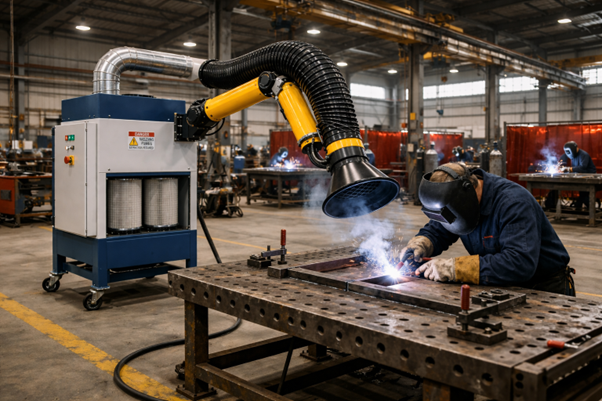
One of the most frequent issues is placing the extraction hood too far from the welding arc.
- Reduces capture efficiency
- Allows fumes to enter the breathing zone
2. Insufficient Airflow
Inadequate airflow is a major contributor to welding fume extraction problems.
- Low capture velocity
- Poor suction at the source
- Inconsistent performance across stations
3. Poor Duct Design
Improper ducting can lead to pressure losses and uneven airflow.
- Sharp bends increase resistance
- Long duct runs reduce efficiency
- Lack of balancing leads to uneven extraction
4. Incorrect System Selection
Using the wrong type of system for the application results in poor performance.
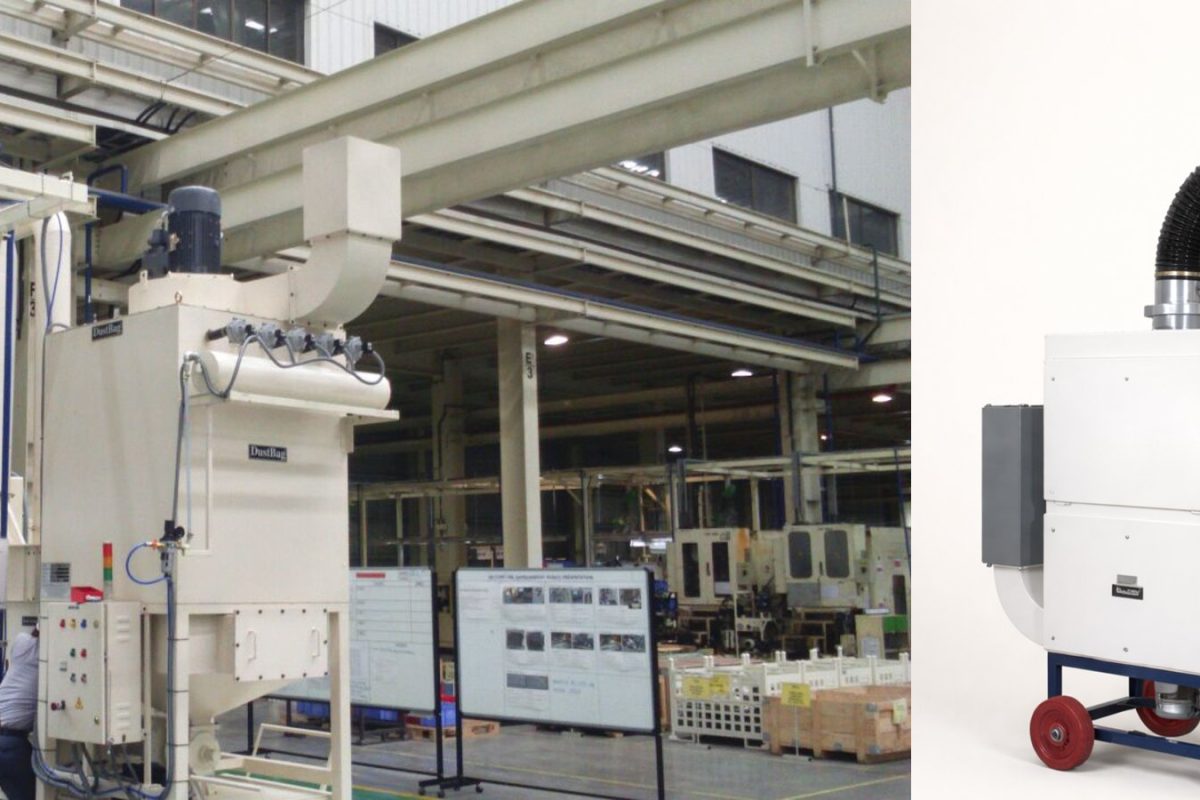
- Portable units used for high-load applications
- Undersized centralized systems
- Lack of scalability
5. Lack of Maintenance
Filters and system components degrade over time.
- Clogged filters reduce airflow
- Increased energy consumption
- Reduced system efficiency
Key Design Parameters for Effective Welding Air Pollution Control
|
Parameter |
Recommended Range |
Remarks |
|
Capture distance |
150 – 300 mm |
Critical for source capture |
|
Capture velocity |
0.5 – 1.5 m/s |
Depends on welding process |
|
Airflow rate |
800 – 1500 m³/hr per arm |
Varies with application |
|
Duct velocity |
10 – 15 m/s |
Prevents particle settling |
|
Filter efficiency |
Up to 99% |
Multi-stage filtration |
Practical Industrial Applications
Fabrication Workshops
Fabrication shops often face challenges due to flexible layouts.
- Frequent repositioning of extraction arms
- Variable workloads
- Need for adaptable systems
Automotive Workshops
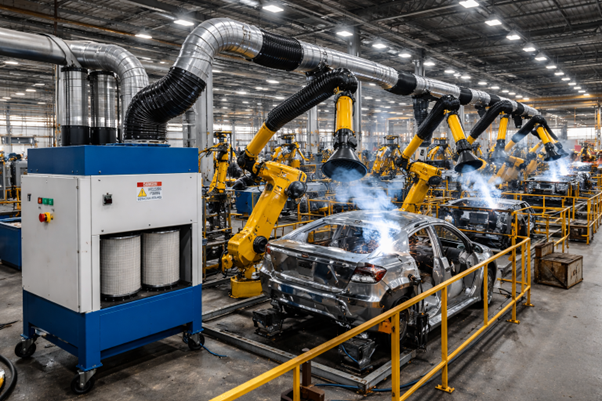
Automotive environments require consistent airflow across multiple stations.
- Centralized systems with proper balancing
- Integrated extraction in welding cells
Maintenance and Repair Workshops
These environments rely on portable systems.
- High flexibility required
- Risk of incorrect positioning
Heavy Engineering Workshops
Heavy welding applications demand high-capacity systems.
- Robust duct design
- High airflow requirements
Expert Insight
Based on Powertech’s experience across industrial workshops, the most common issue is not equipment failure but incorrect system implementation.
In many cases, workshops install high-quality extraction systems but fail to achieve expected performance due to poor design or setup. For example, increasing airflow alone does not improve efficiency if the hood is incorrectly positioned.
Practical recommendations:
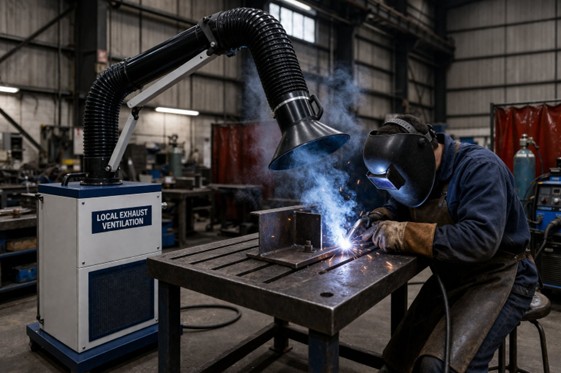
- Focus on source capture rather than increasing airflow
- Ensure proper duct design and balancing
- Conduct regular performance checks
In several installations, minor design corrections have significantly improved system efficiency without requiring major upgrades.
Frequently Asked Questions
Common issues include poor hood positioning, insufficient airflow, poor duct design, and lack of maintenance.
It is usually caused by incorrect system design, inadequate airflow, or improper use of extraction equipment.
– Position extraction arms closer to the source
– Optimize airflow
– Maintain filters regularly
Yes, improper duct design can lead to pressure losses and uneven airflow distribution.
Regular inspections and filter monitoring should be conducted to ensure consistent performance.
Conclusion
Welding fume extraction systems are essential for maintaining safe and efficient workshop environments. However, simply installing a system is not enough. Many workshops continue to face welding fume extraction problems due to poor design, incorrect usage, and lack of maintenance.
Effective welding air pollution control requires a combination of proper system selection, optimized design, and regular monitoring. By addressing common issues such as poor welding ventilation and system design mistakes, industries can significantly improve air quality and worker safety.
With decades of experience in industrial air pollution control, Powertech emphasizes the importance of engineering-driven solutions that are tailored to real-world workshop conditions, ensuring reliable and efficient fume extraction performance.