Best Positioning for Welding Fume Extraction Arms

Introduction

Even the most advanced extraction unit will underperform if the capture point is incorrectly positioned. In welding environments, fumes rise rapidly due to thermal buoyancy and disperse with even minor air currents. If the extraction arm is not placed strategically, fumes bypass the hood and enter the operator’s breathing zone.

Effective welding extraction arm positioning is therefore one of the most critical—and most overlooked—factors in system performance. Many cases of poor ventilation are not caused by inadequate equipment, but by incorrect fume extraction hood placement.

A well-positioned arm enables true source capture welding fumes, ensuring contaminants are removed before dispersion. With over 30 years of experience, Powertech has consistently observed that proper positioning alone can significantly improve welding ventilation efficiency without increasing airflow or system capacity.

Key Takeaways

  1. Correct welding extraction arm positioning is essential for effective fume capture.
  2. Source capture is far more effective than general ventilation.
  3. Hood distance and angle directly impact welding ventilation efficiency.
  4. Small positioning changes can significantly improve system performance.

The Problem: Poor Hood Placement

Improper positioning is one of the leading causes of ineffective welding fume extraction.

Causes

  1. Extraction arm placed too far from the arc
  2. Incorrect angle relative to fume rise direction
  3. Obstruction by the operator or workpiece
  4. Lack of operator training
  5. Frequent repositioning without guidelines

Workplace Impact

  1. Visible fumes escaping into the workspace
  2. Reduced visibility during welding
  3. Increased exposure for operators
  4. Inefficient use of extraction systems

Safety Risks

According to the Occupational Safety and Health Administration (OSHA), exposure to welding fumes can lead to respiratory irritation and long-term health risks.

The National Institute for Occupational Safety and Health (NIOSH) emphasizes source capture as the most effective method for controlling airborne contaminants.

Technical Explanation: How to Position Extraction Arms Correctly

Step 1: Maintain Optimal Distance

The hood should be positioned close enough to capture fumes effectively.

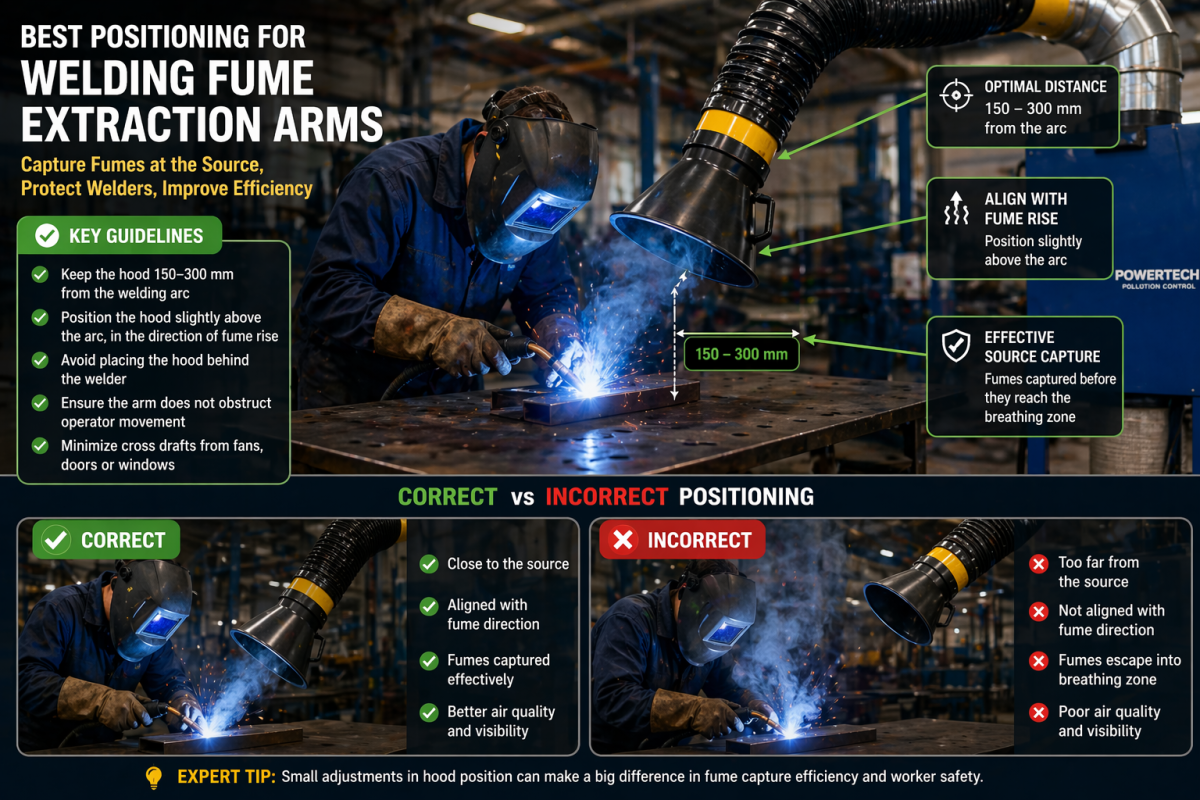
  1. Ideal distance: 150 – 300 mm from the welding arc
  2. Closer positioning reduces airflow requirements

Doubling the distance can significantly reduce capture efficiency.

Step 2: Align with Fume Direction

Welding fumes typically rise upward due to heat.

  1. Position hood slightly above the arc
  2. Angle it to intercept the rising plume

Avoid placing the hood below the welding point.

Step 3: Avoid Blocking Airflow

Improper placement can cause fumes to pass through the operator’s breathing zone.

  1. Do not position hood behind the welder
  2. Avoid placing the hood directly between the arc and the operator’s face

The hood should capture fumes before they reach the operator.

Step 4: Maintain Stable Positioning

Flexible arms must be properly adjusted and locked.

  1. Ensure the arm does not drift during operation
  2. Use arms with good positional stability

Step 5: Minimize Cross Draft Effects

External air movement can disrupt capture.

  1. Avoid placing hoods near fans or open doors
  2. Position to counter airflow disturbances

Recommended Positioning Guidelines

ParameterRecommended ValueRemarks
Hood distance150 – 300 mmCritical for capture
Hood angle30° – 60° toward plumeAlign with fume rise
Position relative to operatorIn front of plumeAvoid breathing zone
Height above arcSlightly aboveMatches fume movement
StabilityFixed positionPrevents drift

Practical Industrial Applications

Fabrication Shops

  1. Frequent repositioning required
  2. Operator training is critical
  3. Flexible arms preferred

Automotive Manufacturing

  1. Fixed positioning in robotic cells
  2. Enclosed extraction systems
  3. Consistent placement improves reliability

Maintenance Workshops

  1. Portable systems used
  2. High dependency on operator positioning

Heavy Engineering

  1. Larger workpieces
  2. Requires adjustable and extended arms

Expert Insight

From Powertech’s field experience, incorrect positioning is one of the most common and easiest-to-fix issues in welding ventilation systems.

In many workshops, improving welding extraction arm positioning has resulted in immediate improvements in air quality without any changes to system capacity.

Key practical observations:

  1. Source capture is more effective than increasing airflow
  2. Proper positioning reduces energy consumption
  3. Operator training is as important as system design

In several installations, correcting fume extraction hood placement has improved efficiency by over 25% without additional investment.

What is the ideal position for a welding extraction arm?

The hood should be placed 150–300 mm from the welding arc and aligned with the direction of rising fumes.

Why is source capture important in welding?

It prevents fumes from spreading into the workspace and reduces operator exposure.

Can poor positioning reduce system efficiency?

Yes, incorrect positioning can significantly reduce capture efficiency even with high airflow.

Should the hood be placed above or below the welding arc?

It should be placed slightly above the arc to capture rising fumes.

How can operators improve positioning?

By keeping the hood close to the source, aligning it with fume direction, and avoiding airflow obstruction.

Conclusion

Proper welding extraction arm positioning is a fundamental requirement for effective fume control. Without correct placement, even well-designed systems fail to capture fumes efficiently. By focusing on source capture welding fumes, optimizing fume extraction hood placement, and improving welding ventilation efficiency, industries can achieve safer and more efficient working environments. With decades of experience, Powertech emphasizes that correct positioning—combined with sound engineering design—is key to achieving reliable and effective welding fume extraction performance.
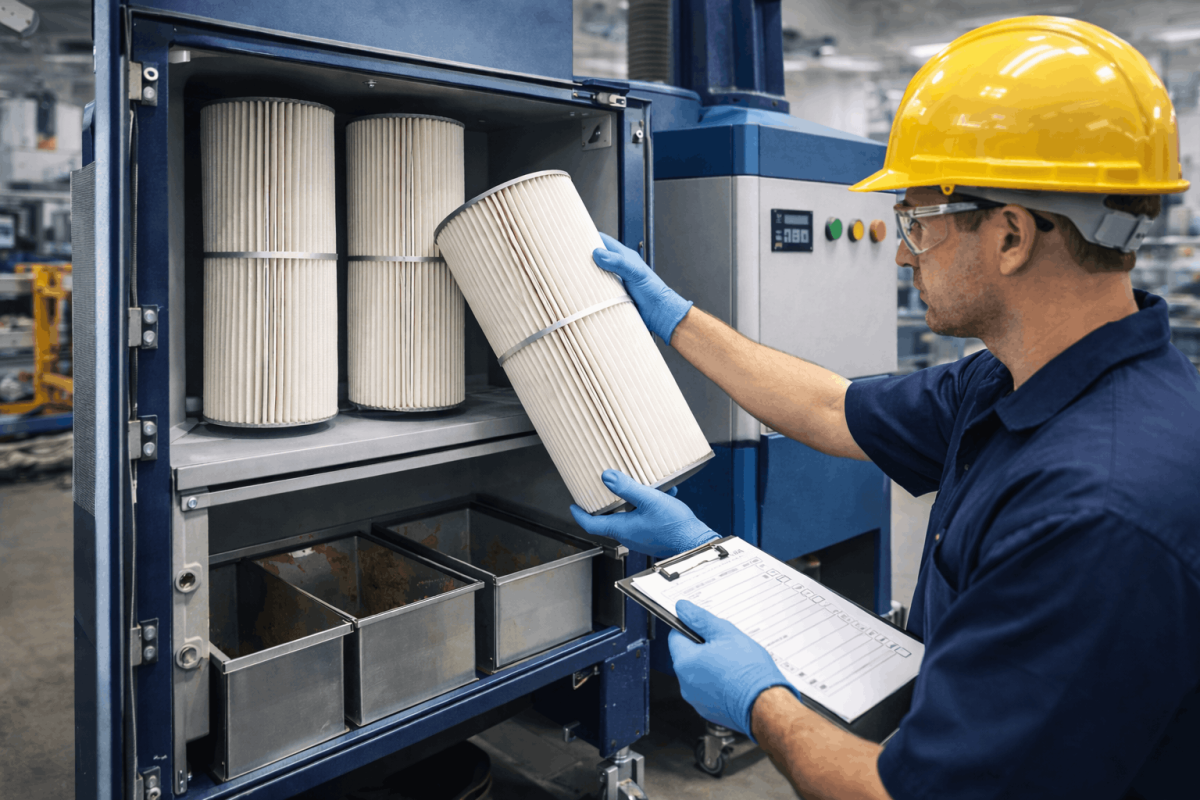
Technician removing a cartridge filter from an industrial dust collector during routine preventive maintenance.

Preventive Maintenance Tips for Mist and Dust Collectors

Why Preventive Maintenance Is Important

Mist collectors and dust collectors play a key role in keeping industrial air clean. They control oil mist from machining and dust from grinding, mixing, and material handling. When these systems do not receive regular care, their performance drops. This leads to poor air quality, higher energy use, and unexpected downtime.

Preventive maintenance helps systems run efficiently and extends equipment life.

Common Problems Caused by Poor Maintenance

Reduced Suction

Clogged filters or collection elements restrict airflow. This reduces capture efficiency.

Higher Power Consumption

Fans work harder when airflow is blocked. This increases energy usage.

Dust or Mist Leakage

Worn seals and overfilled bins allow pollutants to escape back into the workspace.

Unplanned Breakdowns

Neglected systems fail without warning, causing production delays.

Preventive Maintenance Tips for Mist Collectors

Clean Collection Cells Regularly

Oil mist builds up on collection surfaces. Clean electrostatic cells or filter elements as per the operating schedule.

Check Drain Lines

Blocked drains cause oil to re-enter the airflow. Ensure drain paths remain clear.

Inspect Fan and Motor Operation

Listen for unusual noise and check for vibration. These signs often point to imbalance or wear.

Monitor Airflow

A sudden drop in airflow usually indicates fouling or blockage. Address it early.

Preventive Maintenance Tips for Dust Collectors

Inspect Filters or Bags

Check for tears, clogging, or uneven dust loading. Replace damaged elements promptly.

Empty Dust Bins on Time

Overfilled bins cause dust re-entrainment and system strain.

Check Pulse Cleaning Systems

For a pulse-jet dust collector, inspect solenoid valves, air pressure, and timing controls.

Inspect Duct Connections

Loose joints reduce suction and allow dust leakage. Tighten and seal as needed.

Systems supplied by a reliable dust collector manufacturer in Bangalore are designed for easy access and routine servicing.

Creating a Simple Maintenance Schedule

Daily

  • Visual check for leaks or abnormal noise

Weekly

  • Inspect filters and collection areas
  • Check dust or oil levels

Monthly

  • Clean filters or electrostatic cells
  • Inspect fans, motors, and ducts

A written schedule ensures consistency and accountability.

Q&A: Maintenance of Mist and Dust Collectors

Q1: How often should mist collectors be cleaned?
Cleaning frequency depends on mist load, but regular inspection prevents buildup.

Q2: Can poor maintenance affect air quality audits?
Yes. Clogged or leaking systems often cause audit failures.

Q3: Do clean filters improve energy efficiency?
Yes. Clean systems maintain airflow with lower power use.

Q4: Who can help with maintenance planning?
An experienced mist collector manufacturer in Bangalore can recommend service intervals based on your process.

Conclusion

Preventive maintenance keeps your mist collector or dust collector working at their best. Regular cleaning, inspection, and timely replacement prevent performance loss and unexpected downtime. Well-maintained systems protect workers, reduce costs, and support compliance.

A planned maintenance approach ensures clean air and stable operations over the long term.

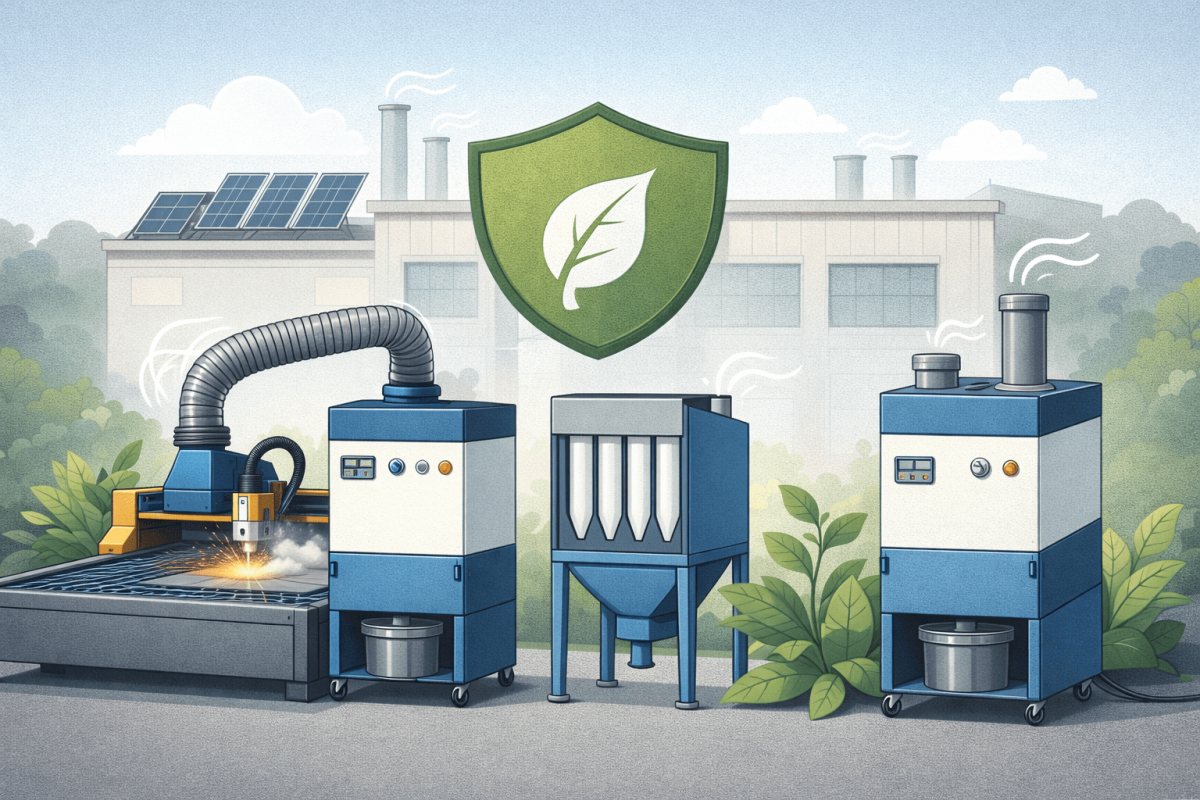
Industrial air pollution control systems operating in a factory environment to support green manufacturing practices.

Green Manufacturing: Role of Air Pollution Control Systems

Why Air Quality Matters in Green Manufacturing

Green manufacturing focuses on reducing environmental impact while maintaining efficient production. It covers energy use, waste reduction, and safe working conditions. One critical but often overlooked part of this approach is air pollution control.

Industrial processes release fumes, dust, and mist that affect both the environment and worker health. Controlling these pollutants supports sustainability goals and ensures long-term operational stability.

What Is Green Manufacturing?

Green manufacturing means producing goods with minimal harm to people and the environment. It involves:

  • Lower emissions
  • Efficient resource use
  • Safer workplaces
  • Compliance with environmental norms

Air pollution control systems play a direct role in achieving these goals.

How Air Pollution Control Supports Sustainability

1. Reduction of Airborne Emissions

Fume extractors, dust collectors, and mist collectors remove pollutants before they enter the atmosphere. This reduces overall emission levels inside and outside the facility.

2. Cleaner Indoor Work Environment

Green manufacturing prioritizes worker health. Clean air improves comfort, reduces health risks, and increases productivity.

3. Energy-Efficient Operation

Modern air pollution control systems use optimized airflow and efficient motors. Electrostatic filtration systems reduce pressure drop and save energy over time.

4. Reduced Waste Generation

Reusable filtration components lower filter disposal and support waste reduction goals.

Key Air Pollution Control Systems Used in Green Manufacturing

Fume Extractors

Used in welding, soldering, and metal cutting. These systems capture fumes at the source and prevent spread.

Dust Collectors

Used in grinding, mixing, food processing, and powder handling. They control fine dust and maintain hygiene.

Mist Collectors

Used in CNC machining and coolant-based operations. They remove oil mist and keep air clean.

Powertech Pollution Controls, a trusted fume extractor manufacturer in Bangalore, designs systems that support long-term sustainability goals.

Compliance and Environmental Responsibility

Green manufacturing requires compliance with CPCB air quality norms and workplace safety standards. Air pollution control systems help industries meet these requirements consistently.

Facilities that invest in proper extraction systems face fewer compliance issues and avoid penalties.

Q&A: Air Pollution Control and Green Manufacturing

Q1: How do air pollution control systems support green manufacturing?
They reduce emissions, protect workers, and support efficient energy use.

Q2: Do air pollution control systems increase operational costs?
No. Efficient systems reduce downtime, energy waste, and health-related losses.

Q3: Can air filtration systems help meet sustainability goals?
Yes. They directly support emission reduction and safer work environments.

Q4: Who provides sustainable air pollution control solutions in India?
An experienced fume extractor manufacturer in Bangalore can design systems aligned with green manufacturing needs.

Conclusion

Green manufacturing depends on clean air as much as efficient production. Air pollution control systems reduce emissions, improve worker health, and support compliance with environmental standards.

By integrating fume extraction, dust collection, and mist control into daily operations, industries move closer to sustainable and responsible manufacturing practices.

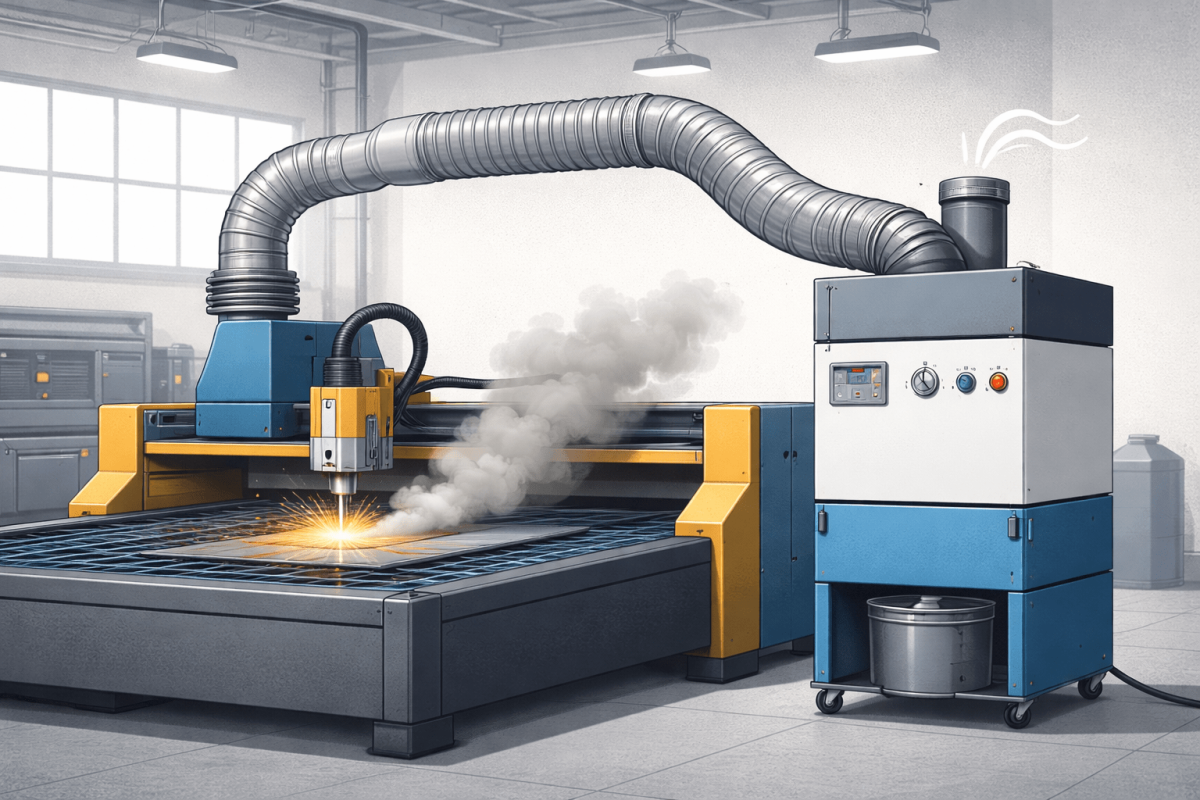
Smoke extraction system capturing metal cutting fumes from a CNC cutting machine inside an industrial workshop.

The Science Behind Smoke Extraction in Metal Cutting Processes

Why Smoke Control Is Critical in Metal Cutting

Metal cutting processes such as plasma cutting, laser cutting, oxy-fuel cutting, and abrasive cutting release smoke and fine particles into the air. This smoke contains metal fumes, fine dust, and heat-generated byproducts that affect air quality and worker safety.

Without proper extraction, smoke spreads quickly across the shop floor. It reduces visibility, causes breathing issues, and leads to non-compliance with air quality standards. Understanding how smoke behaves helps industries choose the right extraction system.

What Is Smoke in Metal Cutting?

How Smoke Is Formed

When metal heats beyond its melting point, it releases vapors. These vapors cool and turn into fine solid particles. At the same time, cutting gases and surface coatings add to the smoke load.

What Smoke Contains

  • Fine metal particles
  • Oxides formed due to heat
  • Coating residues
  • Combustion byproducts

These particles remain airborne for long periods if not captured at the source.

How Smoke Moves Inside a Workshop

Thermal Lift

Hot smoke rises rapidly due to heat. This makes overhead capture difficult if suction is weak or poorly placed.

Airflow Influence

Fans, open doors, and ventilation systems change smoke movement. Poor airflow planning allows smoke to drift across workstations.

Particle Size

Metal cutting smoke consists of very fine particles. These particles stay suspended longer than heavier dust and require strong suction for capture.

The Role of Smoke Extraction Systems

Source Capture

Smoke extraction systems work best when they capture pollutants as close as possible to the cutting zone. This prevents smoke from spreading.

Suction and Airflow Balance

Strong suction pulls smoke into the hood. Stable airflow ensures the system can handle the full smoke volume without loss.

Filtration

Electrostatic and fine filtration stages trap metal particles and return clean air back into the workspace.

Systems designed by a reliable fume extractor manufacturer in Bangalore focus on balancing these three factors.

Common Smoke Extraction Methods for Metal Cutting

Downdraft Tables

Used in laser and plasma cutting. Smoke gets pulled downward through the cutting table.

Local Exhaust Arms

Flexible arms capture smoke directly above the cutting area.

Enclosures with Extraction

Partial or full enclosures contain smoke and improve capture efficiency.

Q&A: Smoke Extraction in Metal Cutting

Q1: Why is metal cutting smoke harder to control than dust?
Because smoke particles are finer and stay airborne longer.

Q2: Does ventilation alone remove cutting smoke?
No. Ventilation only dilutes smoke. Extraction removes it at the source.

Q3: What type of extractor works best for metal cutting smoke?
Systems with strong suction and fine filtration perform best.

Q4: Who can design effective smoke extraction systems in India?
An experienced fume extractor manufacturer in Bangalore can design systems based on cutting method, layout, and smoke load.

Conclusion

Smoke from metal cutting processes spreads fast and contains fine particles that pose serious health risks. Effective smoke extraction depends on understanding how smoke forms, moves, and behaves inside the workspace.

With proper source capture, balanced airflow, and efficient filtration, industries can maintain clean air, improve visibility, and protect workers. Choosing the right extraction system ensures both safety and compliance.

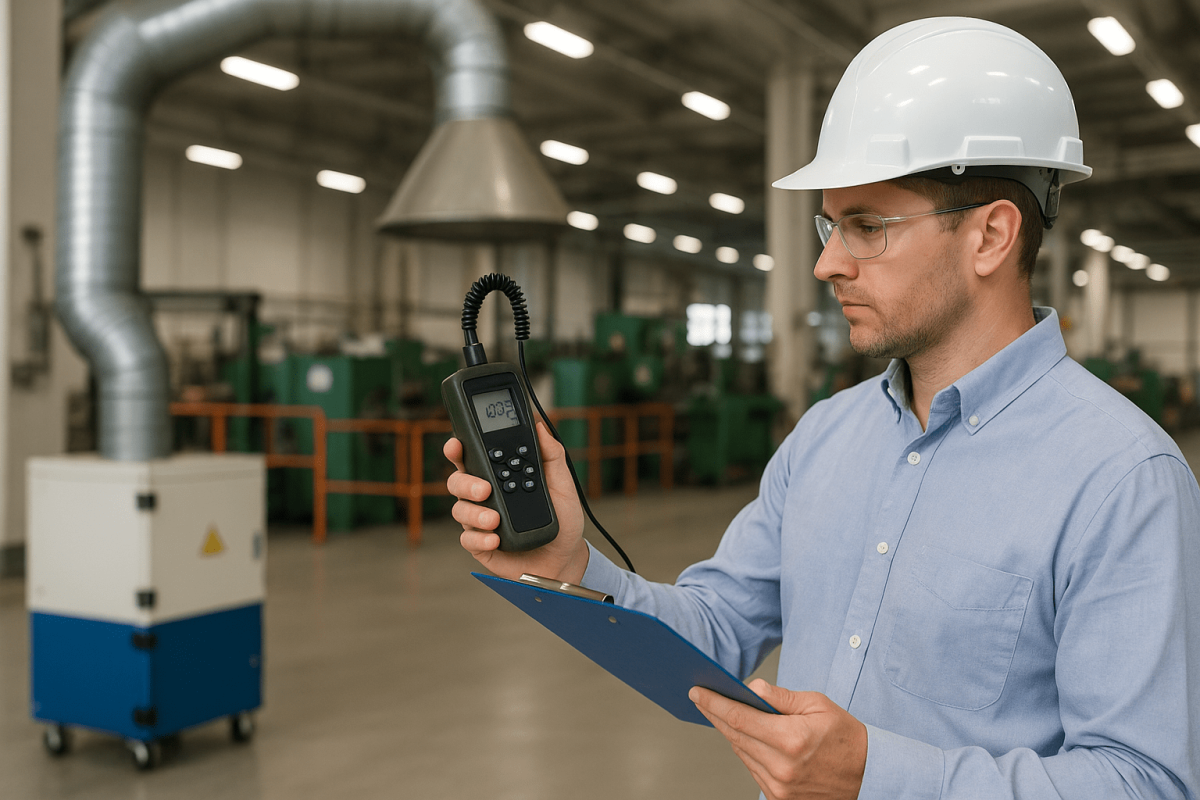
Worker checking air quality with a handheld meter inside an industrial facility.

How to Conduct an Air Quality Audit in Your Facility

Why Air Quality Audits Matter

An air quality audit helps you understand the level of fumes, dust, and mist inside your facility. It also shows whether your current fume extractor, mist collector or dust collector is performing well. Regular audits help protect workers, avoid compliance problems, and keep the workspace clean.

Industries that handle welding, soldering, machining, grinding, or powder processing benefit the most from routine air quality checks.

1. Identify All Sources of Air Pollution

What to Check

  • Welding bays
  • Soldering lines
  • CNC machining areas
  • Grinding benches
  • Mixing and powder handling zones

Each of these processes produces airborne contaminants that may require different extraction solutions.

2. Measure Ventilation and Airflow

Steps

  • Check airflow direction
  • Measure air movement at different points
  • Inspect exhaust fans, inlet vents, and ducts
  • Note areas with low or stagnant airflow

Good ventilation supports fume extraction and reduces pollutant buildup.

3. Test for Pollutant Levels

What to Measure

  • Fine dust (PM2.5 and PM10)
  • Welding fumes
  • Soldering gases
  • Oil mist from machines
  • Airborne powder from food or chemical processing

You can use handheld meters or third-party testing services to collect accurate readings.

4. Review Existing Extraction Systems

Key Points

  • Is suction strong enough at each hood?
  • Are filters or electrostatic cells clean?
  • Are extraction arms positioned correctly?
  • Are there signs of airflow drop or leaks?

Systems such as the FumeKiller® provide steady suction and are easy to maintain when cleaned regularly.

5. Compare Results with CPCB Standards

Your readings should match the indoor air safety limits set by the CPCB. If pollutant levels exceed limits, you may need changes in ventilation, extraction strength, or maintenance procedures.

6. Prepare a Corrective Action Plan

Possible Improvements

  • Move extraction arms closer to the fume source
  • Upgrade to a higher-capacity fume extractor
  • Add dust or mist collectors in specific zones
  • Increase fresh air circulation
  • Set a fixed cleaning schedule for filters

Working with an experienced fume extractor manufacturer in Bangalore ensures you choose solutions that fit your process.

Q&A: Common Questions About Air Quality Audits

Q1: How often should a facility conduct an air quality audit?
At least once a year, or more often for high-fume operations.

Q2: What causes audit failures?
Weak suction, blocked filters, incorrect hood placement, and poor ventilation.

Q3: Do extraction systems directly affect audit results?
Yes. Proper suction and airflow are essential for maintaining safe air quality.

Q4: Who can help improve extraction performance?
A reliable fume extractor manufacturer in Bangalore can inspect your layout and recommend upgrades or adjustments.

Conclusion

An air quality audit is a simple and effective way to maintain clean air, protect workers, and meet compliance standards. With accurate measurements and strong fume extraction systems, facilities can prevent air pollution from building up on the shop floor.

1 2 3 5