
Why Correct Airflow Sizing Is Critical
A welding fume extractor works only when airflow matches the fume load. If airflow is too low, fumes escape into the workspace. If airflow is too high, energy use increases without added benefit.
Correct sizing ensures effective capture, stable performance, and lower operating cost.
What Determines Airflow Requirements
Type of Welding Process
Different welding processes generate different fume volumes. Higher heat input produces more fumes and needs higher airflow.
Number of Welding Stations
Each active station adds to the total airflow demand. Systems serving multiple stations must account for simultaneous operation.
Capture Distance
The farther the hood sits from the welding point, the more airflow is needed. Keeping the hood close reduces airflow demand.
Workplace Air Movement
Fans, open doors, and cross drafts push fumes away from the hood. This increases airflow requirements.
Basic Method to Estimate Airflow
- Decide the Capture Velocity
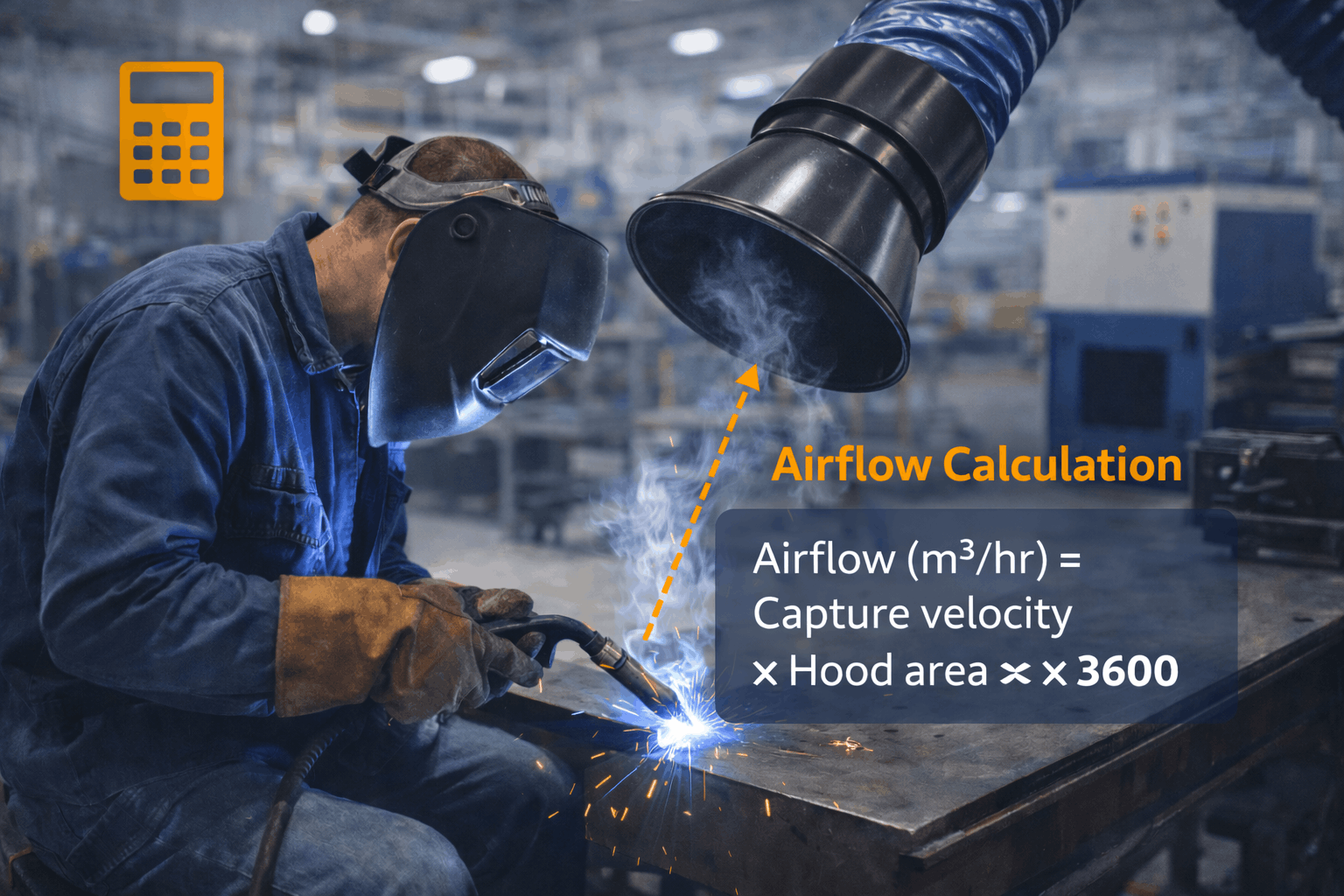
Most welding applications require a capture velocity between 0.5 to 1.0 m/s at the fume source.
- Measure Hood Opening Area
Calculate the open area of the suction hood in square meters.
- Calculate Airflow
Use the formula:
Airflow (m³/hr) = Capture velocity × Hood area × 3600
This gives a basic airflow value for one welding station.
Adjustments for Real-World Conditions
Add Safety Margin
Add 20–30% extra airflow to account for losses in ducts and filters.
Account for Duct Length
Longer ducts increase resistance. This may require higher fan capacity.
Consider Simultaneous Welding
If multiple stations operate at the same time, total airflow must support all active points.
An experienced welding fume extractor manufacturer in Bangalore usually performs these calculations during system design.
Common Sizing Mistakes
Oversizing the System
Oversized systems waste energy and increase noise without improving capture.
Ignoring Hood Position
Poor positioning forces the system to compensate with higher airflow.
Assuming One Size Fits All
Each welding setup needs a specific airflow calculation.
Q&A: Welding Fume Extractor Airflow Sizing
No. Airflow depends on welding intensity, hood size, and layout.
No. Correct hood placement is more effective than excessive airflow.
Yes. Portable units need proper sizing based on their working distance.
A qualified welding fume extractor manufacturer in Bangalore should assess airflow needs based on site conditions.
Conclusion
Correct airflow sizing is essential for welding fume extraction. It ensures fumes get captured before spreading while keeping energy use under control. Calculating airflow based on capture velocity, hood size, and layout leads to reliable performance.
A well-sized welding fume extractor protects workers, improves air quality, and supports efficient operations.