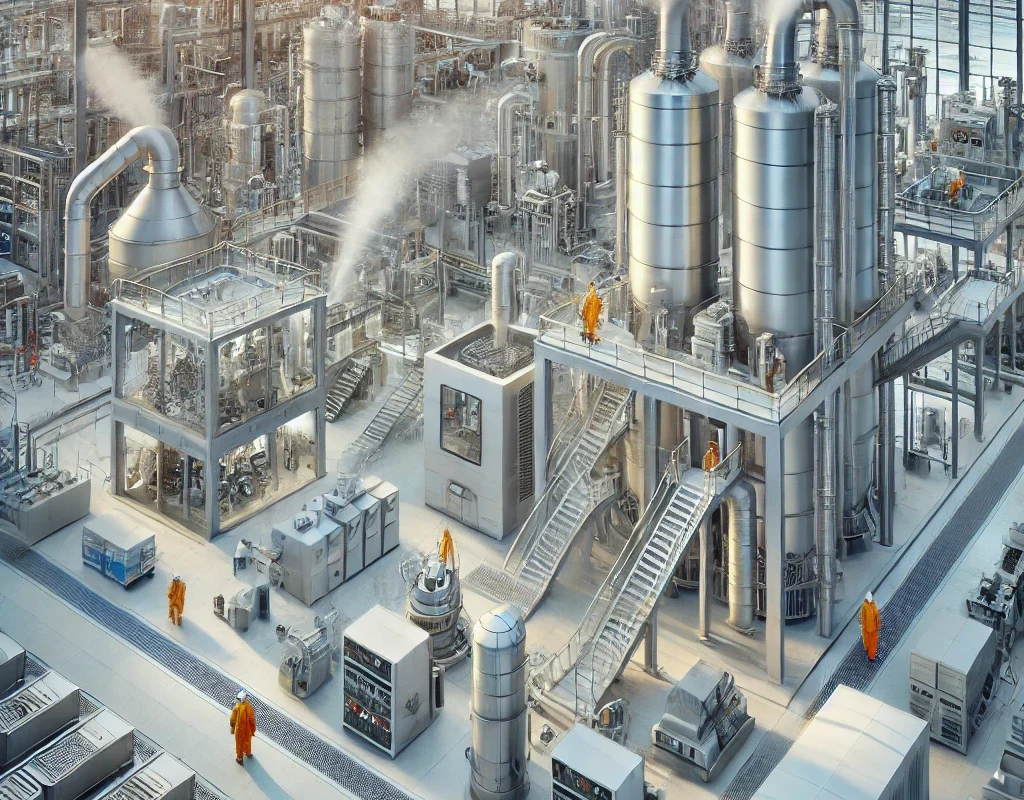
AI generated image of a plant in operation with fumes being released from some equipment.

How Poor Indoor Air Quality Affects Employee Productivity

Why Indoor Air Quality Matters at Work

Indoor air quality has a direct impact on worker comfort, health, and performance. In industrial environments, welding, soldering, machining, and grinding release fumes, dust, and mist into the workspace. If these pollutants are not controlled, they accumulate and affect employees throughout the day.

Poor indoor air quality not only increases health risks but also reduces productivity across the entire facility.

1. Increased Fatigue and Reduced Focus

When workers breathe contaminated air, the body works harder to filter out pollutants. This leads to fatigue and reduced concentration. Employees working near welding fumes, soldering smoke, or dust-heavy processes experience faster mental exhaustion.

Clean air helps workers stay alert and productive for longer periods.

2. Higher Absenteeism and Health Issues

Airborne contaminants cause headaches, irritation, allergies, breathing problems, and long-term lung issues. These health problems lead to more sick leave and reduced work output.

Facilities using proper fume extractors, dust collectors, and mist collectors see fewer health complaints among employees.

3. Poor Visibility and Slower Workflow

Welding smoke, mist from CNC machines, and airborne dust reduce visibility on the shop floor. This slows down the workflow and causes delays during assembly, inspection, and quality checks.

Clear air improves visibility and makes work faster and safer.

4. Reduced Equipment Life and More Breakdowns

Dust and fumes settle on machines, sensors, and control panels. Over time, this leads to overheating, corrosion, or malfunction. Equipment failure disrupts production and adds repair costs.

Clean air reduces equipment wear and supports uninterrupted operations.

5. Lower Morale and Job Satisfaction

Employees working in polluted areas feel discomfort and frustration. Poor air quality affects morale and reduces motivation. A clean and safe work environment improves satisfaction and retention.

Effective Solutions to Improve Indoor Air Quality

Local Exhaust Ventilation (LEV)

LEV systems capture pollutants directly at the source. Flexible arms, hoods, and extraction points ensure targeted capture.

Welding Fume Extractors

A welding fume extractor removes fumes before they spread. Powertech’s FumeKiller®, provides strong suction and efficient electrostatic filtration.

Soldering Fume Extractors

Flux fumes in electronics assembly affect breathing and comfort. A soldering fume extractor keeps the air clean around compact workstations.

Dust Collectors

Grinding and powder handling release fine dust. Powertech offers dust collectors for both light and heavy dust loads.

Mist Collectors

CNC machining generates oil mist that spreads quickly. MistKiller units function as an effective mist collector to capture this mist and help maintain safe indoor air.

Q&A: Indoor Air Quality and Productivity

Q1: How does indoor air quality affect work performance?
Poor air quality causes fatigue, poor focus, health issues, and lower output.

Q2: Can a fume extractor improve productivity?
Yes. Removing fumes improves visibility, comfort, and safety, which raises overall productivity.

Q3: What areas need extraction systems the most?
Welding bays, soldering lines, grinding stations, mixing areas, CNC machining sections, and powder handling zones.

Q4: Who provides reliable extraction systems in India?
Powertech Pollution Controls, a trusted fume extractor manufacturer in India, supplies FumeKiller, DustBag, and MistKiller systems for industrial use.

Conclusion

Poor indoor air quality affects employee productivity by reducing focus, increasing fatigue, causing health issues, and disrupting workflow. Installing high-quality fume extractors, dust collectors, and mist collectors creates a safer and more productive work environment.

As a leading fume extractor manufacturer in Bangalore, Powertech Pollution Controls helps industries maintain clean air, improve worker comfort, and meet compliance standards.
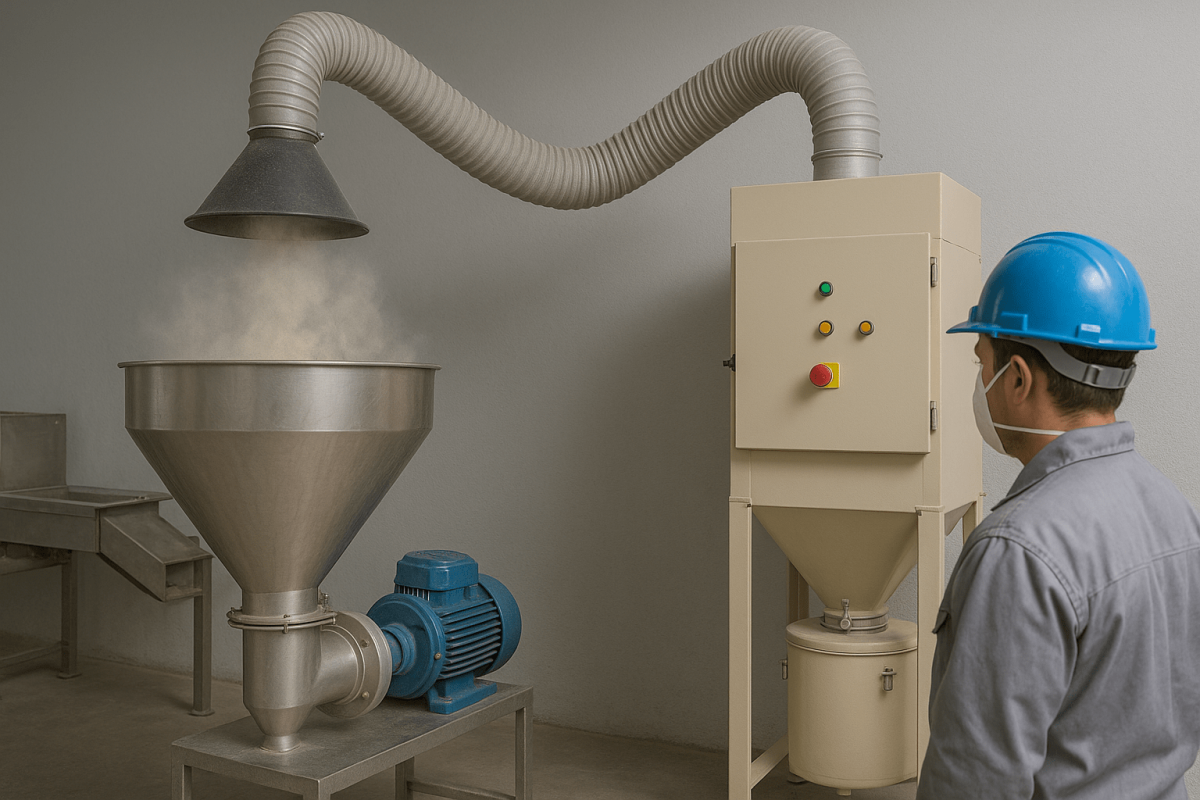
Worker monitoring a dust collection hood extracting fine powder from a food processing hopper in a clean industrial facility.

Benefits of Using Reverse-Pulsed-Jet Dust Collectors in Food Manufacturing

Why Dust Control Is Essential in Food Production

Food manufacturing involves processes like mixing, grinding, sieving, drying, and packaging. These activities generate fine food dust that becomes airborne quickly. Without proper control, this dust affects product quality, worker safety, and hygiene standards.

A Reverse-Pulsed-Jet Dust Collector is one of the most effective systems for food plants because it removes dust continuously without stopping production. It also keeps the workspace clean and supports compliance with food safety regulations.

How Reverse-Pulsed-Jet Dust Collectors Work

Pulse-Jet Cleaning

The system uses short bursts of compressed air to clean filter bags. The dust falls into a collection bin while clean air moves back into the room.

Continuous Operation

The cleaning happens while the system runs. There is no need to stop production for filter maintenance.

High Filtration Efficiency

The filters capture fine dust from flour, spices, powders, grains, and additives commonly used in food production.

Key Benefits for Food Manufacturing Facilities

1. Improved Hygiene and Cleanliness

Food dust settles on equipment and work surfaces. A Reverse-Pulsed-Jet Dust Collector reduces dust levels and helps maintain a clean processing environment.

2. Continuous and Reliable Operation

The pulse-jet cleaning mechanism keeps filters clear. This maintains steady airflow and avoids downtime.

3. Reduced Risk of Cross-Contamination

Fine dust from different ingredients can mix and contaminate batches. Proper dust extraction prevents this and supports food safety compliance.

4. Better Worker Safety

Airborne fine dust causes respiratory issues and irritation. Effective dust collection improves worker comfort and reduces health risks.

5. Extended Filter Life and Lower Running Costs

Pulse-jet cleaning keeps filters efficient for longer periods. This reduces the frequency of replacements and lowers maintenance costs.

6. Compliance With Food Safety Standards

Clean air supports compliance with norms from FSSAI, HACCP, and other hygiene standards. Using equipment from a trusted dust collector manufacturer in Bangalore makes audits and inspections easier.

7. Reduce Potential Loss of Product

The large amount of dust generated that is lost can potentially be reclaimed and used by using food grade material for the dust collector and the ducting. This can greatly benefit the manufacturers by significantly reducing loss of product.

Common Applications in Food Manufacturing

  • Flour mixing and grinding
  • Spice processing
  • Powder blending
  • Grain cleaning
  • Food supplement manufacturing
  • Bakery ingredient handling

The DustBag Reverse-Pulsed-Jet Dust Collector from Powertech is widely used in these applications because it is easy to maintain and highly efficient.

Q&A: Using Reverse-Pulsed-Jet Dust Collectors

Q1: Is a Reverse-Pulsed-Jet Dust Collector suitable for fine food dust?
Yes. It captures very fine powders and keeps filters clean during continuous production.

Q2: Does it require frequent maintenance?
No. The pulse-jet system reduces manual cleaning and increases filter life.

Q3: Can this system improve product quality?
Yes. It reduces cross-contamination and maintains a cleaner processing environment.

Q4: Who manufactures reliable dust collectors in India?
Powertech Pollution Controls, a leading dust collector manufacturer in India, provides pulse-jet systems designed for food and general manufacturing.

Conclusion

Reverse-Pulsed-Jet Dust Collectors are one of the best solutions for controlling dust in food manufacturing. They offer continuous operation, clean filters, low maintenance, and strong performance across high-dust applications. They also help facilities maintain hygiene, product quality, and regulatory compliance.

As a trusted dust collector manufacturer in Bangalore, Powertech Pollution Controls delivers efficient and CPCB-compliant solutions for food, pharmaceutical, and general manufacturing industries.

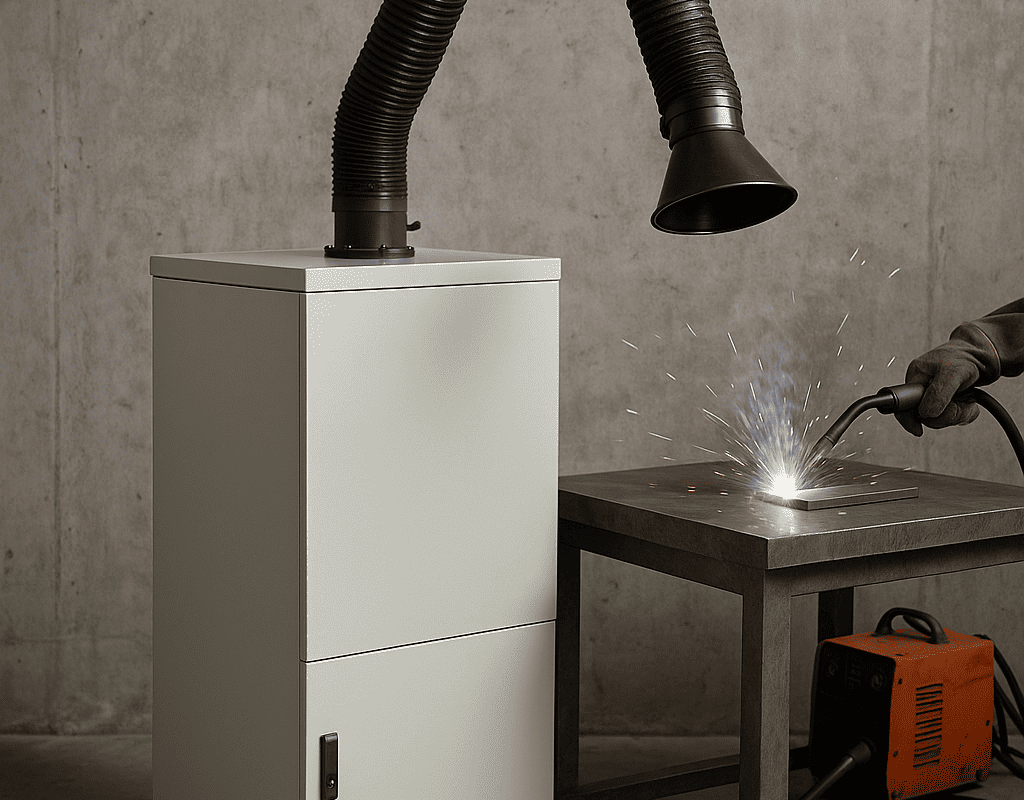
Fume extraction system connected to a welding station, showing a flexible suction arm capturing fumes directly above the weld area in a clean workshop.

FAQs About Industrial Air Filtration Systems

Understanding Industrial Air Filtration

Air filtration systems play a crucial role in maintaining clean and safe environments across industries. From welding and soldering to machining and food processing, every production process generates airborne pollutants such as fumes, dust, mist, or smoke. The right air filtration system helps control these contaminants and ensures compliance with safety standards.To help you understand the importance of these systems better, here are some common questions and answers about industrial air filtration and how manufacturers like Powertech Pollution Controls, a leading fume extractor manufacturer in Bangalore, deliver effective clean air solutions.

What Is an Industrial Air Filtration System?

An industrial air filtration system removes airborne pollutants created during manufacturing. It uses filters or electrostatic technology to capture dust, mist, and fumes before clean air is released back into the workspace. Common examples include fume extractors, dust collectors, and mist collectors — all of which are designed for different types of pollutants.

Why Is Air Filtration Important in Industrial Settings?

Clean air ensures worker safety, reduces equipment wear, and improves overall productivity. Without proper filtration, pollutants such as oil mist, metal fumes, or chemical vapors can cause respiratory problems, damage machinery, and lead to non-compliance with CPCB air quality norms.

What Are the Different Types of Air Filtration Systems?

Fume Extractors
Used for removing smoke and fumes from welding, soldering, and similar operations. Powertech is a trusted welding fume extractor manufacturer in Bangalore and soldering fume extractor manufacturer in Bangalore, offering portable and centralized systems.

Dust Collectors
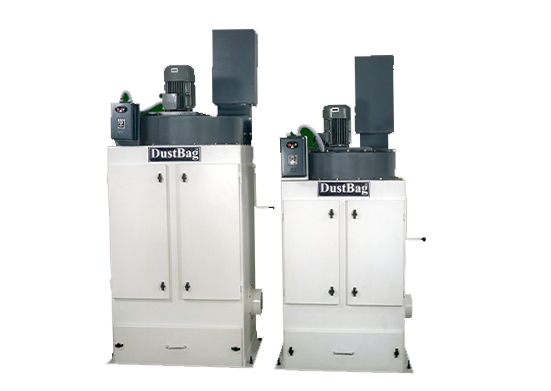
Designed to handle dry particles and dust from processes such as grinding, polishing, or mixing. Powertech also operates as a dust collector manufacturer in Bangalore, providing solutions like the DustBag series.

Mist Collectors
Ideal for CNC machining and coolant-based operations, a mist collector like MistKiller from Powertech Pollution Controls can effectively removes oil mist and fine droplets, improving air quality in workshops.

What Technology Is Used in Modern Air Filtration Systems?

Electrostatic precipitation is one of the most effective methods. It charges fine particles in the air and collects them on oppositely charged plates. This technology is used in systems like FumeKiller, which efficiently captures welding and soldering fumes without frequent filter replacements.

How Often Should Filters Be Cleaned or Replaced?

Maintenance frequency depends on the process and system type.

Electrostatic filters can be washed and reused.

HEPA or cartridge filters must be replaced periodically.
Regular maintenance ensures optimal performance and compliance with air quality standards.

Can One System Handle Multiple Pollutant Types?

While some multi-stage systems can capture different pollutants, it’s usually best to choose separate units for specific contaminants. For instance, fume extractors are ideal for smoke and vapor, while dust collectors handle dry particles. Custom-designed systems can also combine both functions when needed.

How Do I Choose the Right Air Filtration System?

Selecting the right system depends on factors like:

Type of pollutant (dust, mist, or fumes)

Process type (welding, grinding, machining, etc.)

Volume of air to be cleaned

Layout of the facility

Consulting a fume extractor manufacturer in India like Powertech Pollution Controls ensures you get a solution designed for your exact industrial process.

Are Air Filtration Systems Energy Efficient?

Yes. Modern air filtration systems are designed to minimize pressure drop, allowing for efficient airflow with lower energy use. Electrostatic systems, in particular, require less power and offer longer service life compared to traditional filters.

What Are the Benefits of Partnering with a Local Manufacturer?

Working with a fume extractor manufacturer in Bangalore offers faster service, custom-built designs, and easier access to support and spare parts. Local expertise also ensures better understanding of regional air quality norms and CPCB requirements.

Conclusion

Industrial air filtration is not just about meeting safety standards — it’s about creating a cleaner, more efficient, and sustainable workplace. Whether you need a welding fume extractor, soldering fume extractor, dust collector, or mist collector, Powertech Pollution Controls provides reliable and customized solutions to fit your needs. As a trusted fume extractor manufacturer in India, Powertech helps industries achieve cleaner air, safer workspaces, and better long-term performance.

 Points to consider when choosing a Dust Collector

Keeping the air clean is a vital part of the operations within an industrial workspace and when dealing with floating dust particles, dust collectors are a crucial part of this process. The wrong type of dust collector will not only compromise the efficiency of dust extraction but the maintenance and operating costs as well. With this in mind, there are various factors to be considered to ensure that the right type of dust extraction system is chosen.

  1. Type of Dust: Knowing this can help avoid blockages and the need for frequent cleaning.
    • Fine dust, generated from processes like polishing or sanding, would generally require a high-efficiency filter like cartridge filters.
    • Coarse dust, from cutting or grinding processes, will require more heavy duty filters like bag filters, capable of capturing the larger dust particles.
    • Moist or sticky dust can cause problems like clogging of the filters and may require filters that are custom designed and make use of specialized material.
  1. Volume of Air and Suction Power Required to Capture the Dust Particles:
    • The volume of air flow required is measured in CFM (Cubic Feet per Minute) or CMH (Cubic Metres per Hour). 
    • The required air flow volume will vary depending on the size of the work area as well as the distance of the suction hood from the dust generation point.
    • The required suction force is determined based on the capture velocity or velocity of air flow required to move the dust particles.
    • In case of fine dust it can be between 100 – 150 FPM (Feet per Minute).
    • In case of larger dust particles the velocity would need to be higher and is approximately 200 – 250 FPM.
  1. Volume of Generated Dust: Higher volumes mean more frequent cleaning.
    • In case the volume of dust being generated is low or moderate, a regular dust collection system would suffice.
    • However, in case there is a very large volume of dust being generated, the cleaning of the filters will need to be much more frequent which may hinder operation times.
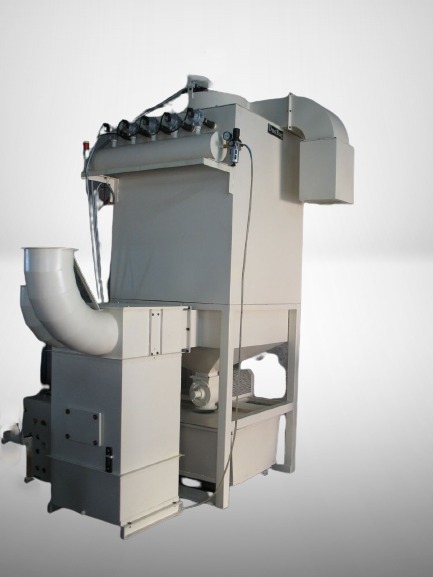
    • For such cases, it is recommended to use a self-cleaning dust collector. The DustBag® Reverse-Pulsed Jet (RPJ) is a good example of this type of dust collector.
  1. Maintenance and Cleaning: Choose a dust collector that is easy to maintain.
    • The collected dust needs to be disposed of and filters cleaned regularly to maintain operational efficiency of the dust collector.
    • As mentioned earlier, pulsed jet dust collectors are examples of self cleaning dust collectors that can automate the filter cleaning process and reduce downtime.
  1. Safety and Compliance: Maintain all regulatory standards.
    • Dust can be hazardous, especially in industries like food or metalworking.
    • Some dust types are also flammable and even explosive. An example of this would be magnesium dust.
    • Ensure that the dust collection system meets standards as per the pollution control laws. Additionally, check for additional safety standards like ATEX if there is a risk of explosion.
  1. Noise and Running Costs: Specific requirements for your dust collector.
    • If noise is a concern in the shopfloor, ask about models with acoustic conditioning for quieter operation.
    • Running costs include factors like energy use, maintenance schedule and filter life and replacement costs.
    • All of the above factors should be considered carefully to avoid long term issues.

Overall, it is important to know what are the factors to be considered when choosing your dust collector.The right system will keep the air clean inside the shopfloor, protect employee health and keep running costs low, all of which are highly beneficial for an industry in the long term. For more expert advice on dust collectors, get in touch with us today.

Innovations in Electrostatic Filtration for Cleaner Air

In an era where environmental health is paramount, the quality of the air we breathe has never been more critical. With the escalating challenges of air pollution, innovative solutions are essential for ensuring a cleaner, healthier atmosphere. At the forefront of these solutions is electrostatic filtration, a revolutionary technology that has become a cornerstone in air pollution control. This technology, evolving continually, stands as a testament to human ingenuity in the face of environmental challenges.

Electrostatic filtration, in its essence, is a method that uses electrically charged filters to capture airborne particles. The concept, originating decades ago, was simple yet effective. Initially, these filters were rudimentary, focusing primarily on capturing large dust particles. However, as environmental demands intensified, the technology underwent significant transformations. Today, electrostatic filters are far more sophisticated, boasting a heightened ability to trap not only dust but also finer pollutants, thus significantly enhancing air quality.

The recent innovations in electrostatic filtration are nothing short of remarkable. Modern systems are now equipped with advanced features that increase their efficacy in purifying air. These enhancements include greater energy efficiency, which makes them more sustainable and cost-effective. Maintenance requirements have been reduced, making them more user-friendly. Perhaps most importantly, these filters have become adept at capturing much finer particles, a critical feature in combating air pollution. Such advancements have cemented electrostatic filtration’s role in modern air pollution control strategies.

The applications of electrostatic filtration are diverse, extending from industrial settings to everyday urban environments. In industries, these filters are integral components of fume extractors, playing a vital role in maintaining air quality by capturing harmful emissions. Laboratories and manufacturing facilities benefit immensely from these systems, ensuring a safer working environment. The impact of electrostatic filtration is not limited to industrial settings; it extends into homes and public spaces, contributing significantly to overall efforts in air pollution control.

When compared to other air purification methods, such as HEPA filters, electrostatic filtration stands out for its unique advantages. While HEPA filters are traditionally more effective in trapping ultra fine particles, electrostatic filters offer a more energy-efficient and cost-effective solution. They are particularly adept at removing certain types of pollutants, which makes them an invaluable tool in specific scenarios where these pollutants are prevalent.

Looking to the future, the potential for further advancements in electrostatic filtration is vast. Research continues to focus on enhancing its efficiency, especially in capturing ultrafine particles, which are increasingly recognized as a significant health hazard. Innovations may also explore the integration of smart technology, enabling more automated and responsive air purification systems. An additional path includes the application of electrostatic filters in the field of healthcare. Powertech has made some advancements in this with our DustKiller® BIO unit. The continuous evolution of electrostatic filtration technology is crucial, not just for the present but for future generations, as we collectively strive for a cleaner and healthier environment.

In conclusion, the journey of electrostatic filtration from a basic air cleaning method to a sophisticated air pollution control technology is a testament to human innovation. As we face the ongoing challenges of air pollution, the role of advanced electrostatic filtration systems becomes increasingly vital. These innovations not only signify progress in environmental technology but also reinforce our commitment to safeguarding the air we breathe, ultimately contributing to a healthier planet for all.