
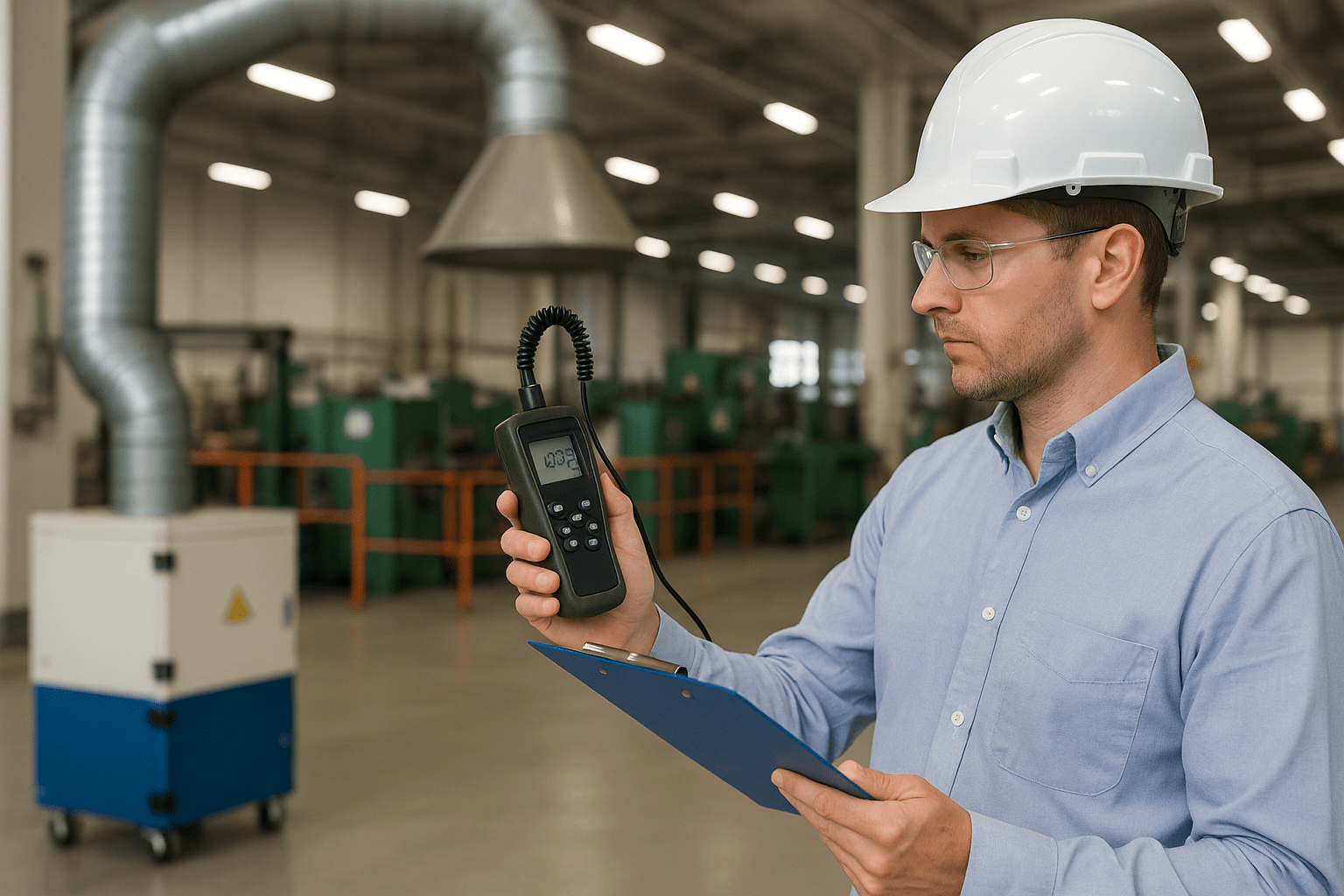
Why Air Quality Audits Matter
An air quality audit helps you understand the level of fumes, dust, and mist inside your facility. It also shows whether your current fume extractor, mist collector or dust collector is performing well. Regular audits help protect workers, avoid compliance problems, and keep the workspace clean.
Industries that handle welding, soldering, machining, grinding, or powder processing benefit the most from routine air quality checks.
1. Identify All Sources of Air Pollution
What to Check
- Welding bays
- Soldering lines
- CNC machining areas
- Grinding benches
- Mixing and powder handling zones
Each of these processes produces airborne contaminants that may require different extraction solutions.
2. Measure Ventilation and Airflow
Steps
- Check airflow direction
- Measure air movement at different points
- Inspect exhaust fans, inlet vents, and ducts
- Note areas with low or stagnant airflow
Good ventilation supports fume extraction and reduces pollutant buildup.
3. Test for Pollutant Levels
What to Measure
- Fine dust (PM2.5 and PM10)
- Welding fumes
- Soldering gases
- Oil mist from machines
- Airborne powder from food or chemical processing
You can use handheld meters or third-party testing services to collect accurate readings.
4. Review Existing Extraction Systems
Key Points
- Is suction strong enough at each hood?
- Are filters or electrostatic cells clean?
- Are extraction arms positioned correctly?
- Are there signs of airflow drop or leaks?
Systems such as the FumeKiller® provide steady suction and are easy to maintain when cleaned regularly.
5. Compare Results with CPCB Standards
Your readings should match the indoor air safety limits set by the CPCB. If pollutant levels exceed limits, you may need changes in ventilation, extraction strength, or maintenance procedures.
6. Prepare a Corrective Action Plan
Possible Improvements
- Move extraction arms closer to the fume source
- Upgrade to a higher-capacity fume extractor
- Add dust or mist collectors in specific zones
- Increase fresh air circulation
- Set a fixed cleaning schedule for filters
Working with an experienced fume extractor manufacturer in Bangalore ensures you choose solutions that fit your process.
Q&A: Common Questions About Air Quality Audits
Q1: How often should a facility conduct an air quality audit?
At least once a year, or more often for high-fume operations.
Q2: What causes audit failures?
Weak suction, blocked filters, incorrect hood placement, and poor ventilation.
Q3: Do extraction systems directly affect audit results?
Yes. Proper suction and airflow are essential for maintaining safe air quality.
Q4: Who can help improve extraction performance?
A reliable fume extractor manufacturer in Bangalore can inspect your layout and recommend upgrades or adjustments.
Conclusion
An air quality audit is a simple and effective way to maintain clean air, protect workers, and meet compliance standards. With accurate measurements and strong fume extraction systems, facilities can prevent air pollution from building up on the shop floor.