
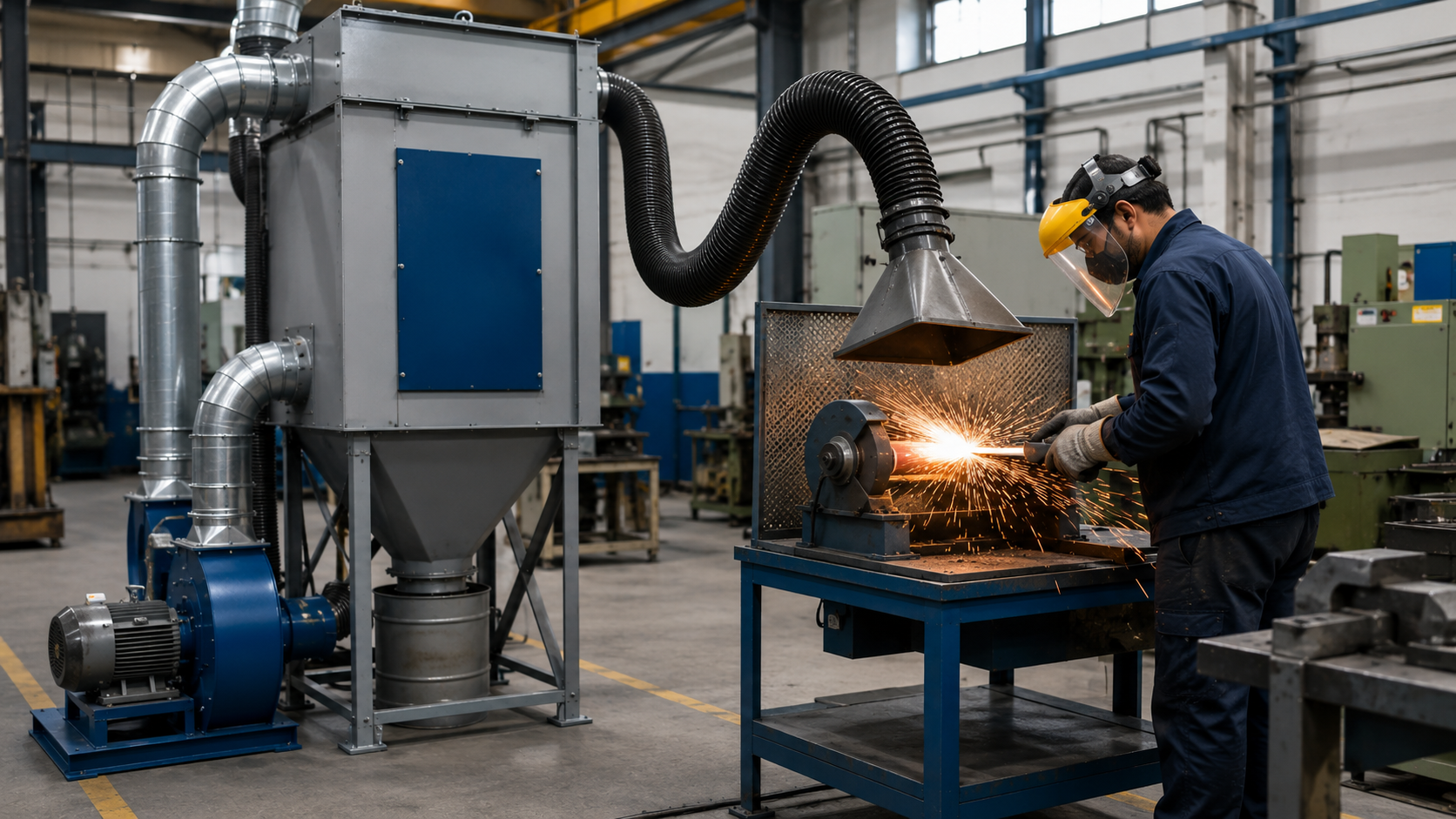
Introduction
Grinding and finishing operations are among the most significant sources of airborne dust in industrial manufacturing. Processes such as surface grinding, deburring, polishing, buffing, and abrasive finishing generate large quantities of fine metal particles that can quickly disperse throughout a facility if not captured at the source. Installing an efficient dust collector for grinding is essential for maintaining clean air, protecting equipment, and improving overall manufacturing efficiency.
An engineered grinding dust extraction system removes airborne contaminants before they spread across the workshop. Effective metal grinding ventilation not only improves workplace air quality but also minimizes dust accumulation on machinery, electrical equipment, and finished products. Combined with high-performance industrial dust filtration, these systems help manufacturers create cleaner, safer, and more productive working environments.
With over 30 years of experience in industrial air pollution control, Powertech designs DustBag industrial dust collection systems specifically engineered for demanding grinding and finishing applications across a wide range of manufacturing industries.
Key Takeaways
- Grinding operations generate large quantities of fine airborne dust.
- Source-capture dust collectors are more effective than general ventilation.
- Proper grinding dust extraction protects machinery and improves air quality.
- Industrial dust filtration reduces maintenance and housekeeping costs.
- Engineered dust collection systems improve productivity and workplace safety.
Why Grinding Operations Generate Large Amounts of Dust
Grinding removes material through high-speed abrasion. As grinding wheels contact the workpiece, microscopic particles are released into the air.
The amount of dust generated depends on several factors, including:
- Material being processed
- Grinding wheel speed
- Feed rate
- Abrasive type
- Surface finishing requirements
Without proper extraction, these particles remain suspended in the workplace before settling on equipment and surrounding surfaces.
Common Grinding and Finishing Applications
Industrial dust collectors are commonly used for:
Surface Grinding
Produces continuous fine metallic dust.
Belt Grinding
Generates airborne particles during material removal.
Deburring
Removes sharp edges while creating fine dust.
Polishing
Produces extremely fine particulate matter.
Buffing
Creates airborne polishing compounds and metal particles.
Abrasive Finishing
Generates dust from both abrasive media and processed materials.
Challenges of Grinding Dust
Poor Air Quality
Fine particles remain airborne for extended periods, reducing overall workplace cleanliness.
Equipment Contamination
Dust accumulates on:
- CNC machines
- Electrical cabinets
- Automation systems
- Precision instruments
Product Contamination
Airborne dust may settle on finished components before packaging or assembly.
Increased Housekeeping
Dust accumulation requires frequent cleaning of machines, floors, and production areas.
Higher Maintenance Costs
Contaminated equipment often requires more frequent servicing and maintenance.
How a Dust Collector for Grinding Works
Step 1: Source Capture
Extraction hoods capture dust directly from grinding equipment.
Step 2: Air Conveyance
Dust-laden air is transported through engineered ductwork.
Step 3: Industrial Dust Filtration
High-efficiency filter media separate airborne particles from the airflow.
Step 4: Dust Collection
Collected dust is stored in hoppers or collection bins for disposal or recycling.
Step 5: Clean Air Discharge
Filtered air is safely discharged or recirculated according to plant requirements.
Benefits of Grinding Dust Extraction
Cleaner Work Environment
Source capture significantly reduces airborne dust.
Improved Equipment Reliability
Cleaner machinery experiences lower contamination and maintenance requirements.
Better Product Quality
Reduced airborne dust minimizes contamination during finishing operations.
Lower Operating Costs
Efficient dust extraction decreases housekeeping and maintenance expenses.
Improved Productivity
Cleaner facilities support smoother production and improved operator efficiency.
Metal Grinding Ventilation Best Practices
To maximize performance:
- Capture dust as close to the grinding point as possible.
- Maintain sufficient airflow throughout the duct system.
- Inspect filters regularly.
- Prevent air leaks in ductwork.
- Schedule preventive maintenance.
- Select the correct dust collector capacity for each application.
General building ventilation should never replace localized dust extraction for grinding operations.
Choosing the Right Industrial Dust Filtration System
The ideal system depends on:
- Dust particle size
- Material being processed
- Dust loading
- Airflow requirements
- Number of grinding stations
- Plant layout
- Future expansion requirements
An engineered assessment ensures optimal system performance.
Powertech DustBag for Grinding Applications
Powertech’s DustBag industrial dust collectors are designed to handle demanding grinding and finishing operations.
Key Features
- High-efficiency cartridge or bag filtration
- Continuous-duty operation
- Modular construction
- Low maintenance
- High airflow capacity
- Durable industrial design
- Custom-engineered solutions
DustBag systems can be configured for individual grinding stations or centralized extraction systems serving multiple work areas.
Expert Insight
From Powertech’s experience, one of the most common mistakes is relying on general shop ventilation instead of capturing grinding dust directly at the source.
The closer the extraction point is to the grinding operation, the higher the collection efficiency. Facilities that implement properly designed source-capture systems consistently report cleaner equipment, reduced maintenance, lower housekeeping costs, and improved overall production efficiency.
Grinding produces fine airborne particles that can spread throughout the facility. A dust collector captures these contaminants before they affect equipment and workplace air quality.
Grinding dust extraction is the process of capturing airborne dust generated during grinding, polishing, and finishing operations using localized extraction systems.
It removes airborne dust at the source, protecting workers, machinery, and finished products while improving overall workplace cleanliness.
Metal fabrication, foundries, automotive manufacturing, aerospace, precision engineering, tool rooms, and general manufacturing all benefit from industrial dust filtration systems.
Yes. Centralized dust collection systems can efficiently extract dust from multiple grinding and finishing stations.
Selection depends on the type of material, dust characteristics, airflow requirements, production volume, and facility layout. An engineered system design provides the most effective solution.
Installing a properly engineered dust collector for grinding is essential for controlling airborne contaminants generated during grinding and finishing operations. By implementing effective grinding dust extraction, optimizing metal grinding ventilation, and using high-performance industrial dust filtration, manufacturers can significantly improve workplace cleanliness, protect equipment, and reduce operating costs. With decades of expertise in industrial air pollution control, Powertech’s DustBag dust collection systems deliver reliable, high-efficiency dust extraction solutions tailored to the demanding requirements of modern manufacturing facilities.