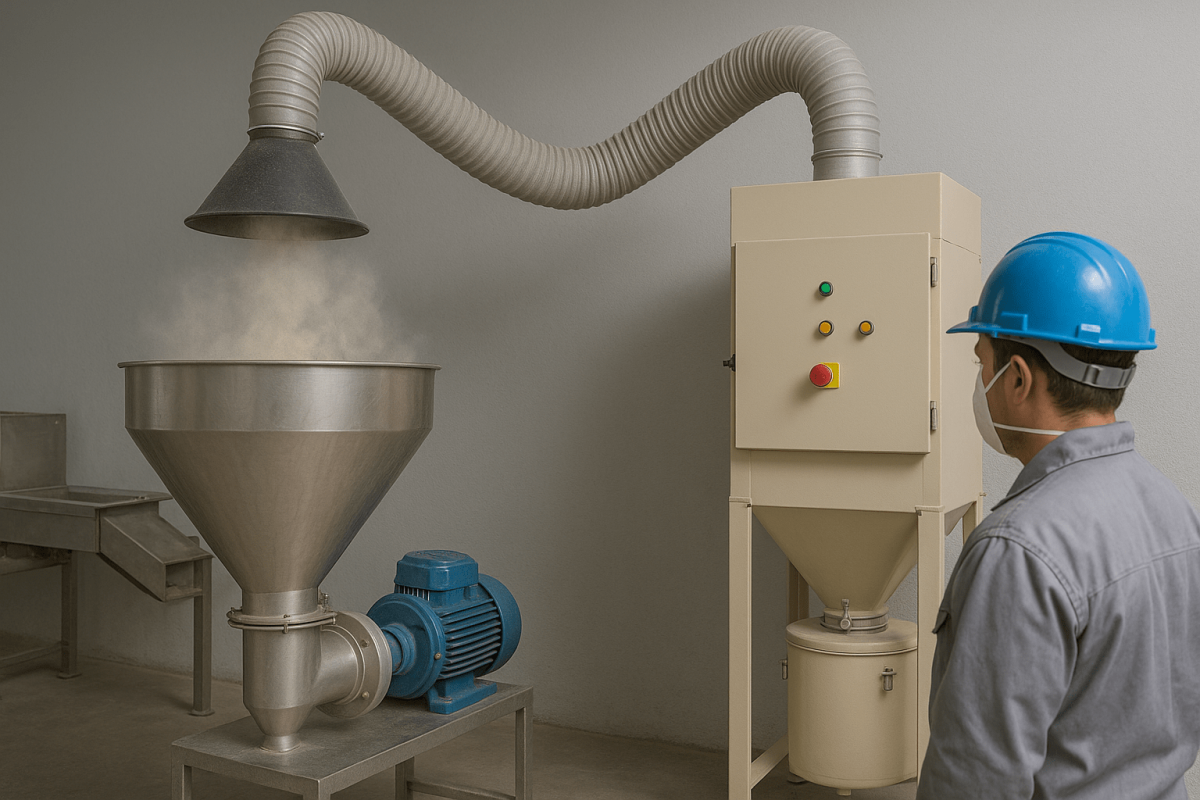
Worker monitoring a dust collection hood extracting fine powder from a food processing hopper in a clean industrial facility.

Benefits of Using Reverse-Pulsed-Jet Dust Collectors in Food Manufacturing

Why Dust Control Is Essential in Food Production

Food manufacturing involves processes like mixing, grinding, sieving, drying, and packaging. These activities generate fine food dust that becomes airborne quickly. Without proper control, this dust affects product quality, worker safety, and hygiene standards.

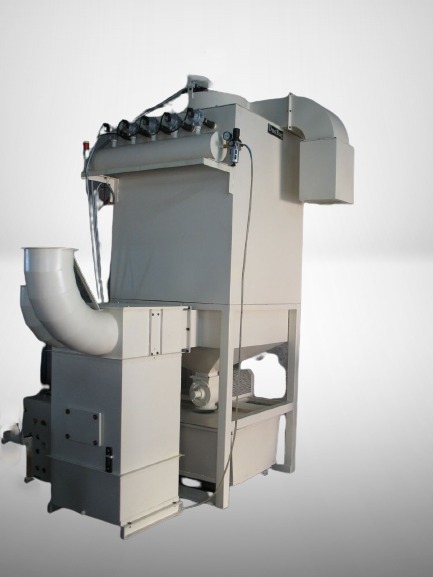
A Reverse-Pulsed-Jet Dust Collector is one of the most effective systems for food plants because it removes dust continuously without stopping production. It also keeps the workspace clean and supports compliance with food safety regulations.

How Reverse-Pulsed-Jet Dust Collectors Work

Pulse-Jet Cleaning

The system uses short bursts of compressed air to clean filter bags. The dust falls into a collection bin while clean air moves back into the room.

Continuous Operation

The cleaning happens while the system runs. There is no need to stop production for filter maintenance.

High Filtration Efficiency

The filters capture fine dust from flour, spices, powders, grains, and additives commonly used in food production.

Key Benefits for Food Manufacturing Facilities

1. Improved Hygiene and Cleanliness

Food dust settles on equipment and work surfaces. A Reverse-Pulsed-Jet Dust Collector reduces dust levels and helps maintain a clean processing environment.

2. Continuous and Reliable Operation

The pulse-jet cleaning mechanism keeps filters clear. This maintains steady airflow and avoids downtime.

3. Reduced Risk of Cross-Contamination

Fine dust from different ingredients can mix and contaminate batches. Proper dust extraction prevents this and supports food safety compliance.

4. Better Worker Safety

Airborne fine dust causes respiratory issues and irritation. Effective dust collection improves worker comfort and reduces health risks.

5. Extended Filter Life and Lower Running Costs

Pulse-jet cleaning keeps filters efficient for longer periods. This reduces the frequency of replacements and lowers maintenance costs.

6. Compliance With Food Safety Standards

Clean air supports compliance with norms from FSSAI, HACCP, and other hygiene standards. Using equipment from a trusted dust collector manufacturer in Bangalore makes audits and inspections easier.

7. Reduce Potential Loss of Product

The large amount of dust generated that is lost can potentially be reclaimed and used by using food grade material for the dust collector and the ducting. This can greatly benefit the manufacturers by significantly reducing loss of product.

Common Applications in Food Manufacturing

  • Flour mixing and grinding
  • Spice processing
  • Powder blending
  • Grain cleaning
  • Food supplement manufacturing
  • Bakery ingredient handling

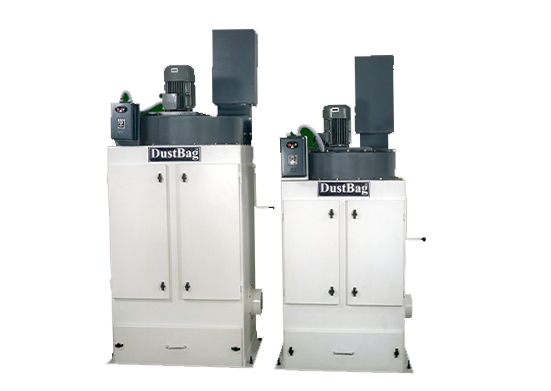
The DustBag Reverse-Pulsed-Jet Dust Collector from Powertech is widely used in these applications because it is easy to maintain and highly efficient.

Q&A: Using Reverse-Pulsed-Jet Dust Collectors

Q1: Is a Reverse-Pulsed-Jet Dust Collector suitable for fine food dust?
Yes. It captures very fine powders and keeps filters clean during continuous production.

Q2: Does it require frequent maintenance?
No. The pulse-jet system reduces manual cleaning and increases filter life.

Q3: Can this system improve product quality?
Yes. It reduces cross-contamination and maintains a cleaner processing environment.

Q4: Who manufactures reliable dust collectors in India?
Powertech Pollution Controls, a leading dust collector manufacturer in India, provides pulse-jet systems designed for food and general manufacturing.

Conclusion

Reverse-Pulsed-Jet Dust Collectors are one of the best solutions for controlling dust in food manufacturing. They offer continuous operation, clean filters, low maintenance, and strong performance across high-dust applications. They also help facilities maintain hygiene, product quality, and regulatory compliance.

As a trusted dust collector manufacturer in Bangalore, Powertech Pollution Controls delivers efficient and CPCB-compliant solutions for food, pharmaceutical, and general manufacturing industries.
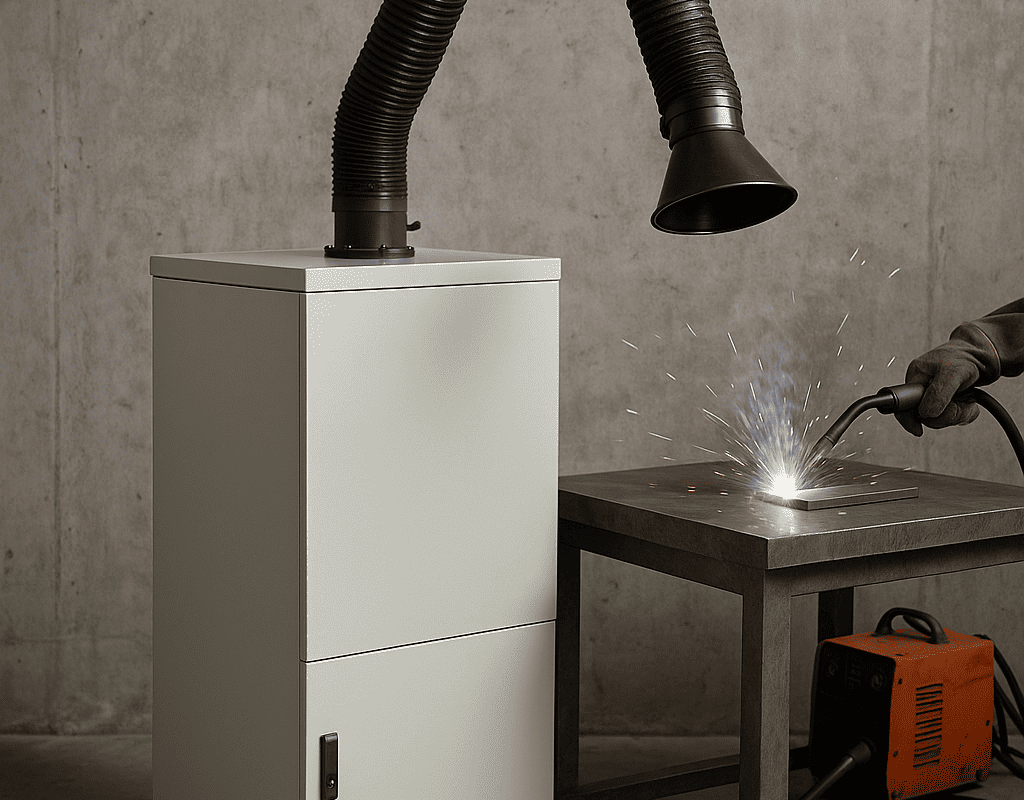
Fume extraction system connected to a welding station, showing a flexible suction arm capturing fumes directly above the weld area in a clean workshop.

FAQs About Industrial Air Filtration Systems

Understanding Industrial Air Filtration

Air filtration systems play a crucial role in maintaining clean and safe environments across industries. From welding and soldering to machining and food processing, every production process generates airborne pollutants such as fumes, dust, mist, or smoke. The right air filtration system helps control these contaminants and ensures compliance with safety standards.To help you understand the importance of these systems better, here are some common questions and answers about industrial air filtration and how manufacturers like Powertech Pollution Controls, a leading fume extractor manufacturer in Bangalore, deliver effective clean air solutions.

What Is an Industrial Air Filtration System?

An industrial air filtration system removes airborne pollutants created during manufacturing. It uses filters or electrostatic technology to capture dust, mist, and fumes before clean air is released back into the workspace. Common examples include fume extractors, dust collectors, and mist collectors — all of which are designed for different types of pollutants.

Why Is Air Filtration Important in Industrial Settings?

Clean air ensures worker safety, reduces equipment wear, and improves overall productivity. Without proper filtration, pollutants such as oil mist, metal fumes, or chemical vapors can cause respiratory problems, damage machinery, and lead to non-compliance with CPCB air quality norms.

What Are the Different Types of Air Filtration Systems?

Fume Extractors
Used for removing smoke and fumes from welding, soldering, and similar operations. Powertech is a trusted welding fume extractor manufacturer in Bangalore and soldering fume extractor manufacturer in Bangalore, offering portable and centralized systems.

Dust Collectors
Designed to handle dry particles and dust from processes such as grinding, polishing, or mixing. Powertech also operates as a dust collector manufacturer in Bangalore, providing solutions like the DustBag series.

Mist Collectors
Ideal for CNC machining and coolant-based operations, a mist collector like MistKiller from Powertech Pollution Controls can effectively removes oil mist and fine droplets, improving air quality in workshops.

What Technology Is Used in Modern Air Filtration Systems?

Electrostatic precipitation is one of the most effective methods. It charges fine particles in the air and collects them on oppositely charged plates. This technology is used in systems like FumeKiller, which efficiently captures welding and soldering fumes without frequent filter replacements.

How Often Should Filters Be Cleaned or Replaced?

Maintenance frequency depends on the process and system type.

Electrostatic filters can be washed and reused.

HEPA or cartridge filters must be replaced periodically.
Regular maintenance ensures optimal performance and compliance with air quality standards.

Can One System Handle Multiple Pollutant Types?

While some multi-stage systems can capture different pollutants, it’s usually best to choose separate units for specific contaminants. For instance, fume extractors are ideal for smoke and vapor, while dust collectors handle dry particles. Custom-designed systems can also combine both functions when needed.

How Do I Choose the Right Air Filtration System?

Selecting the right system depends on factors like:

Type of pollutant (dust, mist, or fumes)

Process type (welding, grinding, machining, etc.)

Volume of air to be cleaned

Layout of the facility

Consulting a fume extractor manufacturer in India like Powertech Pollution Controls ensures you get a solution designed for your exact industrial process.

Are Air Filtration Systems Energy Efficient?

Yes. Modern air filtration systems are designed to minimize pressure drop, allowing for efficient airflow with lower energy use. Electrostatic systems, in particular, require less power and offer longer service life compared to traditional filters.

What Are the Benefits of Partnering with a Local Manufacturer?

Working with a fume extractor manufacturer in Bangalore offers faster service, custom-built designs, and easier access to support and spare parts. Local expertise also ensures better understanding of regional air quality norms and CPCB requirements.

Conclusion

Industrial air filtration is not just about meeting safety standards — it’s about creating a cleaner, more efficient, and sustainable workplace. Whether you need a welding fume extractor, soldering fume extractor, dust collector, or mist collector, Powertech Pollution Controls provides reliable and customized solutions to fit your needs. As a trusted fume extractor manufacturer in India, Powertech helps industries achieve cleaner air, safer workspaces, and better long-term performance.

 Points to consider when choosing a Dust Collector

Keeping the air clean is a vital part of the operations within an industrial workspace and when dealing with floating dust particles, dust collectors are a crucial part of this process. The wrong type of dust collector will not only compromise the efficiency of dust extraction but the maintenance and operating costs as well. With this in mind, there are various factors to be considered to ensure that the right type of dust extraction system is chosen.

  1. Type of Dust: Knowing this can help avoid blockages and the need for frequent cleaning.
    • Fine dust, generated from processes like polishing or sanding, would generally require a high-efficiency filter like cartridge filters.
    • Coarse dust, from cutting or grinding processes, will require more heavy duty filters like bag filters, capable of capturing the larger dust particles.
    • Moist or sticky dust can cause problems like clogging of the filters and may require filters that are custom designed and make use of specialized material.
  1. Volume of Air and Suction Power Required to Capture the Dust Particles:
    • The volume of air flow required is measured in CFM (Cubic Feet per Minute) or CMH (Cubic Metres per Hour). 
    • The required air flow volume will vary depending on the size of the work area as well as the distance of the suction hood from the dust generation point.
    • The required suction force is determined based on the capture velocity or velocity of air flow required to move the dust particles.
    • In case of fine dust it can be between 100 – 150 FPM (Feet per Minute).
    • In case of larger dust particles the velocity would need to be higher and is approximately 200 – 250 FPM.
  1. Volume of Generated Dust: Higher volumes mean more frequent cleaning.
    • In case the volume of dust being generated is low or moderate, a regular dust collection system would suffice.
    • However, in case there is a very large volume of dust being generated, the cleaning of the filters will need to be much more frequent which may hinder operation times.
    • For such cases, it is recommended to use a self-cleaning dust collector. The DustBag® Reverse-Pulsed Jet (RPJ) is a good example of this type of dust collector.
  1. Maintenance and Cleaning: Choose a dust collector that is easy to maintain.
    • The collected dust needs to be disposed of and filters cleaned regularly to maintain operational efficiency of the dust collector.
    • As mentioned earlier, pulsed jet dust collectors are examples of self cleaning dust collectors that can automate the filter cleaning process and reduce downtime.
  1. Safety and Compliance: Maintain all regulatory standards.
    • Dust can be hazardous, especially in industries like food or metalworking.
    • Some dust types are also flammable and even explosive. An example of this would be magnesium dust.
    • Ensure that the dust collection system meets standards as per the pollution control laws. Additionally, check for additional safety standards like ATEX if there is a risk of explosion.
  1. Noise and Running Costs: Specific requirements for your dust collector.
    • If noise is a concern in the shopfloor, ask about models with acoustic conditioning for quieter operation.
    • Running costs include factors like energy use, maintenance schedule and filter life and replacement costs.
    • All of the above factors should be considered carefully to avoid long term issues.

Overall, it is important to know what are the factors to be considered when choosing your dust collector.The right system will keep the air clean inside the shopfloor, protect employee health and keep running costs low, all of which are highly beneficial for an industry in the long term. For more expert advice on dust collectors, get in touch with us today.

Air pollution control equipment

How Custom Solutions from Powertech Pollution Controls Benefit Your Business

In today’s industrial landscape, air pollution control is a critical concern for businesses across various sectors. Ensuring clean air within industrial environments is not only a regulatory requirement but also essential for the health and safety of workers, the longevity of equipment, and overall operational efficiency. At Powertech Pollution Controls, we understand that each industrial operation has unique challenges and requirements when it comes to managing air quality. This is why we specialize in providing custom solutions tailored to meet the specific needs of our clients.

Custom solutions in air pollution control offer several distinct advantages over standard, one-size-fits-all systems. These advantages stem from the ability to design and implement solutions that address the unique characteristics of each industrial process and environment. By focusing on customization, Powertech Pollution Controls ensures that our clients receive the most effective and efficient air pollution control systems possible.

One of the primary benefits of custom air pollution control solutions is the precise targeting of specific pollutants. Different industries generate different types of pollutants, ranging from dust and smoke to fumes and mist. A custom solution allows for the selection and combination of technologies best suited to capture and neutralize these specific contaminants. For instance, a welding shop may require an advanced welding fume extractor like our FumeKiller®, while a food production facility might need a high-efficiency dust collector such as the DustBag® Reverse-Pulsed-Jet. By tailoring the system to the exact pollutants present, we can ensure maximum effectiveness and compliance with environmental standards.

Another significant advantage of custom solutions is the optimization of system performance and energy efficiency. Standard systems often operate under suboptimal conditions because they are not specifically designed for the particular requirements of a given industrial process. Custom solutions, on the other hand, are engineered to match the exact airflow, pressure, and filtration needs of the operation. This results in more efficient capture and removal of pollutants, reducing energy consumption and operational costs.

Custom air pollution control solutions also offer enhanced flexibility and scalability. As industrial processes evolve and production demands change, the ability to modify and expand air pollution control systems becomes crucial. A custom-designed system from Powertech Pollution Controls can be easily adapted to accommodate new processes, increased production volumes, or changes in regulatory requirements. This flexibility ensures that your investment remains valuable and effective over the long term, providing a future-proof solution to air quality management.

At Powertech Pollution Controls, our commitment to providing custom solutions begins with a thorough understanding of our clients’ needs. Our process involves a detailed assessment of the industrial environment, including site visits, detailed study of the application and pollutants generated, and consultations with key personnel. This comprehensive analysis allows us to identify the specific pollutants and operational requirements that need to be addressed. Based on this assessment, we design a tailored solution that incorporates the most appropriate technologies and configurations.

Our custom solutions encompass a wide range of technologies, including electrostatic precipitators, baghouse filters, centrifugal mist collectors, and advanced fume extraction systems. Each technology is selected and configured to work seamlessly with the others, creating an integrated system that delivers superior air pollution control. We also provide complete installation and commissioning services, ensuring that the system is correctly implemented and fully operational from day one.

Post-installation, Powertech Pollution Controls offers ongoing support and maintenance services to ensure the continued effectiveness of our custom solutions. Regular maintenance, performance monitoring, and timely upgrades are essential for maintaining optimal system performance. Our dedicated service team is always available to provide technical support and address any issues that may arise, ensuring that your air pollution control system operates reliably and efficiently over its entire lifespan.

For more information on how Powertech Pollution Controls can develop a custom solution for your business, please visit our product page or contact us here.

Growing Importance of Air Pollution Control in Cities

In the bustling heart of urban landscapes, where industry, transportation, and dense populations merge into a vibrant yet challenging tableau, the imperative for air pollution control has surged to unprecedented heights. Cities across the globe are wrestling with the complex task of maintaining air quality to safeguard public health, preserve ecological balance, and ensure a sustainable future. This exploration delves into the significance of air pollution control measures, shining a light on innovative technologies such as fume extractors, dust collectors, mist collectors, alongside strategies for effective fume and smoke control, illuminating a path towards cleaner urban air.

The invisible assailant of air pollution presents severe risks, contributing to a spectrum of health issues from respiratory diseases to cardiovascular conditions, and even premature deaths. Its environmental repercussions are no less dire, leading to the degradation of ecosystems, loss of biodiversity, and an exacerbation of climate change. Urban areas, with their concentrated activities, stand as epicenters for air pollution challenges, making the urgency for effective control measures palpable, directly influencing the well-being of millions and the ecological footprint of our urban centers.

At the forefront of combating air pollution in industrial and commercial settings are fume extractors. These devices, engineered to capture and filter hazardous fumes and gases, play a pivotal role in mitigating occupational health risks and contributing to broader urban air quality management strategies. Similarly, dust collector systems, designed to capture particulate matter from various industrial processes, are indispensable across industries, enhancing operational efficiency and safety by trapping dust at the source.

Addressing a specific yet significant aspect of air pollution, mist collectors remove oil mist, coolant mist, and other aerosols, ensuring a cleaner, healthier work atmosphere, particularly in machining and metalworking environments. These technologies, alongside comprehensive strategies for fume and smoke control that incorporate both technological solutions and regulatory frameworks, are vital. Urban planning and industrial operations must prioritize air pollution control measures, integrating cleaner production techniques and fuel sources, underpinned by regulatory bodies that enforce emissions standards and monitor air quality.

However, the battle against air pollution transcends technological and industrial realms, extending into policy and public awareness. Stringent air quality standards and regulations are essential, compelling industries and businesses to adopt cleaner practices. Public awareness campaigns further mobilize community support for air pollution control measures, encouraging individual actions that contribute to cleaner air.

Looking ahead, the path to cleaner urban air is marked by innovations in air pollution control technologies and collaborative efforts across sectors. The continuous advancement of fume extractors, dust collectors, and mist collectors, paired with collaborative efforts between governments, industry, academia, and civil society, fosters the exchange of best practices and scales up successful initiatives. This collective endeavor is critical for ensuring urban centers thrive as vibrant, healthy, and sustainable communities.

In conclusion, the imperative for air pollution control in cities underscores a pivotal moment in our journey towards sustainability. Leveraging advanced technologies and adopting comprehensive control strategies significantly mitigate the health and environmental impacts of air pollution. It is a collective endeavor, requiring the commitment of all stakeholders to shape the clean air landscapes of our urban futures. As we forge ahead, the fusion of innovation, policy, and public engagement will be instrumental, painting a hopeful picture of cleaner, healthier cities.