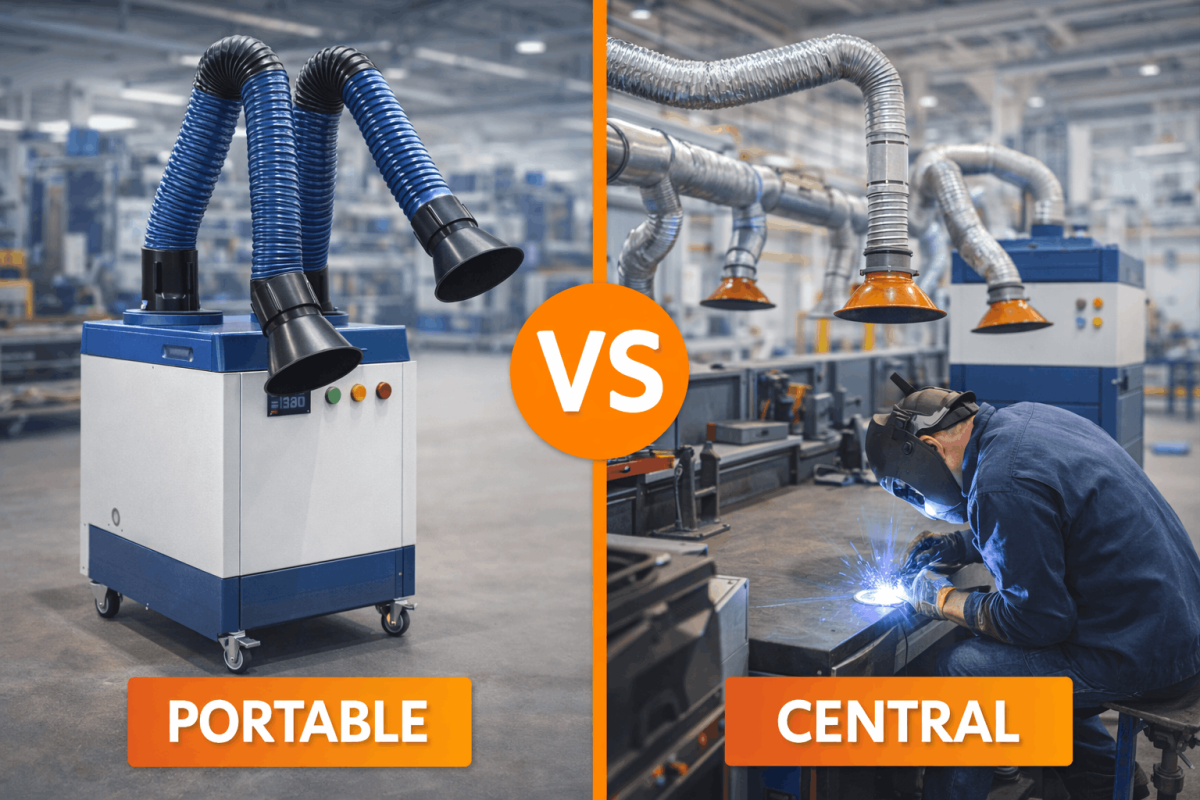
Portable welding fume extractor compared with a central welding fume extraction system inside an industrial workshop.

Portable vs Central Welding Fume Extractors: Which One Fits Your Facility?

Why Choosing the Right Welding Fume Extractor Matters

Welding fumes pose serious health risks when they remain in the workspace. A welding fume extractor removes these fumes before workers inhale them. However, not all facilities need the same type of system.

The two common options are portable welding fume extractors and central welding fume extraction systems. Each works well in specific conditions. Choosing the right one depends on layout, number of stations, and production style.

What Is a Portable Welding Fume Extractor?

How It Works

A portable welding fume extractor is a self-contained unit. It usually has wheels and one or two flexible suction arms. Operators move it close to the welding point to capture fumes directly.

Best Suited For

  • Small workshops
  • Job shops
  • Repair and maintenance areas
  • Low to medium number of welding stations

Key Advantages

  • Easy to move
  • No fixed ducting required
  • Lower installation cost
  • Flexible use across different work areas

Limitations

  • Limited capacity for large facilities
  • Requires manual repositioning
  • Not ideal for continuous high-volume welding

What Is a Central Welding Fume Extraction System?

How It Works

A central system uses a single high-capacity extractor connected to multiple welding stations through ducting. Each station has a hood or suction arm connected to the system.

Best Suited For

  • Large production floors
  • Fixed welding stations
  • High-volume or multi-shift welding
  • Facilities with consistent layouts

Key Advantages

  • Handles multiple stations at once
  • Stable airflow and suction
  • Minimal operator intervention
  • Cleaner overall shop environment

Limitations

  • Higher initial installation cost
  • Requires duct planning
  • Less flexible once installed

Key Factors to Consider When Choosing

Number of Welding Stations

Few stations benefit from portable units. Many stations usually need a central system.

Layout Flexibility

If workstations move often, portable extractors work better. Fixed layouts suit central systems.

Production Volume

High-duty welding requires consistent extraction, which central systems handle better.

Maintenance Planning

Central systems allow planned maintenance at one point. Portable units need individual attention.

Q&A: Portable vs Central Welding Fume Extractors

Q1: Can portable welding fume extractors serve two stations?
Yes. Some models support twin extractor arms, depending on fume load.

Q2: Do central systems consume more power?
Not always. Well-designed systems use optimized airflow to reduce energy use.

Q3: Is a portable system suitable for continuous production?
It works for limited production but may struggle under heavy, continuous loads.

Q4: Who can help choose the right system?
An experienced welding fume extractor manufacturer in Bangalore can assess layout, welding type, and airflow needs.

Conclusion

Portable and central welding fume extractors serve different needs. Portable units offer flexibility and lower setup cost. Central systems provide consistent extraction for large and busy facilities.

The right choice depends on how many stations you have, how often layouts change, and how intensive the welding process is. Selecting the correct system ensures clean air, better safety, and stable operations.
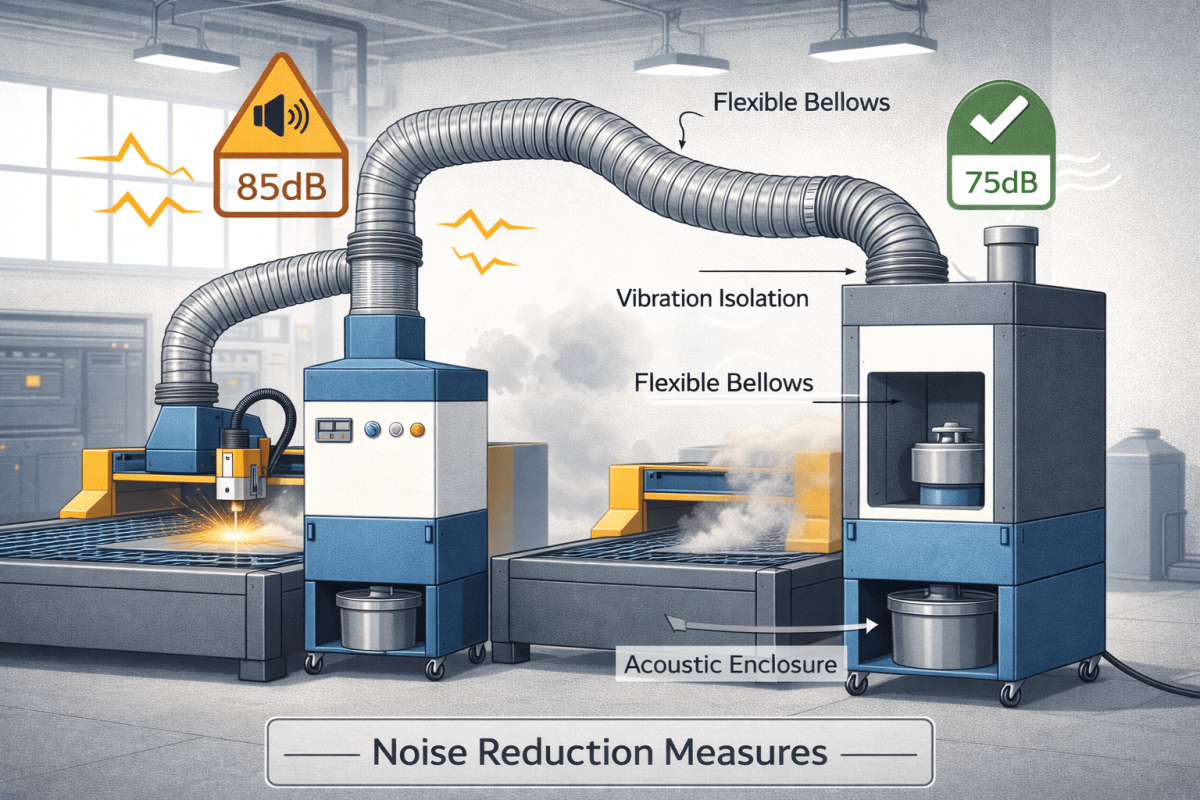
Air pollution control system with noise reduction features operating in an industrial workshop environment.

Noise Levels in Air Pollution Control Systems and How to Reduce Them

Why Noise Control Matters in Industrial Workspaces

Air pollution control systems improve air quality, but they can also introduce noise into the work environment. High noise levels affect worker comfort, concentration, and long-term hearing health. In many facilities, excessive equipment noise also leads to complaints and safety concerns.

Understanding where noise comes from and how to control it helps industries create safer and more productive workplaces.

Common Sources of Noise in Air Pollution Control Systems

1. Fans and Blowers

High-speed fans generate most of the noise in fume extractors, dust collectors, and mist collectors. Poor fan selection or imbalance increases sound levels.

2. Airflow Turbulence

Sharp bends in ducts, sudden diameter changes, and improper hood design cause turbulence. Turbulence increases both noise and energy loss.

3. Motor Vibration

Motors mounted without proper isolation transfer vibration to the structure. This vibration amplifies noise across the shop floor.

4. Worn or Clogged Filters

Blocked filters increase resistance. Fans work harder to maintain airflow, which raises noise output.

Typical Noise Levels to Watch For

  • Comfortable industrial noise: below 75 dB
  • Caution zone: 75–85 dB
  • Harmful exposure: above 85 dB

Many regulations recommend limiting continuous exposure above 85 dB. Air pollution control systems should operate well below this level where possible.

How to Reduce Noise in Air Pollution Control Systems

1. Use Low-Noise Fan Design

Backward-curved fans and properly sized blowers produce less noise while maintaining airflow.

2. Improve Duct Design

  • Reduce sharp bends
  • Maintain smooth airflow paths
  • Use correct duct sizing

Better duct design lowers turbulence and noise.

3. Add Vibration Isolation

Rubber mounts, spring isolators, and flexible connectors prevent vibration from spreading to the structure.

4. Maintain Filters Regularly

Clean filters reduce pressure drop and keep fans operating at normal speeds.

5. Use Acoustic Enclosures or Silencers

Enclosures around blowers and inline silencers help absorb sound without affecting airflow.

Systems designed by an experienced fume extractor manufacturer in Bangalore often include noise reduction features at the design stage.

Balancing Noise Control and Extraction Performance

Reducing noise should not reduce extraction efficiency. The goal is to control sound while maintaining proper airflow and suction. Poor noise control methods, such as choking airflow, reduce system performance and should be avoided.

Well-designed systems achieve both clean air and acceptable noise levels.

Q&A: Noise in Air Pollution Control Systems

Q1: Are air pollution control systems always noisy?
No. Properly designed systems operate at safe noise levels.

Q2: Can noise increase over time?
Yes. Poor maintenance, worn bearings, and clogged filters increase noise.

Q3: Does higher airflow always mean higher noise?
Not always. Correct fan selection and duct design allow high airflow with low noise.

Q4: Who can help design low-noise extraction systems?
A qualified fume extractor manufacturer in Bangalore can design systems that balance airflow, efficiency, and noise control.

Conclusion

Noise from air pollution control systems affects worker comfort and safety if not managed properly. Most noise issues come from fan design, duct layout, vibration, and poor maintenance.

By focusing on proper system design, regular upkeep, and sound control measures, industries can maintain clean air without adding harmful noise to the workplace.

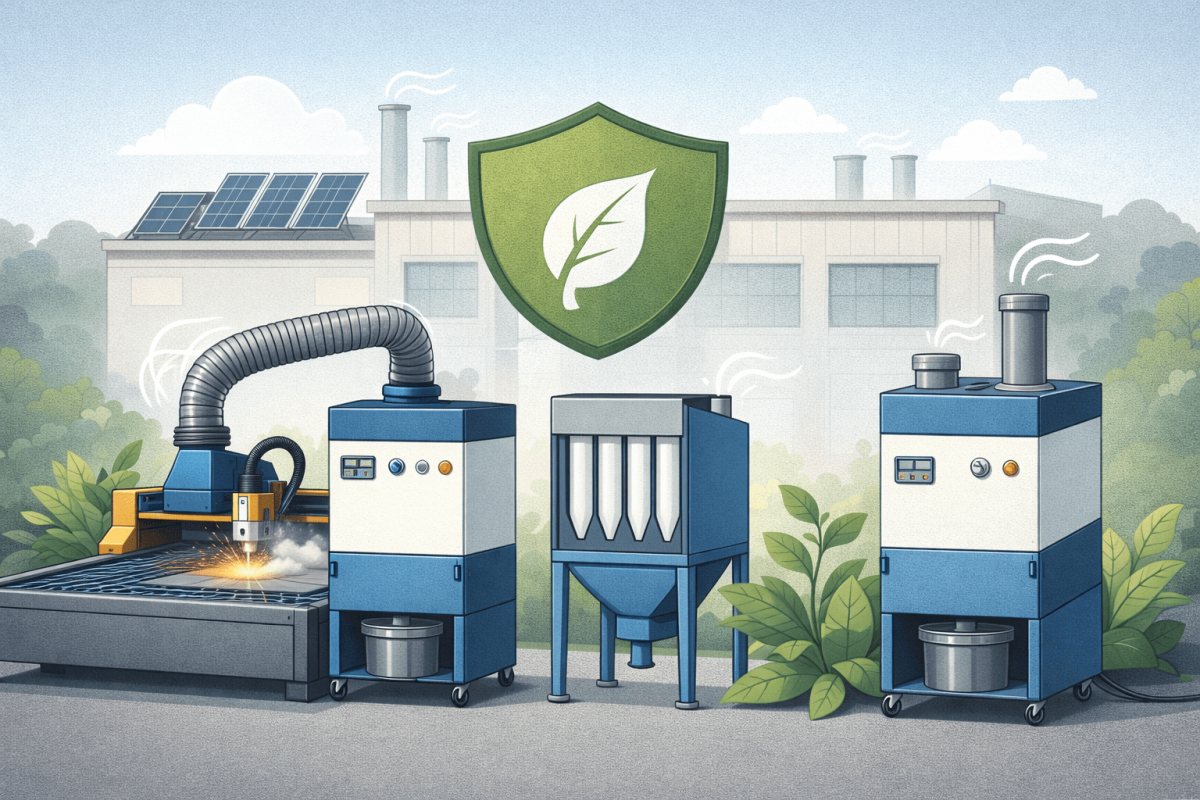
Industrial air pollution control systems operating in a factory environment to support green manufacturing practices.

Green Manufacturing: Role of Air Pollution Control Systems

Why Air Quality Matters in Green Manufacturing

Green manufacturing focuses on reducing environmental impact while maintaining efficient production. It covers energy use, waste reduction, and safe working conditions. One critical but often overlooked part of this approach is air pollution control.

Industrial processes release fumes, dust, and mist that affect both the environment and worker health. Controlling these pollutants supports sustainability goals and ensures long-term operational stability.

What Is Green Manufacturing?

Green manufacturing means producing goods with minimal harm to people and the environment. It involves:

  • Lower emissions
  • Efficient resource use
  • Safer workplaces
  • Compliance with environmental norms

Air pollution control systems play a direct role in achieving these goals.

How Air Pollution Control Supports Sustainability

1. Reduction of Airborne Emissions

Fume extractors, dust collectors, and mist collectors remove pollutants before they enter the atmosphere. This reduces overall emission levels inside and outside the facility.

2. Cleaner Indoor Work Environment

Green manufacturing prioritizes worker health. Clean air improves comfort, reduces health risks, and increases productivity.

3. Energy-Efficient Operation

Modern air pollution control systems use optimized airflow and efficient motors. Electrostatic filtration systems reduce pressure drop and save energy over time.

4. Reduced Waste Generation

Reusable filtration components lower filter disposal and support waste reduction goals.

Key Air Pollution Control Systems Used in Green Manufacturing

Fume Extractors

Used in welding, soldering, and metal cutting. These systems capture fumes at the source and prevent spread.

Dust Collectors

Used in grinding, mixing, food processing, and powder handling. They control fine dust and maintain hygiene.

Mist Collectors

Used in CNC machining and coolant-based operations. They remove oil mist and keep air clean.

Powertech Pollution Controls, a trusted fume extractor manufacturer in Bangalore, designs systems that support long-term sustainability goals.

Compliance and Environmental Responsibility

Green manufacturing requires compliance with CPCB air quality norms and workplace safety standards. Air pollution control systems help industries meet these requirements consistently.

Facilities that invest in proper extraction systems face fewer compliance issues and avoid penalties.

Q&A: Air Pollution Control and Green Manufacturing

Q1: How do air pollution control systems support green manufacturing?
They reduce emissions, protect workers, and support efficient energy use.

Q2: Do air pollution control systems increase operational costs?
No. Efficient systems reduce downtime, energy waste, and health-related losses.

Q3: Can air filtration systems help meet sustainability goals?
Yes. They directly support emission reduction and safer work environments.

Q4: Who provides sustainable air pollution control solutions in India?
An experienced fume extractor manufacturer in Bangalore can design systems aligned with green manufacturing needs.

Conclusion

Green manufacturing depends on clean air as much as efficient production. Air pollution control systems reduce emissions, improve worker health, and support compliance with environmental standards.

By integrating fume extraction, dust collection, and mist control into daily operations, industries move closer to sustainable and responsible manufacturing practices.

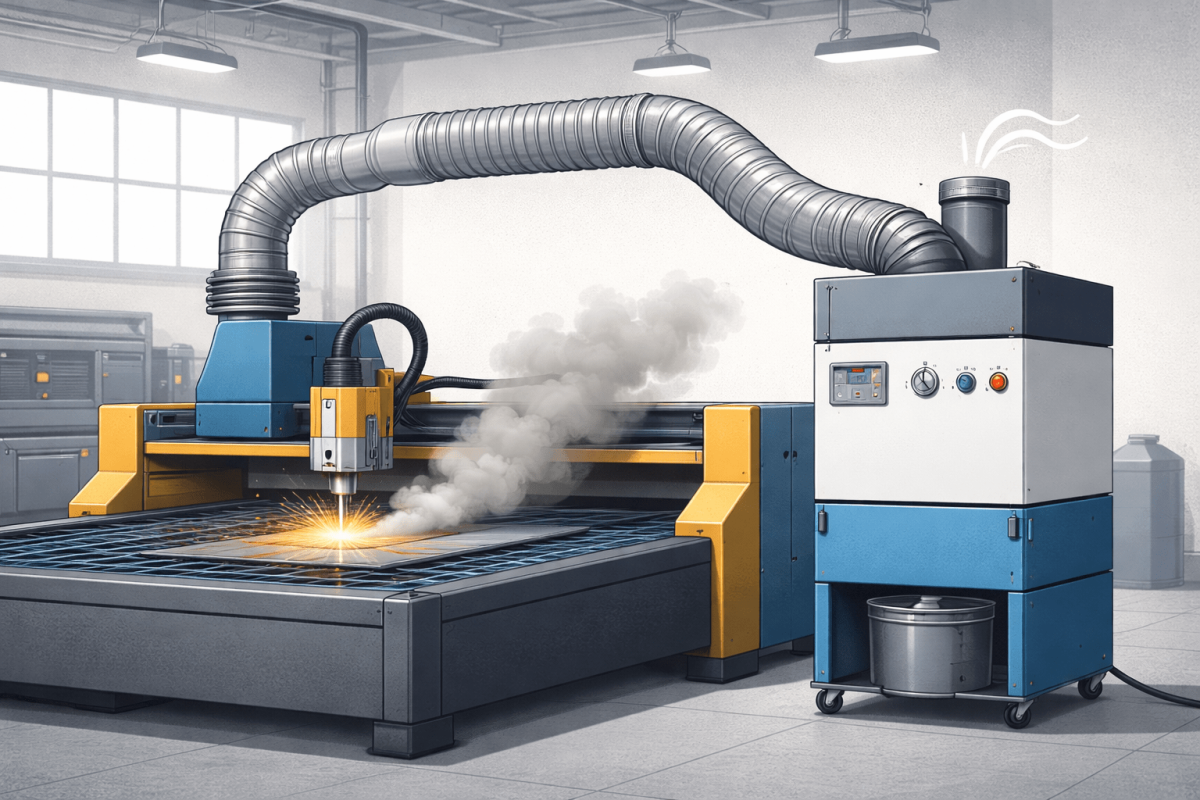
Smoke extraction system capturing metal cutting fumes from a CNC cutting machine inside an industrial workshop.

The Science Behind Smoke Extraction in Metal Cutting Processes

Why Smoke Control Is Critical in Metal Cutting

Metal cutting processes such as plasma cutting, laser cutting, oxy-fuel cutting, and abrasive cutting release smoke and fine particles into the air. This smoke contains metal fumes, fine dust, and heat-generated byproducts that affect air quality and worker safety.

Without proper extraction, smoke spreads quickly across the shop floor. It reduces visibility, causes breathing issues, and leads to non-compliance with air quality standards. Understanding how smoke behaves helps industries choose the right extraction system.

What Is Smoke in Metal Cutting?

How Smoke Is Formed

When metal heats beyond its melting point, it releases vapors. These vapors cool and turn into fine solid particles. At the same time, cutting gases and surface coatings add to the smoke load.

What Smoke Contains

  • Fine metal particles
  • Oxides formed due to heat
  • Coating residues
  • Combustion byproducts

These particles remain airborne for long periods if not captured at the source.

How Smoke Moves Inside a Workshop

Thermal Lift

Hot smoke rises rapidly due to heat. This makes overhead capture difficult if suction is weak or poorly placed.

Airflow Influence

Fans, open doors, and ventilation systems change smoke movement. Poor airflow planning allows smoke to drift across workstations.

Particle Size

Metal cutting smoke consists of very fine particles. These particles stay suspended longer than heavier dust and require strong suction for capture.

The Role of Smoke Extraction Systems

Source Capture

Smoke extraction systems work best when they capture pollutants as close as possible to the cutting zone. This prevents smoke from spreading.

Suction and Airflow Balance

Strong suction pulls smoke into the hood. Stable airflow ensures the system can handle the full smoke volume without loss.

Filtration

Electrostatic and fine filtration stages trap metal particles and return clean air back into the workspace.

Systems designed by a reliable fume extractor manufacturer in Bangalore focus on balancing these three factors.

Common Smoke Extraction Methods for Metal Cutting

Downdraft Tables

Used in laser and plasma cutting. Smoke gets pulled downward through the cutting table.

Local Exhaust Arms

Flexible arms capture smoke directly above the cutting area.

Enclosures with Extraction

Partial or full enclosures contain smoke and improve capture efficiency.

Q&A: Smoke Extraction in Metal Cutting

Q1: Why is metal cutting smoke harder to control than dust?
Because smoke particles are finer and stay airborne longer.

Q2: Does ventilation alone remove cutting smoke?
No. Ventilation only dilutes smoke. Extraction removes it at the source.

Q3: What type of extractor works best for metal cutting smoke?
Systems with strong suction and fine filtration perform best.

Q4: Who can design effective smoke extraction systems in India?
An experienced fume extractor manufacturer in Bangalore can design systems based on cutting method, layout, and smoke load.

Conclusion

Smoke from metal cutting processes spreads fast and contains fine particles that pose serious health risks. Effective smoke extraction depends on understanding how smoke forms, moves, and behaves inside the workspace.

With proper source capture, balanced airflow, and efficient filtration, industries can maintain clean air, improve visibility, and protect workers. Choosing the right extraction system ensures both safety and compliance.

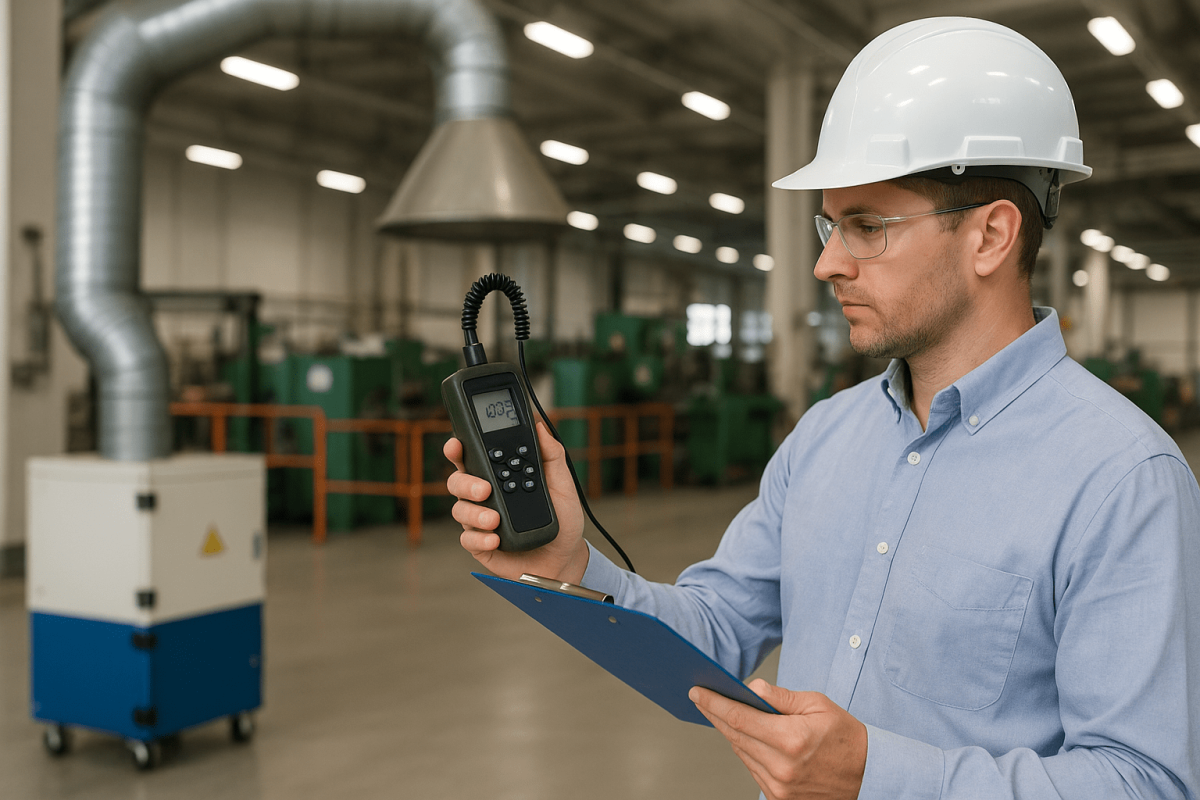
Worker checking air quality with a handheld meter inside an industrial facility.

How to Conduct an Air Quality Audit in Your Facility

Why Air Quality Audits Matter

An air quality audit helps you understand the level of fumes, dust, and mist inside your facility. It also shows whether your current fume extractor, mist collector or dust collector is performing well. Regular audits help protect workers, avoid compliance problems, and keep the workspace clean.

Industries that handle welding, soldering, machining, grinding, or powder processing benefit the most from routine air quality checks.

1. Identify All Sources of Air Pollution

What to Check

  • Welding bays
  • Soldering lines
  • CNC machining areas
  • Grinding benches
  • Mixing and powder handling zones

Each of these processes produces airborne contaminants that may require different extraction solutions.

2. Measure Ventilation and Airflow

Steps

  • Check airflow direction
  • Measure air movement at different points
  • Inspect exhaust fans, inlet vents, and ducts
  • Note areas with low or stagnant airflow

Good ventilation supports fume extraction and reduces pollutant buildup.

3. Test for Pollutant Levels

What to Measure

  • Fine dust (PM2.5 and PM10)
  • Welding fumes
  • Soldering gases
  • Oil mist from machines
  • Airborne powder from food or chemical processing

You can use handheld meters or third-party testing services to collect accurate readings.

4. Review Existing Extraction Systems

Key Points

  • Is suction strong enough at each hood?
  • Are filters or electrostatic cells clean?
  • Are extraction arms positioned correctly?
  • Are there signs of airflow drop or leaks?

Systems such as the FumeKiller® provide steady suction and are easy to maintain when cleaned regularly.

5. Compare Results with CPCB Standards

Your readings should match the indoor air safety limits set by the CPCB. If pollutant levels exceed limits, you may need changes in ventilation, extraction strength, or maintenance procedures.

6. Prepare a Corrective Action Plan

Possible Improvements

  • Move extraction arms closer to the fume source
  • Upgrade to a higher-capacity fume extractor
  • Add dust or mist collectors in specific zones
  • Increase fresh air circulation
  • Set a fixed cleaning schedule for filters

Working with an experienced fume extractor manufacturer in Bangalore ensures you choose solutions that fit your process.

Q&A: Common Questions About Air Quality Audits

Q1: How often should a facility conduct an air quality audit?
At least once a year, or more often for high-fume operations.

Q2: What causes audit failures?
Weak suction, blocked filters, incorrect hood placement, and poor ventilation.

Q3: Do extraction systems directly affect audit results?
Yes. Proper suction and airflow are essential for maintaining safe air quality.

Q4: Who can help improve extraction performance?
A reliable fume extractor manufacturer in Bangalore can inspect your layout and recommend upgrades or adjustments.

Conclusion

An air quality audit is a simple and effective way to maintain clean air, protect workers, and meet compliance standards. With accurate measurements and strong fume extraction systems, facilities can prevent air pollution from building up on the shop floor.