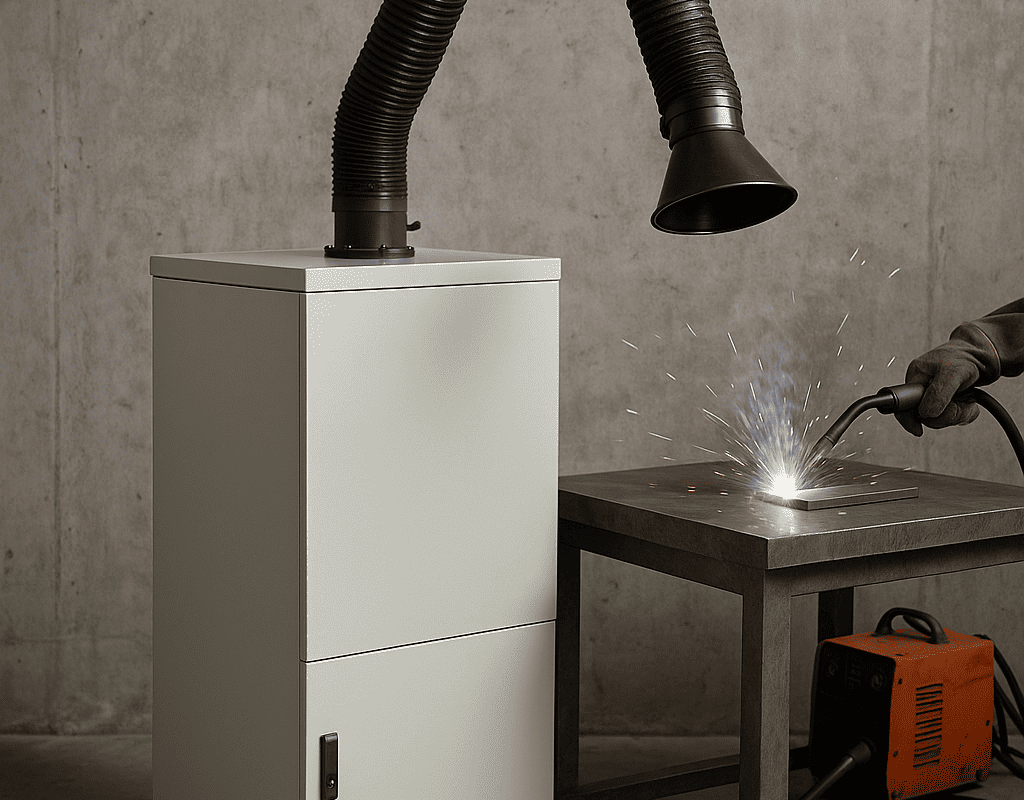
Fume extraction system connected to a welding station, showing a flexible suction arm capturing fumes directly above the weld area in a clean workshop.

FAQs About Industrial Air Filtration Systems

Understanding Industrial Air Filtration

Air filtration systems play a crucial role in maintaining clean and safe environments across industries. From welding and soldering to machining and food processing, every production process generates airborne pollutants such as fumes, dust, mist, or smoke. The right air filtration system helps control these contaminants and ensures compliance with safety standards.To help you understand the importance of these systems better, here are some common questions and answers about industrial air filtration and how manufacturers like Powertech Pollution Controls, a leading fume extractor manufacturer in Bangalore, deliver effective clean air solutions.

What Is an Industrial Air Filtration System?

An industrial air filtration system removes airborne pollutants created during manufacturing. It uses filters or electrostatic technology to capture dust, mist, and fumes before clean air is released back into the workspace. Common examples include fume extractors, dust collectors, and mist collectors — all of which are designed for different types of pollutants.

Why Is Air Filtration Important in Industrial Settings?

Clean air ensures worker safety, reduces equipment wear, and improves overall productivity. Without proper filtration, pollutants such as oil mist, metal fumes, or chemical vapors can cause respiratory problems, damage machinery, and lead to non-compliance with CPCB air quality norms.

What Are the Different Types of Air Filtration Systems?

Fume Extractors
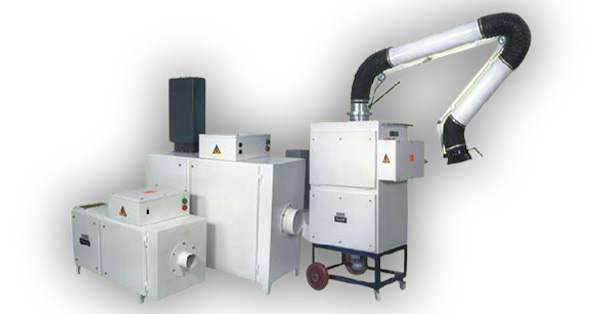
Used for removing smoke and fumes from welding, soldering, and similar operations. Powertech is a trusted welding fume extractor manufacturer in Bangalore and soldering fume extractor manufacturer in Bangalore, offering portable and centralized systems.

Dust Collectors
Designed to handle dry particles and dust from processes such as grinding, polishing, or mixing. Powertech also operates as a dust collector manufacturer in Bangalore, providing solutions like the DustBag series.

Mist Collectors
Ideal for CNC machining and coolant-based operations, a mist collector like MistKiller from Powertech Pollution Controls can effectively removes oil mist and fine droplets, improving air quality in workshops.

What Technology Is Used in Modern Air Filtration Systems?

Electrostatic precipitation is one of the most effective methods. It charges fine particles in the air and collects them on oppositely charged plates. This technology is used in systems like FumeKiller, which efficiently captures welding and soldering fumes without frequent filter replacements.

How Often Should Filters Be Cleaned or Replaced?

Maintenance frequency depends on the process and system type.

Electrostatic filters can be washed and reused.

HEPA or cartridge filters must be replaced periodically.
Regular maintenance ensures optimal performance and compliance with air quality standards.

Can One System Handle Multiple Pollutant Types?

While some multi-stage systems can capture different pollutants, it’s usually best to choose separate units for specific contaminants. For instance, fume extractors are ideal for smoke and vapor, while dust collectors handle dry particles. Custom-designed systems can also combine both functions when needed.

How Do I Choose the Right Air Filtration System?

Selecting the right system depends on factors like:

Type of pollutant (dust, mist, or fumes)

Process type (welding, grinding, machining, etc.)

Volume of air to be cleaned

Layout of the facility

Consulting a fume extractor manufacturer in India like Powertech Pollution Controls ensures you get a solution designed for your exact industrial process.

Are Air Filtration Systems Energy Efficient?

Yes. Modern air filtration systems are designed to minimize pressure drop, allowing for efficient airflow with lower energy use. Electrostatic systems, in particular, require less power and offer longer service life compared to traditional filters.

What Are the Benefits of Partnering with a Local Manufacturer?

Working with a fume extractor manufacturer in Bangalore offers faster service, custom-built designs, and easier access to support and spare parts. Local expertise also ensures better understanding of regional air quality norms and CPCB requirements.

Conclusion

Industrial air filtration is not just about meeting safety standards — it’s about creating a cleaner, more efficient, and sustainable workplace. Whether you need a welding fume extractor, soldering fume extractor, dust collector, or mist collector, Powertech Pollution Controls provides reliable and customized solutions to fit your needs. As a trusted fume extractor manufacturer in India, Powertech helps industries achieve cleaner air, safer workspaces, and better long-term performance.
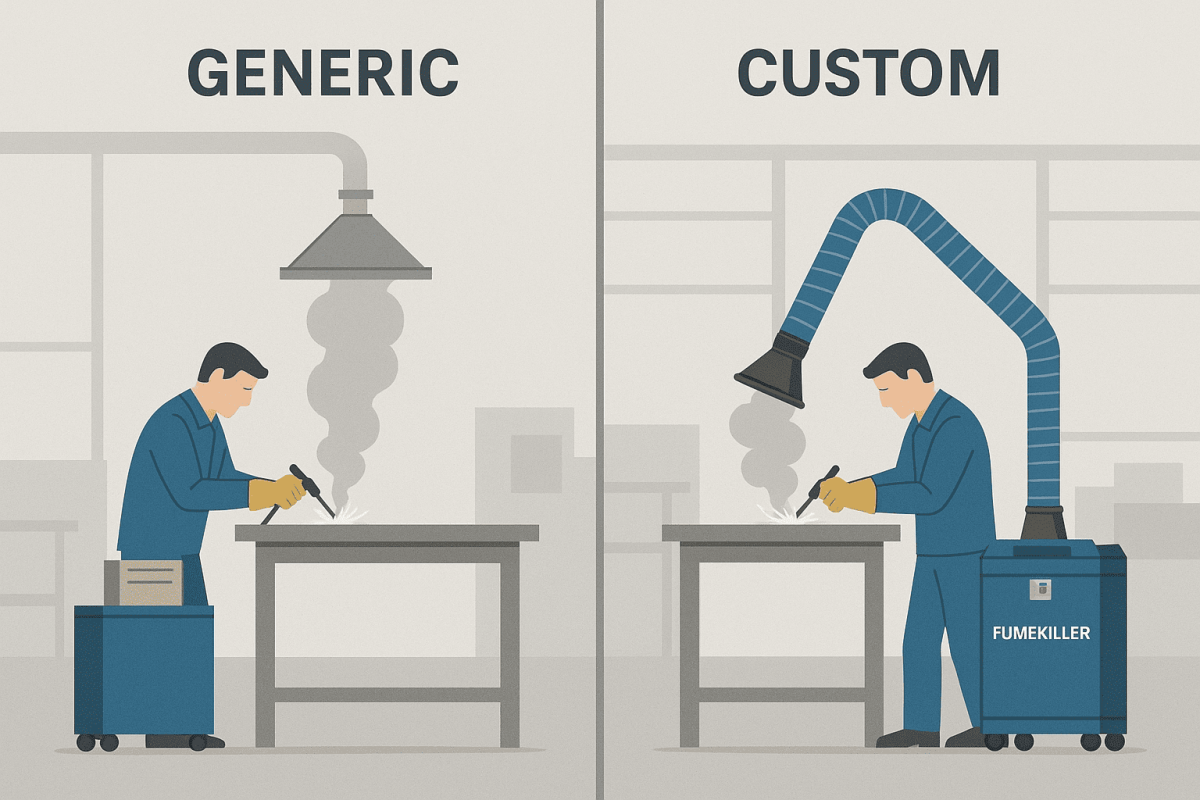
Side-by-side comparison of a generic fume extractor and a custom Powertech FumeKiller system, showing how the custom extractor with flexible arms captures fumes more effectively during welding.

What Makes a Custom Fume Extractor More Effective Than Generic Ones?

Why Does Every Industry Need the Right Fume Extraction System?

Air pollution in industrial environments is a major concern for both safety and productivity. Processes such as welding, soldering, grinding, and machining release harmful fumes, mist, and fine particles. A fume extractor helps capture these pollutants at the source before they spread through the workspace. However, not all fume extractors are designed the same way. Many facilities rely on generic models that may not deliver the performance they expect. This is where a custom-built fume extractor makes the difference.

What Is a Custom Fume Extractor?

A custom fume extractor is designed and built to match the exact needs of a specific application or facility. Unlike off-the-shelf models, it considers factors such as the type of pollutants, airflow requirements, machine layout, and available space. Powertech Pollution Controls, a leading fume extractor manufacturer in Bangalore, specializes in creating tailored solutions that improve both performance and efficiency.

Why Are Custom Fume Extractors More Effective?

1. Designed for Specific Pollutants

Different processes produce different types of pollutants. A welding fume extractor is a system designed to handle heavy smoke and metal particles, while a soldering fume extractor focuses on capturing fine flux fumes. A custom extractor ensures the right filter type, suction capacity, and filtration method are used for maximum efficiency.

2. Optimized Airflow and Placement

Generic units often struggle to maintain consistent suction across large or complex layouts. A custom-designed system maps out airflow paths and positions suction hoods close to the source, ensuring uniform extraction and cleaner air throughout the facility.

3. Integration with Existing Machinery

Custom extractors can be designed to integrate directly with CNC machines, welding booths, or assembly lines. This makes them easier to install and operate, while also improving the overall workflow.

4. Scalable and Energy-Efficient

Tailored systems are sized correctly for the volume of air to be treated. They maintain effective suction without wasting energy, reducing both operational costs and environmental impact — a key factor for sustainable manufacturing.

Common Questions About Custom Fume Extractors

Q1: Are custom fume extractors more expensive than standard ones?

A: While the initial cost may be higher, a custom system saves money in the long run by reducing maintenance, downtime, and energy consumption.

Q2: Who can build a reliable custom fume extraction system in India?

A: Powertech Pollution Controls, a trusted fume extractor manufacturer in India, designs systems for a wide range of industries, including automotive, heavy engineering, and electronics manufacturing.

Q3: Can custom extractors be used for dust or mist control?

A: Yes. Powertech also designs and manufactures dust collectors as well as mist collectors for applications like grinding, machining, and coolant mist control.

How Custom Fume Extractors Improve Workplace Safety

Cleaner air directly improves worker health and productivity. Custom systems reduce exposure to harmful fumes, prevent slippery mist buildup, and extend the life of expensive equipment. They also help facilities comply with CPCB and other environmental regulations.

Conclusion

A custom fume extractor delivers higher performance, better efficiency, and long-term reliability compared to generic models. With expertise in welding fume extractors, soldering fume extractors, and mist collectors, Powertech Pollution Controls designs systems that meet the unique challenges of modern manufacturing. Whether it’s a small workshop or a large production facility, a custom-built solution ensures cleaner air and safer operations.

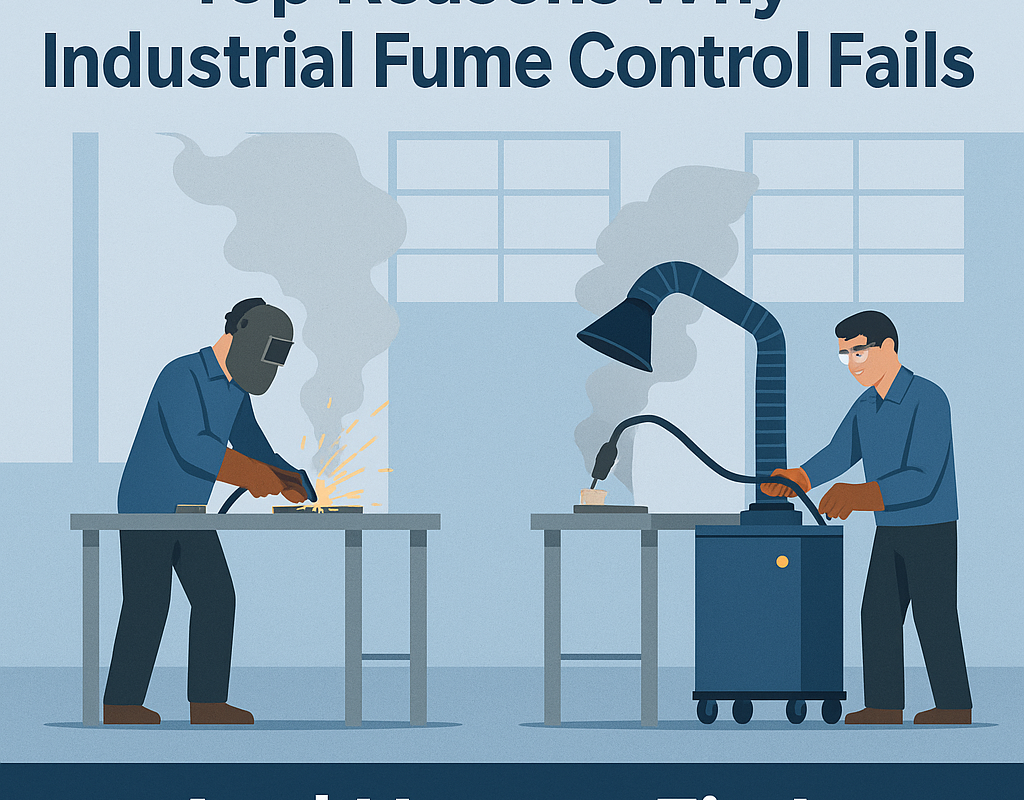
Industrial workshop with two stations, one using a portable fume extractor capturing welding fumes effectively, while the other shows fumes spreading due to poor extraction.

Top Reasons Why Industrial Fume Control Fails (And How to Fix It)

Why Fume Control Is Critical

Industries that involve welding, soldering, machining, or chemical processing generate harmful fumes and mist. A reliable fume extractor ensures clean air, protects workers, and keeps plants compliant with safety standards. Yet, many facilities still face challenges where fume control systems do not work as expected. Knowing the reasons behind these failures and how to solve them helps avoid downtime and health risks.

Reason 1: Wrong Type of Fume Extractor Chosen

Each pollutant needs a specific control method. A welding fume extractor handles metal fumes, while a soldering fume extractor is designed for electronics assembly fumes. Using the wrong system leads to poor results.

Fix:

Choose the extractor based on the pollutant type, volume of emissions, and workplace layout. Work with an experienced fume extractor manufacturer like Powertech to get a system tailored to your needs.

Reason 2: Poor Placement of Extraction Points

If the suction hood or arm is too far from the source, fumes escape before being captured. This lowers system efficiency and reduces air quality.

Fix: 

Position extractor arms or hoods as close to the source as possible. Flexible arms allow precise placement without interrupting the process.

Reason 3: Inadequate Maintenance

Filters and collection cells clog or wear out over time. Without proper cleaning and replacement, even the best fume extractor cannot perform well.

Fix:

Follow a fixed maintenance schedule. Clean electrostatic cells, replace filters on time, and keep ducts free from blockages. Maintain a log to track servicing.

Reason 4: Undersized or Overloaded Systems

Sometimes a single unit is expected to handle more than it was designed for. This reduces suction power and leaves pollutants in the air.

Fix:

Always match the system capacity to the process requirements. For larger setups, consider centralized systems or multiple extractors placed strategically.

Reason 5: Lack of Worker Training

Operators may bypass the system, move hoods incorrectly, or switch off extractors to save power. This leads to poor air quality and higher risks.

Fix:

Train workers to use extractors correctly and explain the risks of exposure. Simple awareness can prevent many fume control failures.

Conclusion

Industrial fume control fails when the wrong system is used, placement is poor, or maintenance is ignored. It also fails when the system is overloaded or not used properly. By choosing the right fume extractor, placing it correctly, maintaining it on time, and training workers, industries can avoid these issues. Powertech Pollution Controls is a trusted fume extractor manufacturer in Bangalore and partnering with us ensures reliable solutions for welding, soldering, and other industrial applications.

Portable Welding Fume Extractor in Action

Air Quality Improvement in Automotive Workshops with Fume Extractors

Why Air Quality Matters in Automotive Workshops

Automotive workshops handle welding, soldering, painting, and engine testing on a daily basis. These processes release fumes, smoke, dust, and oil mist that pollute the air. Poor air quality not only affects worker health but also reduces productivity and can damage sensitive tools. Using a proper fume extraction system is the most effective way to improve air quality in these workshops.

Sources of Air Pollution in Workshops

Workshops generate different types of airborne pollutants depending on the activity:

  • Welding and Soldering release metal fumes and smoke.
  • Grinding and Cutting produce fine dust that spreads across the workspace.
  • Painting and Spraying release volatile organic compounds (VOCs).
  • Engine Testing generates exhaust gases that are harmful when concentrated indoors.

Without proper extraction, these contaminants linger in the workshop and increase the risks for both workers and customers.

How a Fume Extractor Can Help

Fume extractors are designed to capture and filter out pollutants at the source before they spread into the air. In automotive workshops, they are used to handle:

Welding Fumes

A fixed welding fume extractor or a portable fume extractor with flexible arms can be placed near welding stations to capture fumes directly at the source.

Soldering Fumes

A soldering fume extractor can be used with the suction hood(s) placed 6 – 8 inches from the fume generation point. These fume extractors are much smaller as compared to welding fume extractors.

Dust from Grinding

A dust collector can remove fine particles created during grinding and polishing work, keeping surfaces and equipment cleaner.

Oil Mist and Smoke

Electrostatic mist collectors capture oil mist from machining and smoke from certain repair processes.

Exhaust Gases

Specialized fume extraction systems capture and vent engine exhaust gases, preventing buildup inside enclosed workshops.

Benefits of Cleaner Air in Automotive Workshops

  • Health Protection: Workers are protected from respiratory issues, skin irritation, and long-term health problems.
  • Improved Safety: Cleaner air reduces the chance of accidents caused by slippery floors or poor visibility.
  • Longer Equipment Life: Dust-free environments prevent buildup on sensitive tools and machines.
  • Regulatory Compliance: Meeting workplace air quality standards avoids fines and improves professional reputation.
  • Higher Productivity: Healthy workers and cleaner environments improve efficiency and reduce downtime.

Conclusion

Air quality is a critical factor in the performance and safety of automotive workshops. Fume extractors provide an effective way to control welding fumes, grinding dust, oil mist, and exhaust gases. By investing in proper fume extraction systems, workshops can create safer workplaces, extend the life of their equipment, and ensure compliance with environmental standards.

FumeKiller from Powertech Pollution Controls

How Powertech’s FumeKiller® Supports Sustainable Manufacturing

Clean Air Solutions for a Greener Industry

Sustainable manufacturing focuses on reducing environmental impact while maintaining productivity and efficiency. Air quality is a key part of this effort. Welding, soldering, and machining generate fumes and fine particles that affect both workers and the environment. The FumeKiller® series from Powertech Pollution Controls is designed to control these emissions at the source, making it an important tool for industries committed to sustainability.

Capturing Pollutants at the Source

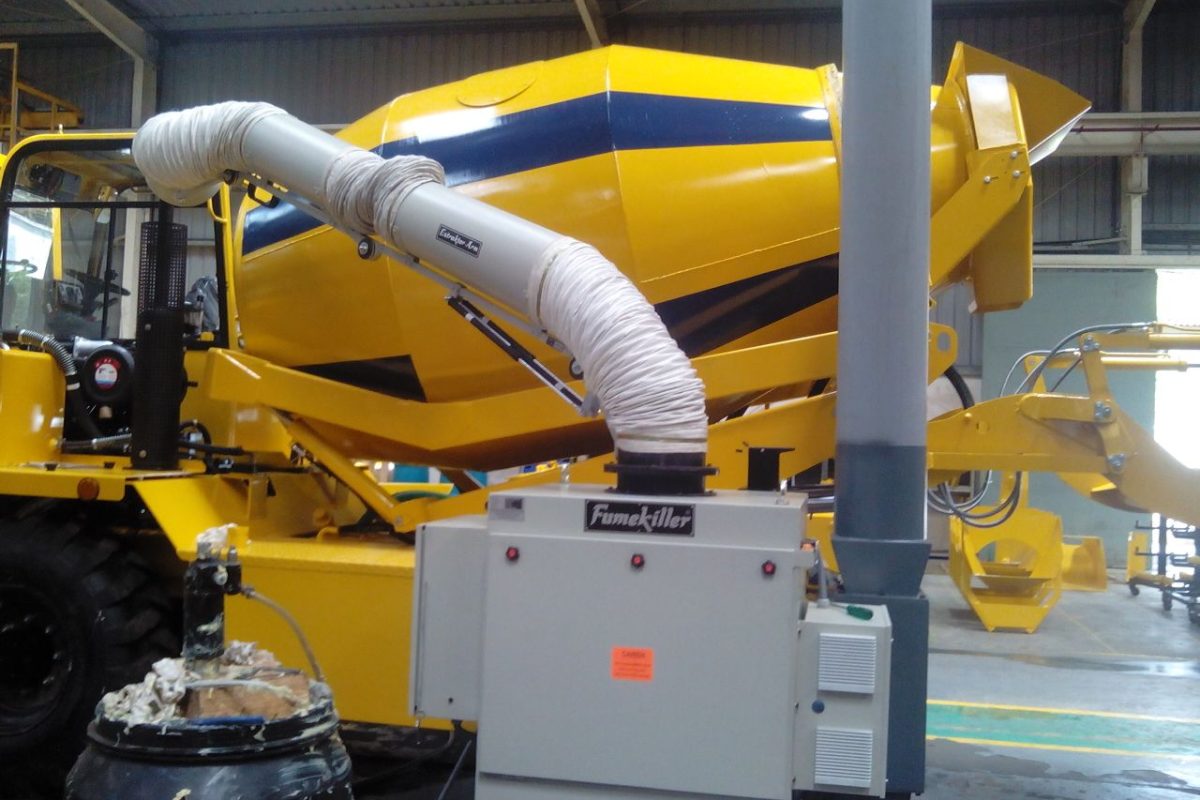
FumeKiller® systems use electrostatic filtration to function as a welding fume extractor, soldering fume extractor or even as an oil mist collector. By removing these pollutants before they spread through the workspace, the system reduces the release of harmful emissions into the atmosphere. This targeted approach supports cleaner production and aligns with sustainable manufacturing practices.

Reducing Waste with Reusable Filters

Unlike disposable filter units, FumeKiller® systems feature reusable collection cells. These cells can be washed and reused multiple times, cutting down on waste generation. This design lowers the need for frequent filter replacements, helping companies reduce material usage and support circular resource management.

Energy-Efficient Operation

Energy use is a major factor in sustainability. As a fume extraction system, FumeKiller® is designed to provide high-efficiency filtration without large pressure drops, which means the fan motor uses less power to move air. Over time, this reduces the facility’s energy footprint and lowers operating costs.

Creating a Safer Workplace

Worker health and safety are part of sustainable development goals. By capturing fumes and fine particles, the FumeKiller® improves indoor air quality, reduces health risks, and contributes to a healthier workforce. Fewer sick days and a cleaner environment also support higher productivity.

Supporting Compliance and Green Goals

Environmental compliance is a core part of sustainable manufacturing. FumeKiller® units help companies meet workplace safety standards and environmental rules, including CPCB requirements. At the same time, they demonstrate a company’s commitment to green initiatives, making them more attractive to clients and stakeholders who value sustainability.

Conclusion

Powertech’s FumeKiller® is more than a fume extractor. It is a clean air solution that helps industries adopt sustainable practices by reducing emissions, lowering waste, saving energy, and protecting workers. For manufacturers working toward greener operations, the FumeKiller® offers both immediate and long-term benefits.