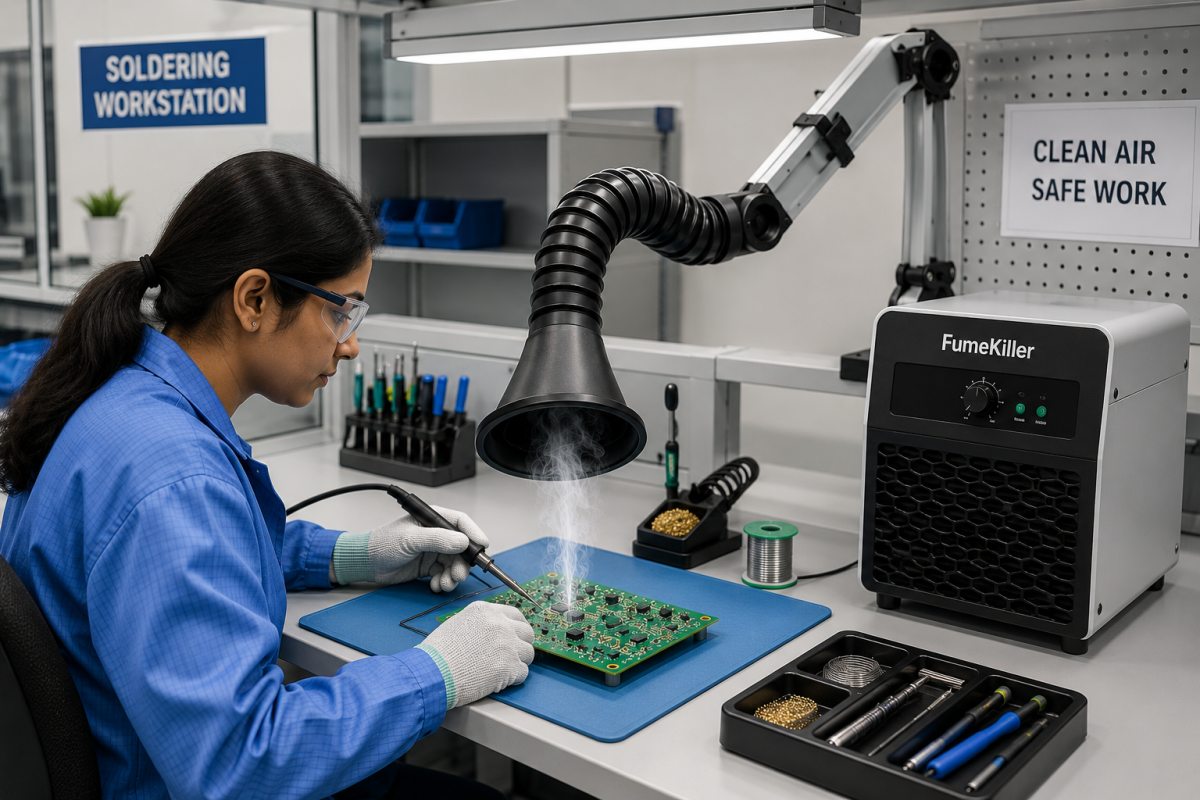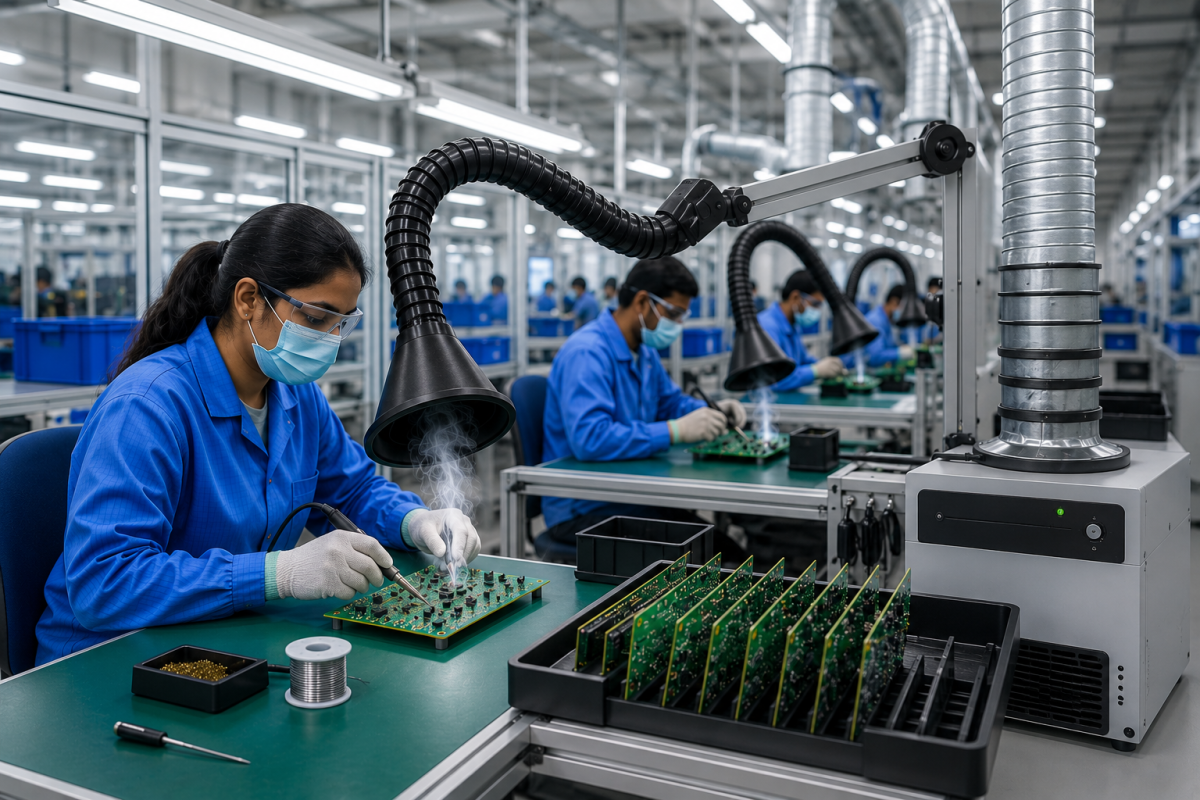
Technician replacing filter in a soldering fume extractor at an electronics workstation

Best Maintenance Practices for Soldering Fume Extractors

Soldering fume extractors get rid of smoke and flux fumes from places where electronics are worked on. Over time, filters gather dust and other particles, which slows down the flow of air. The system will slowly lose its ability to catch fumes if it is not maintained.

Regular maintenance makes sure the system works well and gets rid of fumes before they get to the operator’s breathing zone.

A soldering fume extractor that is maintained in good running condition helps keep the air clean, the airflow steady, and the workstation running smoothly.

Why Maintenance is Important

Most of the fumes that come out during soldering come from flux. These fumes have very small particles in them that get stuck in filters. If filters get clogged:

  • The air flow rate drops.
  • Fumes escape from getting captured.
  • Smoke spreads all over the work area.

Operators might see smoke hanging around the soldering tip. This is often the first sign that maintenance is overdue.

Check the airflow often

Keep an eye on the suction at the nozzle

There should be a steady flow of air at the capture nozzle. If the suction isn’t strong, the filters might be partly blocked.

An easy way to check is to watch how quickly smoke moves toward the nozzle while soldering.

Keep an eye on changes in airflow noise

The impeller may have to work harder when the filters get clogged. This could make strange sounds or cause vibrations.

Any sudden change in the sound of the airflow should be checked at the earliest.

Change the filters on a schedule

The most important part of a soldering fume extractor is the filters. A lot of systems have more than one stage of filtration, like:

  • Pre-filters for bigger bits
  • HEPA filters for small particles
  • Filters made of activated carbon for flux fumes

The manufacturer has a maintenance schedule that tells you when to replace each stage. For example, Powertech Pollution Controls is a soldering fume extractor manufacturer in Bangalore that regularly helps various facilities in figuring out the right replacement cycle based on how much soldering is done.

Clean the Extraction Arms and Nozzles

Inside nozzles and flexible arms, flux residue can build up.

Inspect the Capture Hood

Dust and other things may block the airflow at the hood opening. Clean the hood surface often.

Check the movement of the flexible arm

Operators need to be able to move the extraction arms easily so they can get them close to the soldering point.

If the arm gets stiff, the operators might have put it too far away from the joint. This makes it less effective at capturing.

Check the connections between the ducts

Duct joints must stay sealed in systems that are connected to central extraction units. Loose connections can:

  • Reduce airflow
  • Allow fumes to escape
  • Put more load on the system fan

Regular checks help find leaks early.

Keep the fan and motor in good shape.

The fan moves air through the whole extraction system.

Checks for maintenance should include:

  • Cleaning the fan blades
  • Checks on the motor
  • Checks of electrical connections

If the fan stops working, the airflow at the soldering point will also stop.

Train Operators How to Properly Position the Nozzle

Maintenance is not just a technical job. The way an operator does their job also affects performance.

The extraction nozzle should stay close to the soldering point but not get in the way of hand movement. Fumes escape before they can be captured if the nozzle is too far away.

Simple training for operators helps keep the system running well.

Q&A

Q1. How often do you need to change the filters in a soldering fume extractor?

  1. The amount of soldering and the size of the filter will determine when it needs to be replaced. Regular checks help figure out the right time.

Q2. What is the first sign that something isn’t being taken care of?

  1. Smoke that stays near the soldering joint instead of moving toward the extractor.

Q3. Can filters that are full of dirt hurt the system?

  1. Yes. Blocked filters put more strain on the fan and may shorten the life of the system.

Q4. Do small soldering stations need to be taken care of as well?

  1. Yes. Even small, portable units need to have their filters checked and changed on a regular basis.

Conclusion

In places where electronics are put together, soldering fume extractors work all the time. As time goes on, filters collect particles and the flow of air slows down.

The system works best when it is checked regularly, the filters are changed on time, and it is cleaned properly.

A soldering fume extractor that is well-maintained keeps the air clean, protects workers, and helps with consistent soldering.

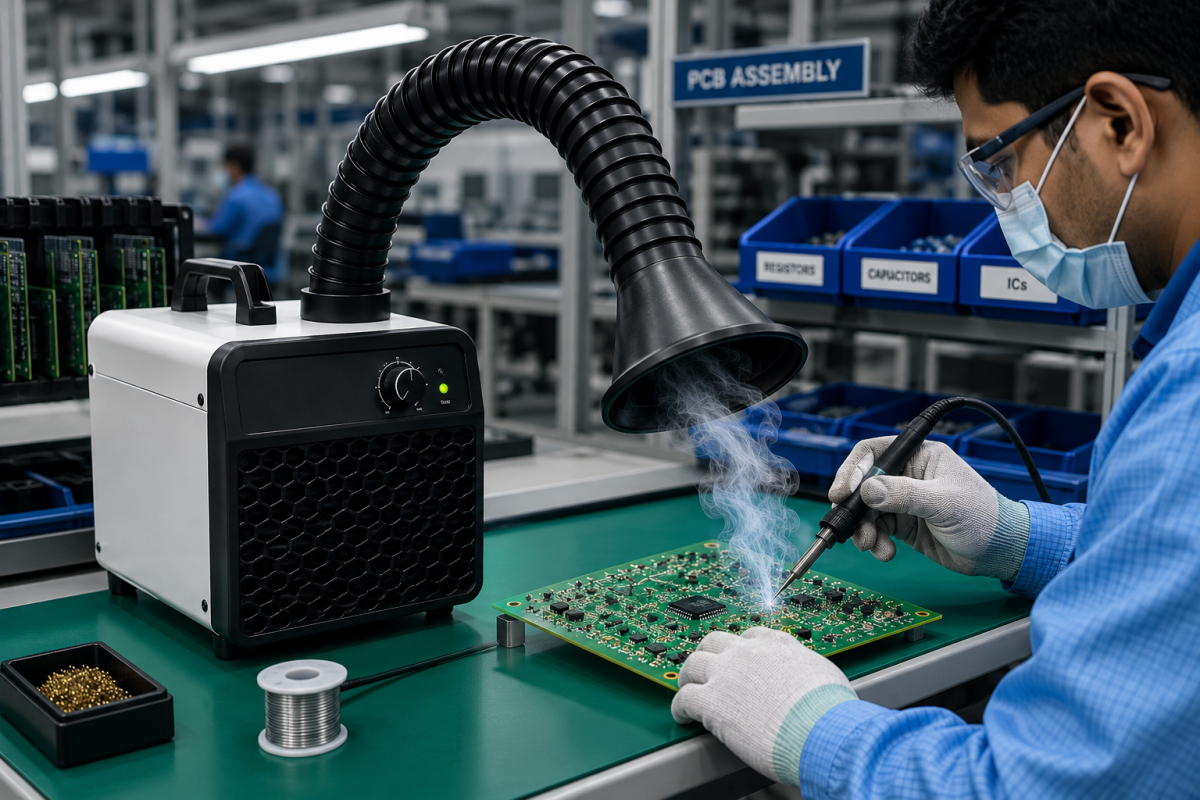
Technician soldering PCB with a soldering fume extractor capturing smoke at the workstation

Managing Fumes from Lead-Free Soldering Processes

Lead-free soldering is now the norm in making electronics. It gets rid of lead from the process, but not the fumes.

In many cases, soldering without lead makes more smoke than soldering with lead. Higher melting points and active flux compounds make more fumes come out.

Facilities must manage fumes at the source to limit exposure and keep the quality of the product.

Why soldering without lead makes more fumes

Lead-free alloys melt at higher temperatures than solder that contains lead. This hotter heat:

  • Increases the activation of flux
  • Makes more thermal breakdown happen
  • Makes fumes with tiny particles

The flux, not the metal itself, makes most of the fumes. When flux burns, it sends harmful particles into the air that go straight into the operator’s breathing zone.

Risks of Bad Fume Control

Operator Exposure

Fumes rise toward the face if they aren’t properly extracted. This can lead to:

  • Irritation of the eyes
  • Pain in the throat
  • Headaches
  • Less comfortable for the operator

Less visibility

It is harder to check if there is smoke around the solder joint:

  • Wetting the pad
  • Flow of solder
  • Bridging problems

Clear visibility helps with accurate hand soldering and rework.

Contamination of Residue and Surface

When fumes spread across the workstation, residue settles on:

  • Surfaces of PCBs
  • Lenses for optical inspection
  • Tools and fixtures

This has an impact on the quality of the product and how often it needs to be cleaned.


Source Capture Is the Best Method of Control

A soldering fume extractor that is in the right place catches fumes as soon as they come out of the solder joint.

Capture at the Tip

The extraction nozzle should be close to the soldering point but not get in the way of hand movement.

This keeps fumes from getting into the breathing zone.

Airflow that is controlled

Airflow needs to be strong enough to catch fumes, but not so strong that it cools the solder joint or changes the flow of solder.

Balanced airflow makes sure that:

  • Temperature of soldering stays the same
  • A clear line of sight
  • Consistent joint formation

A lot of electronics companies require soldering fume extractor manufacturers to size their systems based on how many workstations there are and how much soldering they do.


Things to think about when laying out a workstation

There is more to fume control than just equipment.

Where to Put the Bench

Set up extraction units so that air flows away from the operator.

Don’t Let Cross Drafts Happen

Air conditioning or fans blowing across the bench can move fumes to the side and make it less effective at capturing them.

Planning for Multiple Stations

Central extraction systems may be better for balancing airflow in assembly lines with a lot of soldering stations than having a lot of separate units.

A correct layout makes things safer and more consistent.

Things to Keep an Eye on for Performance

To make sure that the fume control system works well:

  • Make sure the air is flowing well often.
  • Change the filters on time
  • Check the connections between the ducts
  • Watch the suction at the nozzle

Bad maintenance lowers the efficiency of capture and lets fumes spread again.

A Real-Life Example

In a PCB assembly unit that did manual soldering and rework, workers said there was a lot of smoke after they switched to lead-free solder.

After putting source capture extraction at each station:

  • The air was clearer.
  • Fewer complaints from operators
  • The accuracy of inspections went up.
  • Less frequent cleaning

The improvement came from putting the nozzles in the right places and balancing the airflow.

Q & A

Q1. Is the smoke from lead-free solder less dangerous than the smoke from leaded solder?

  1. They get rid of lead exposure, but they still need to control flux fumes.

Q2. What are the main sources of soldering fumes?

  1. Mostly from the flux that is used to solder.

Q3. Can extraction make the solder joint cooler?

  1. Yes, if the airflow is too strong. This won’t happen if the system is the right size.

Q4. Is portable extraction good enough for small labs?

  1. Yes, for work that doesn’t require a lot of volume. Larger assembly lines might need systems that are all in one place.


Conclusion:

Lead-free soldering makes materials safer, but it doesn’t get rid of fumes. Higher temperatures in the process often make more smoke.

Controlling fumes at the source keeps workers safe, makes it easier to see, and helps with the accuracy of solder joints.

A well-chosen soldering fume extractor, along with a well-organized and well-maintained workstation, keeps the air clean and production running smoothly.

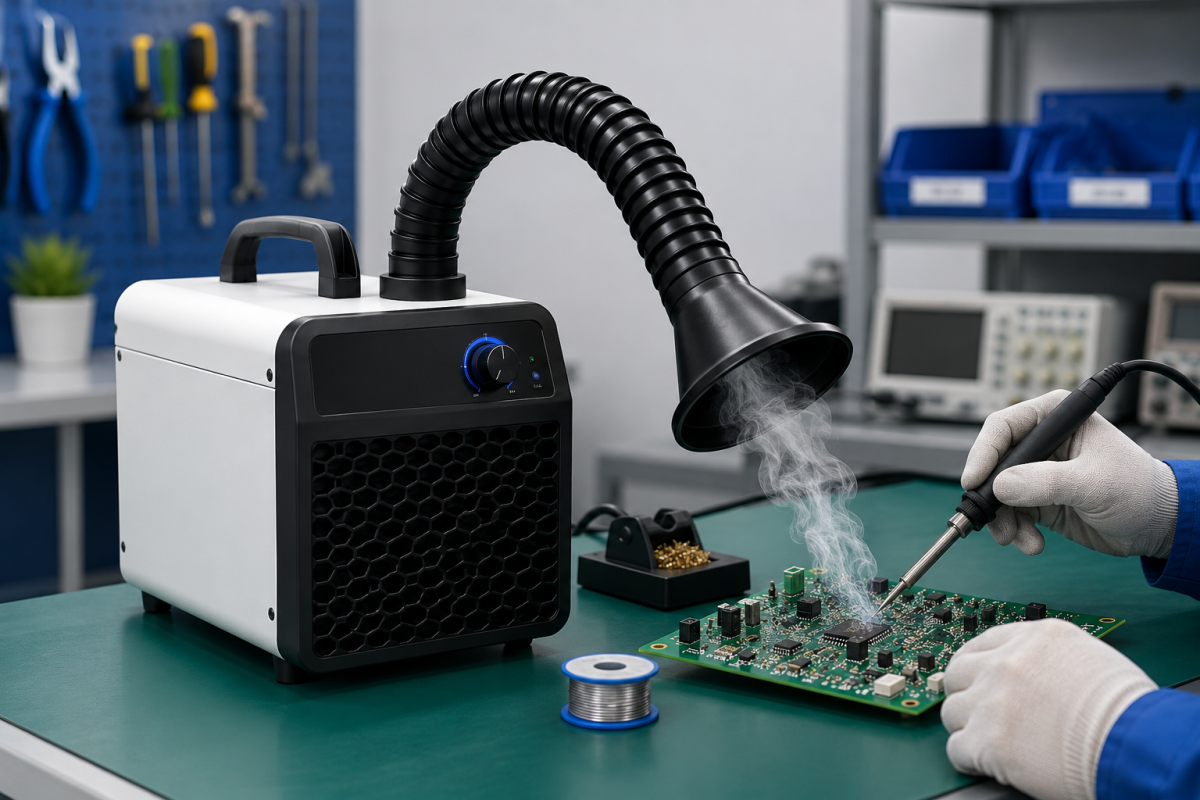
Soldering workstation with visible flux fumes being captured by a soldering fume extractor during PCB assembly.

Common Flux Types in Soldering and Their Impact on Indoor Air Quality

Why Flux Choice Matters for Air Quality

Flux plays a critical role in soldering. It cleans metal surfaces and helps solder flow correctly. However, when flux heats up, it releases fumes. These fumes directly affect indoor air quality, especially in electronics assembly areas with continuous soldering.

Understanding different flux types helps facilities control exposure and choose the right fume extraction approach.

What Happens When Flux Is Heated

Fume Generation

During soldering, flux burns and releases smoke made of fine particles and gases. These fumes rise quickly and stay close to the operator’s breathing zone.

Accumulation in Enclosed Areas

Electronics assembly lines often operate indoors with limited ventilation. Without proper extraction, fumes build up and spread to nearby stations.

Common Flux Types Used in Soldering

Rosin-Based Flux

Rosin flux is widely used in electronics soldering. When heated, it releases thick white fumes that cause eye and throat irritation. Long-term exposure affects breathing comfort.

Water-Soluble Flux

This flux type produces fumes that contain active chemicals. These fumes spread quickly and require effective source capture to prevent buildup.

No-Clean Flux

No-clean flux leaves minimal residue, but it still releases fumes during heating. Operators often underestimate its impact because the smoke appears lighter.

Activated Flux

Activated flux types clean aggressively but release stronger fumes. These fumes affect air quality faster than standard fluxes.

Impact of Flux Fumes on Indoor Air Quality

Breathing Discomfort

Operators inhale fumes directly during soldering. This leads to coughing, throat irritation, and shortness of breath over time.

Eye and Skin Irritation

Flux fumes irritate eyes and exposed skin, especially during long shifts.

Reduced Work Comfort

Poor air quality causes fatigue and reduces focus. This affects productivity and soldering accuracy.

Surface Contamination

Fumes settle on circuit boards, tools, and work surfaces. This increases cleaning effort and rework risk.

How a Soldering Fume Extractor Controls Flux Fumes

Source-Level Capture

A soldering fume extractor captures fumes directly at the soldering point. This prevents fumes from entering the breathing zone.

Consistent Air Quality

Continuous extraction keeps air quality stable across all soldering stations.

Cleaner Workstations

Effective fume control reduces residue buildup on boards and equipment.

A reliable soldering fume extractor manufacturer in Bangalore designs systems suited for different flux types and soldering densities.

Q&A: Flux and Air Quality in Soldering

Q1: Do all flux types produce harmful fumes?
Yes. All flux types release fumes when heated, even no-clean flux.

Q2: Is general ventilation enough for soldering fumes?
No. Ventilation only dilutes fumes. Extraction removes them at the source.

Q3: Does flux type affect extractor selection?
Yes. Stronger flux fumes require efficient source capture and filtration.

Q4: When should a soldering fume extractor be mandatory?
Any indoor soldering operation with repeated or continuous soldering needs extraction.

Conclusion

Different flux types produce different levels of fumes, but all impact indoor air quality. In high-density electronics assembly, these fumes build up quickly and affect health, comfort, and product quality.Using a soldering fume extractor ensures fumes stay away from workers and sensitive components. Effective fume control starts with understanding flux behavior and capturing fumes at the source.

Energy-efficient air pollution control equipment operating in an industrial workshop with fume and dust extraction systems.

Benefits of Energy-Efficient Air Pollution Control Equipment

Why Energy Efficiency Matters in Air Pollution Control

Air pollution control systems run for long hours in most industrial facilities. Equipment that consumes excessive power increases operating costs and strain electrical infrastructure. Energy-efficient systems can reduce this burden while maintaining effective pollution control.

Choosing efficient systems helps industries control emissions without increasing energy bills.

What Makes Air Pollution Control Equipment Energy Efficient

Optimized Airflow Design

Efficient systems move only the required volume of air. Proper duct sizing and hood design reduce pressure loss and avoid wasted energy.

Low-Resistance Filtration

Advanced filtration methods reduce airflow resistance. This allows fans to operate at lower speeds while maintaining capture efficiency.

Efficient Motors and Fans

High-efficiency motors and well-balanced fans reduce power draw during continuous operation.

Key Benefits of Energy-Efficient Systems

Lower Operating Costs

Reduced power consumption directly lowers monthly electricity bills, especially in facilities running multiple extraction units.

Stable Extraction Performance

Energy-efficient systems maintain consistent airflow. This prevents performance drops caused by overloaded fans or blocked filters.

Reduced Heat Generation

Lower energy use means less heat buildup in motors and blowers. This improves equipment reliability and service life.

Smaller Electrical Load

Efficient systems place less demand on power infrastructure. This reduces the risk of overloads and electrical failures.

Energy Efficiency Across Different Equipment Types

Fume Extractors

An energy-efficient fume extractor can capture pollutants at the source using optimized suction rather than high airflow volumes.

Dust Collectors

A dust collector with low-pressure-drop filters and effective cleaning systems reduces fan load and energy use.

Mist Collectors

Electrostatic mist collectors operate with minimal airflow resistance, making them more energy efficient than many mechanical systems.

A reliable fume extractor manufacturer in Bangalore designs systems with energy performance considered at the design stage.

Impact on Sustainability and Compliance

Lower energy consumption reduces indirect emissions from power generation. This supports sustainability goals and helps facilities meet environmental targets.

Energy-efficient equipment also operates more quietly and with fewer breakdowns, improving overall workplace conditions.

Q&A: Energy-Efficient Air Pollution Control

Q1: Does energy efficiency reduce extraction performance?
No. Proper design improves efficiency without reducing capture effectiveness.

Q2: Can energy-efficient systems handle heavy pollution loads?
Yes. When correctly sized, they perform reliably even in demanding applications.

Q3: Do energy-efficient systems require special maintenance?
No. Regular preventive maintenance keeps them operating efficiently.

Q4: Who can help select energy-efficient extraction systems?
An experienced fume extractor manufacturer in Bangalore can recommend solutions based on process and airflow needs.

Conclusion

Energy-efficient air pollution control equipment reduces operating costs while maintaining clean air and stable performance. These systems protect workers, support compliance, and lower long-term expenses.

Investing in energy efficiency improves both environmental responsibility and operational reliability without compromising air quality.

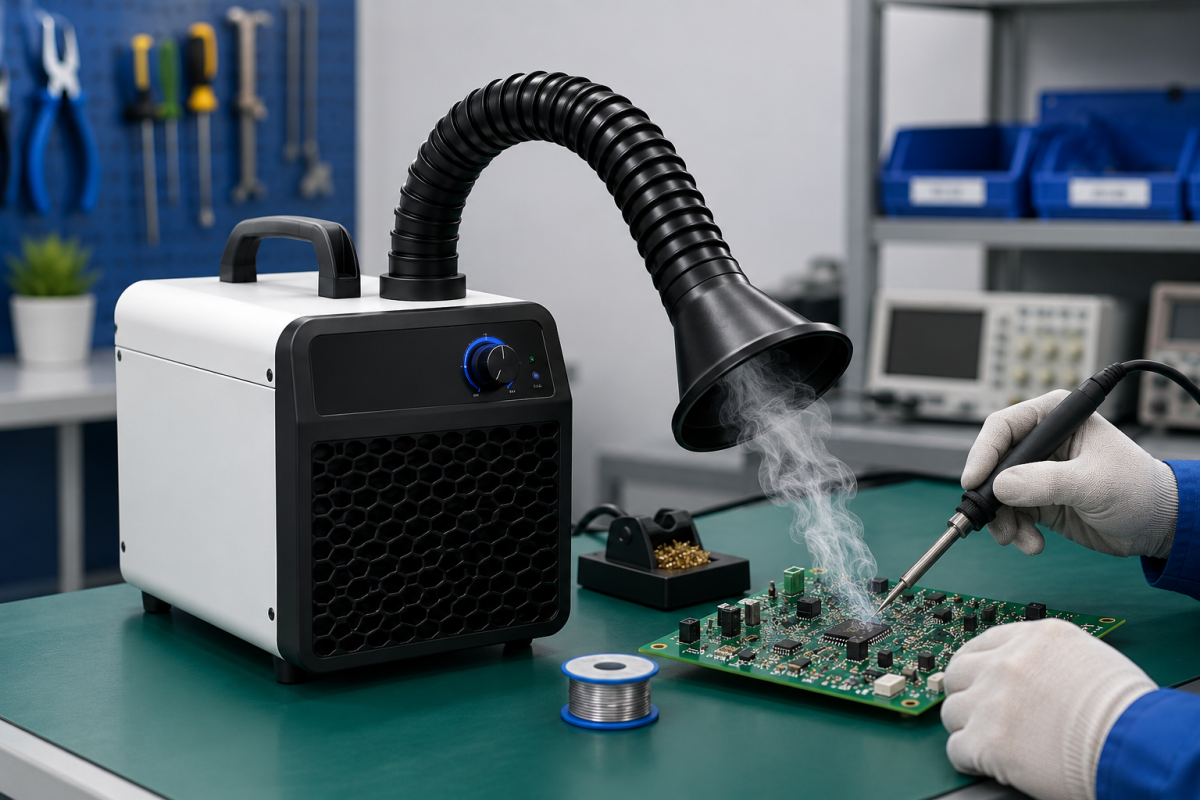
Electronics assembly workstation using a soldering fume extractor to capture fumes during PCB soldering operations.

Why Soldering Fume Extraction Is Critical in High-Density Electronics Assembly

Why High-Density Electronics Assembly Needs Fume Control

High-density electronics assembly involves many soldering points within a small area. Operators work close to circuit boards for long hours. During soldering, flux and heated materials release fumes that stay trapped around the workstation.

Without proper control, these fumes affect worker health, product quality, and overall efficiency. This makes fume extraction a basic requirement, not an optional add-on.

What Causes Fumes During Soldering

Flux Activation

Flux burns when heated. This produces smoke that contains fine particles and gases.

Continuous Soldering Cycles

In high-density lines, soldering happens repeatedly with little break. Fumes build up faster than they can disperse.

Limited Natural Ventilation

Electronics assembly areas are often enclosed to control dust and temperature. This traps soldering fumes inside the workspace.

Health Risks in High-Density Soldering Environments

Respiratory Irritation

Operators inhale fumes directly. Over time, this causes throat irritation, coughing, and breathing discomfort.

Eye and Skin Discomfort

Fumes irritate eyes and skin, especially during long shifts.

Long-Term Exposure Risks

Repeated exposure increases the risk of chronic respiratory issues and reduced work comfort.

How a Soldering Fume Extractor Solves These Issues

Source-Level Capture

A soldering fume extractor captures fumes directly at the soldering point. This prevents fumes from spreading to nearby stations.

Cleaner Breathing Zone

By removing fumes early, the system keeps the air around the operator clean.

Stable Indoor Air Quality

Extraction systems maintain consistent air quality across all shifts.

Better Work Comfort

Clean air reduces fatigue and helps operators maintain focus.

Impact on Product Quality and Rework

Soldering fumes settle on circuit boards and tools. This contamination can affect solder joints and inspection accuracy. Clean air reduces surface contamination and supports consistent assembly quality.

Q&A: Soldering Fume Extraction in Electronics Assembly

Q1: Are soldering fumes harmful even in small quantities?
Yes. Continuous exposure, even at low levels, affects comfort and health.

Q2: Can room ventilation replace fume extraction?
No. Ventilation only dilutes fumes. Extraction removes them at the source.

Q3: Does fume extraction slow down production?
No. It improves comfort and helps operators work consistently.

Q4: When is a soldering fume extractor necessary?
It is necessary wherever soldering happens indoors, especially in high-density assembly lines.

Conclusion

High-density electronics assembly creates concentrated soldering fumes that remain close to workers. Over time, this affects health, comfort, and product quality. A soldering fume extractor removes fumes at the source and keeps the workspace clean and stable.

Effective fume control supports safer operations, better output, and long-term workforce well-being.