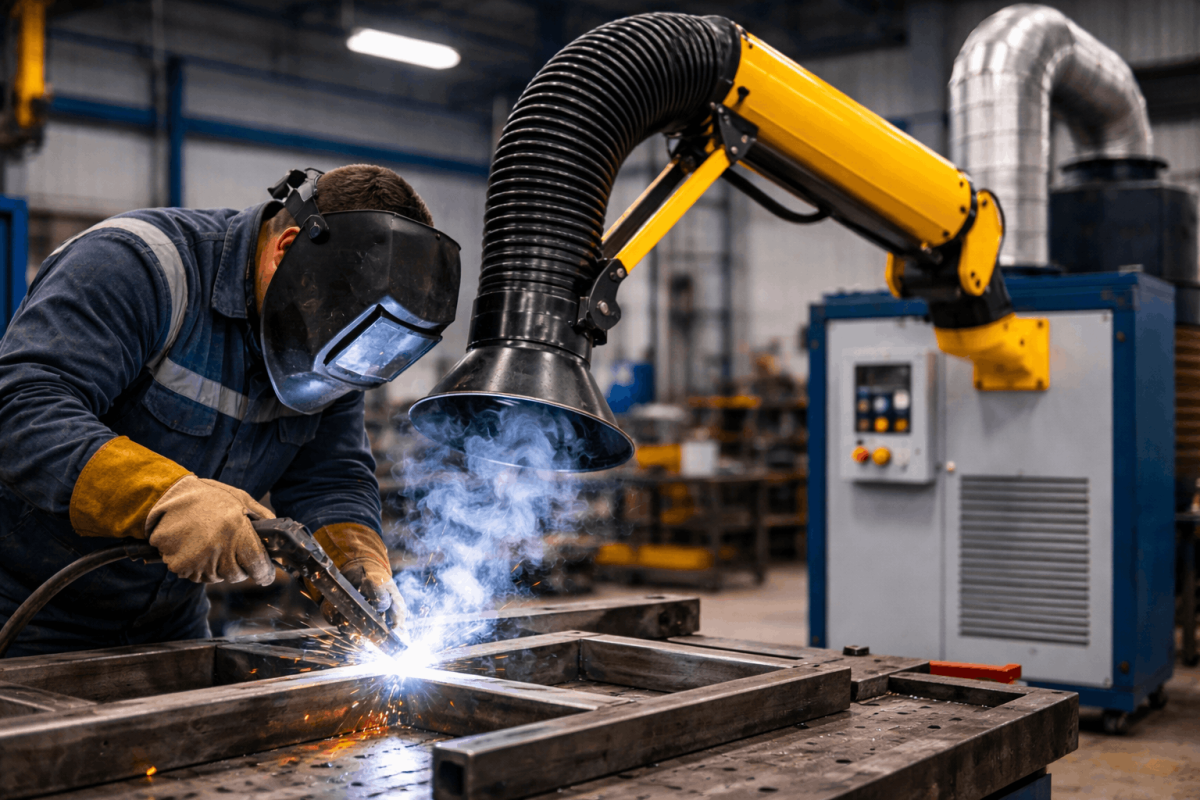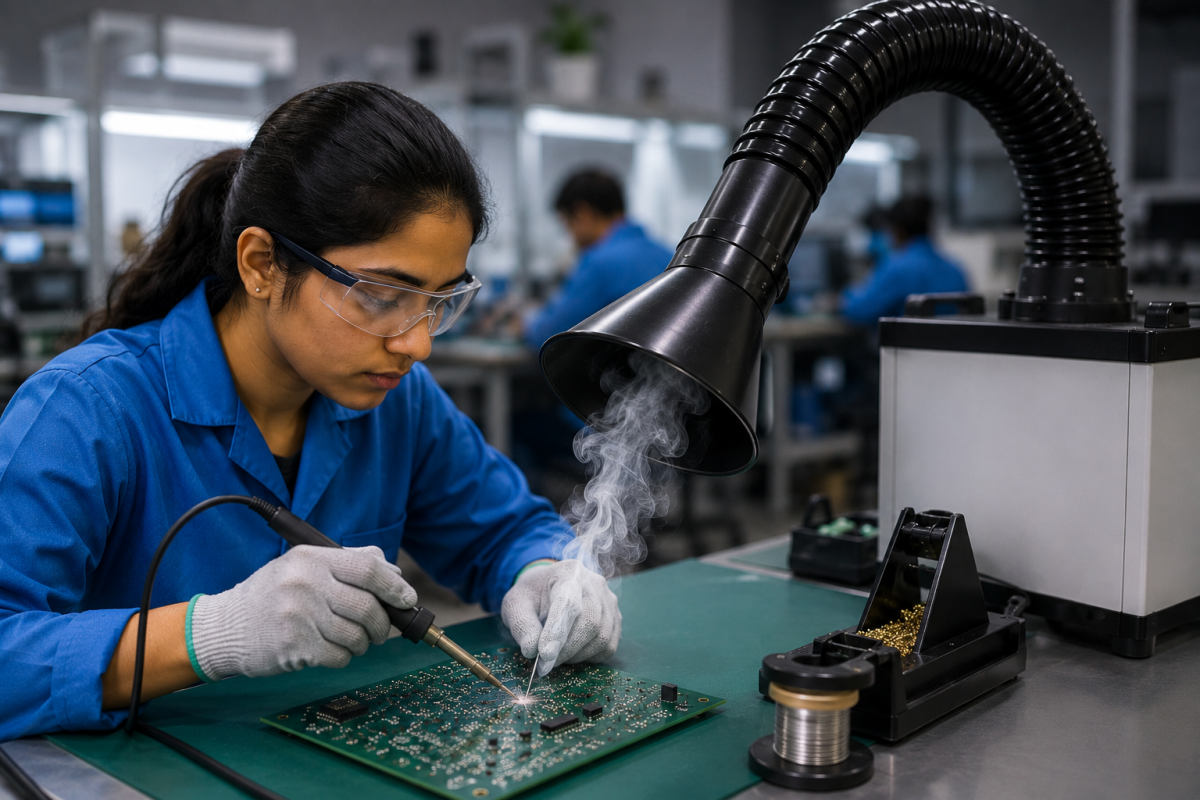
Welder working at a station with a welding fume extractor capturing fumes through a flexible suction arm

How Welding Fume Extractors Protect Workers from Long-Term Health Risks

Why Welding Fumes Are a Serious Health Concern

Welding creates fumes that contain fine metal particles and gases. These fumes enter the lungs when workers breathe. Over time, repeated exposure causes serious health problems. Many of these risks do not appear immediately. They build slowly and affect workers years later.

This makes fume control a critical part of workplace safety.

What Welding Fumes Contain

Common Components

Welding fumes usually contain:

  • Fine metal particles
  • Metal oxides formed during heating
  • Gases released from coatings and fillers

These particles are small enough to reach deep into the lungs. Once inside, the body struggles to remove them.

Long-Term Health Risks from Welding Fumes

Respiratory Problems

Long-term exposure damages lung tissue. Workers may develop chronic cough, breathing difficulty, and reduced lung capacity.

Metal Exposure Effects

Certain metals affect the nervous system and internal organs. Continuous exposure increases the risk of long-term illness.

Reduced Immune Response

Poor air quality weakens the body’s ability to fight infections. This leads to frequent illness and slower recovery.

Increased Absenteeism

Health issues result in more sick leave and lower productivity across teams.

How a Welding Fume Extractor Reduces These Risks

Source Capture

A welding fume extractor captures fumes directly at the welding point. This prevents fumes from spreading across the workspace.

Reduced Inhalation

By removing fumes at the source, the system limits how much contaminated air workers breathe.

Consistent Air Quality

Extraction systems maintain stable air conditions throughout the shift. This reduces long-term exposure.

Cleaner Work Environment

Less airborne fume means cleaner floors, machines, and work surfaces. This improves overall hygiene.

Why Long-Term Protection Matters More Than Short-Term Comfort

Many welding fumes do not cause immediate discomfort. Workers may not notice the damage until years later. Long-term protection prevents hidden risks from becoming permanent health problems.

Installing a welding fume extractor protects both current workers and future employees.

Q&A: Welding Fumes and Worker Health

Q1: Are welding fumes dangerous even at low levels?
Yes. Long-term exposure to low levels still increases health risks.

Q2: Can general ventilation replace a welding fume extractor?
No. Ventilation only dilutes fumes. Extraction removes them at the source.

Q3: Does fume extraction improve productivity?
Yes. Cleaner air improves focus, comfort, and attendance.

Q4: When should fume extraction be mandatory?
Any indoor welding operation should use source-level extraction.

Conclusion

Welding fumes pose serious long-term health risks when left uncontrolled. These risks affect lungs, overall health, and productivity. A welding fume extractor removes fumes before workers inhale them. This protects health, improves air quality, and supports safer operations.

Long-term safety starts with clean air at the source.

Fume extractor arm capturing welding fumes above a workbench in an industrial workshop.

Understanding Airflow and Suction in Extraction Systems

Why Airflow and Suction Matter in Fume Extraction

The performance of any extraction system depends on its airflow and suction strength. These two factors decide how well the system captures fumes, mist, and dust before they spread into the workspace.

Industries that use welding, soldering, grinding, or CNC machining rely on proper airflow to maintain clean air and meet safety standards. Understanding these basics helps users select the right system and operate it correctly.

What Is Airflow in an Extraction System?

Definition:

Airflow is the volume of air an extraction system moves per minute. It is usually measured in cubic meters per hour (CMH) or cubic feet per minute (CFM).

Why It Matters:

  • Higher airflow helps capture pollutants faster
  • Ensures clean air circulation in enclosed spaces
  • Prevents fumes from spreading to nearby stations

Where It Matters Most:

  • Large welding bays
  • Centralized extraction setups
  • Multi-station work areas

Understanding Suction (Negative Pressure)

Definition:

Suction is the negative pressure created by the extraction system that pulls contaminants into the hood or arm.

Why It Matters:

  • Strong suction ensures fumes are captured at the source
  • Helps maintain stable airflow
  • Improves capture efficiency, especially during welding or soldering

Where It Matters Most:

  • Soldering benches
  • Welding stations
  • Enclosed mist-generating processes

How Airflow and Suction Work Together

Airflow handles the volume of air being moved.
Suction handles the pulling force at the capture point.

Both must be balanced. High airflow with weak suction will not pull fumes effectively. Strong suction with poor airflow will not cover the full capture area.

Powertech’s systems like the FumeKiller®, which finds multiple applications as a welding fume extractor or as a soldering fume extractor, maintains optimal airflow and suction using high-efficiency electrostatic filtration and well-engineered blowers.

Factors That Affect Airflow and Suction

1. Duct Length and Bends

Long or bent ducts reduce suction strength and create resistance. Shorter and straighter ducts offer better performance.

2. Hood Design

The size and shape of the hood determine how well fumes enter the system.

3. Filter Condition

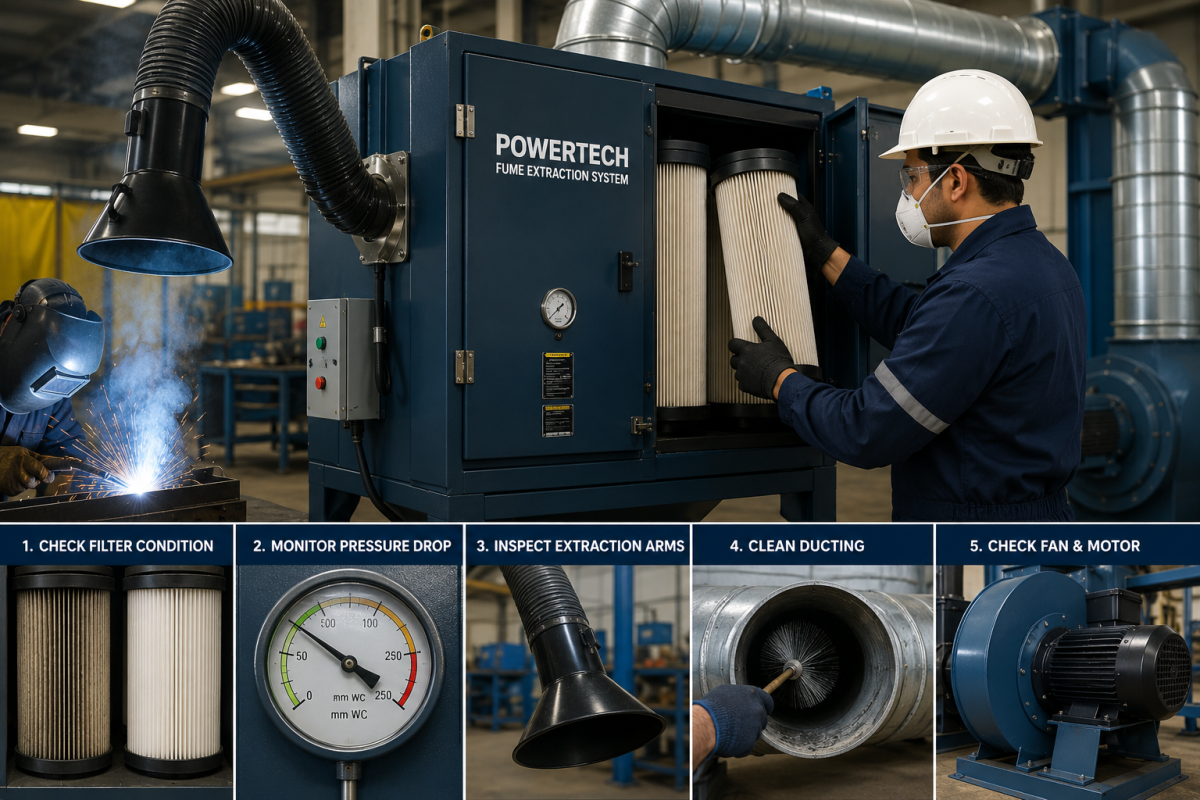
Clogged filters lower airflow and reduce efficiency. Electrostatic filters, used in models like FumeKiller® and MistKiller®, stay efficient longer and only require periodic washing.

4. Blower Capacity

A properly rated blower ensures stable negative pressure and high airflow even under load.

Q&A: Common Questions About Airflow and Suction

Q1: What is more important — airflow or suction?
Both are important. Suction controls capture at the source, while airflow controls how much air the system handles.

Q2: Why does suction drop over time?
Clogged filters, duct leaks, and airflow resistance reduce suction. Regular cleaning solves this.

Q3: Which extractor offers the best airflow for welding?
Electrostatic systems like FumeKiller®, provide stable airflow and high capture efficiency.

Q4: Is high airflow always better?
Not always. Too much airflow can pull fumes away from the capture point before extraction. Balance is key.

Q5: Who makes reliable extraction systems in India?
Powertech Pollution Controls offers systems for welding, soldering, dust, and mist extraction.

Conclusion

Understanding airflow and suction helps industries choose and maintain efficient extraction systems. Balanced airflow, strong suction, clean filters, and correct hood positioning ensure effective control of fumes, dust, and mist.As a leading fume extractor manufacturer in Bangalore, Powertech Pollution Controls provides reliable and CPCB-compliant extraction solutions for all major industrial processes.

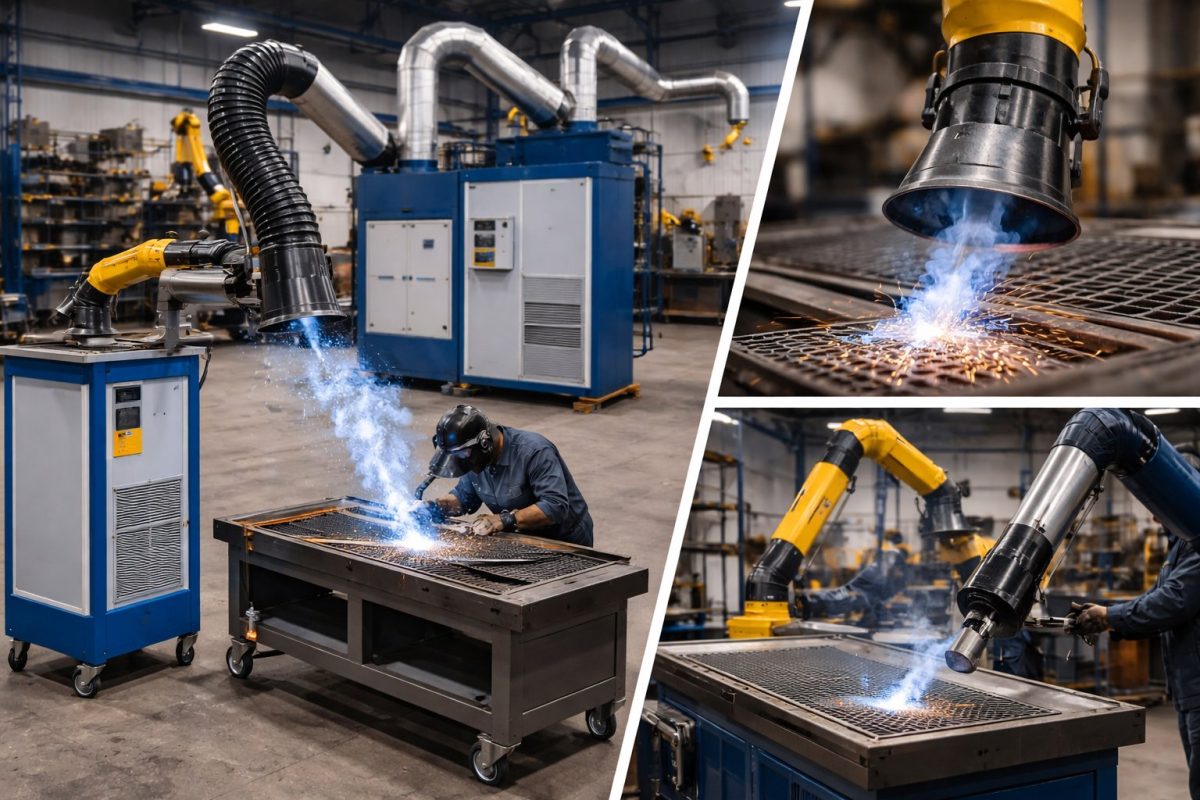
Photorealistic image of two welders working at separate stations in an industrial workshop, with a central fume extraction unit equipped with twin flexible suction arms capturing welding fumes at both work areas.

Challenges of Controlling Fumes in Multi-Station Work Areas

Why Multi-Station Areas Need Strong Fume Control

Modern workshops often run several welding, soldering, or machining stations side by side. While this improves productivity, it also increases the concentration of fumes in one shared space. If the fumes are not controlled properly, they spread across stations and affect every worker in the area.

Multi-station layouts make fume extraction systems more complex because each workstation generates pollutants at different rates. Without the right system, fumes mix, visibility drops, and air quality declines quickly.

Key Challenges in Multi-Station Fume Control

1. High Volume of Pollutants

When several welding or soldering stations operate at the same time, the total amount of fumes released into the workspace rises sharply. A single system may struggle to capture fumes from all points.

2. Uneven Fume Distribution

Some stations produce more fumes than others. For example, MIG welding releases heavier fumes than soldering. This uneven load makes centralized extraction difficult.

3. Limited Space for Ducting or Hoods

Multi-station lines often have compact layouts. Installing large ducts or fixed hoods is not always practical. Portable arms or extractors are needed but require careful positioning.

4. Worker Movement and Workflow Interruptions

Operators move frequently between stations. If extractor arms are in the way, workers may shift them, reducing capture efficiency.

5. Noise and Airflow Imbalance

When several extraction points connect to one system, airflow can drop at certain points. This lowers capture efficiency and increases noise.

Effective Solutions for Multi-Station Fume Control

1. Use of Portable or Semi-Portable Fume Extractors

Units like the FumeKiller® from Powertech Pollution Controls allow flexible placement near each station. These extractors provide strong suction without major ducting.

2. Twin Flexible Extractor Arms

A single extractor with two arms can cover two nearby stations. This reduces cost and space while maintaining strong source capture.

3. Local Exhaust Ventilation (LEV)

LEV systems capture pollutants before they spread. Flexible arms or drop-down hoods ensure targeted capture.

4. Zoning and Airflow Planning

Dividing the workshop into zones helps balance airflow and maintain steady extraction capacity.

5. Electrostatic Filtration for High Efficiency

Electrostatic systems handle fine welding and soldering fumes better than mechanical filters. They also reduce maintenance costs.

Q&A: Common Questions About Multi-Station Fume Control

Q1: Why do fume problems increase in multi-station areas?
Multiple sources release fumes at the same time. Without proper extraction, pollutants accumulate faster than they disperse.

Q2: Can one fume extractor serve two or more stations?
Yes. Models with twin flexible arms can handle two stations. The actual capacity depends on the extraction volume required.

Q3: What type of extractor works best in multi-station welding areas?
A welding fume extractor with electrostatic filtration works best. It captures fine metal fumes and offers steady airflow.

Q4: Who manufactures reliable multi-station extraction systems in India?
Powertech Pollution Controls, a leading fume extractor manufacturer in Bangalore, provides welding fume extractors, soldering fume extractors, dust collectors, and mist collectors for multi-station layouts.

Conclusion

Multi-station work areas present unique challenges for fume control due to higher pollutant loads, limited space, and frequent worker movement. The right extraction system can solve these issues by targeting fumes at the source, balancing airflow, and reducing maintenance.As a trusted fume extractor manufacturer in India, Powertech Pollution Controls offers reliable and CPCB-compliant solutions that keep multi-station welding, soldering, and machining areas safe and productive.

A digital illustration of an air filtration unit inside an industrial workshop, with certification badges such as CPCB, CE, ISI, and ISO floating beside it

Key Certifications for Air Pollution Control Equipment in India

Key CertificatiWhy Certifications Matter for Air Pollution Control Systems

Air pollution control equipment plays a major role in maintaining workplace safety and meeting legal requirements in India. Whether it’s a welding fume extractor, soldering fume extractor, dust collector, or mist collector, certified equipment ensures reliability, efficiency, and compliance with national standards.

Understanding the key certifications helps industries select systems that meet quality benchmarks and pass inspections by local authorities.

1. CPCB Certification (Central Pollution Control Board)

What It Means:

CPCB certification ensures that the air pollution control system meets India’s emission standards. It confirms that the unit keeps indoor pollutant levels within safe limits.

Why It Matters:

  • Required for factories working with fumes, dust, or mist
  • Prevents penalties and shutdowns
  • Ensures clean and safe air for workers

Powertech Pollution Controls, a trusted fume extractor manufacturer in India, designs systems that meet CPCB air quality norms for various industrial applications.

2. ISI / BIS Standards (Bureau of Indian Standards)

What It Means:

BIS certification confirms that the equipment meets Indian safety, performance, and reliability standards.

Why It Matters:

  • Ensures safe electrical design and construction
  • Guarantees steady performance under industrial loads
  • Supports long-term durability

This is especially important for electrically powered units such as welding fume extractors and soldering fume extractors.

3. CE Certification (European Conformity)

What It Means:

CE certification shows that the equipment meets European health, safety, and environmental standards.

Why It Matters in India:

  • Ensures international-level product safety
  • Helps when exporting units or working with multinational clients
  • Confirms strong electrical and mechanical safety features

Many Indian manufacturers, including those producing industrial extractors, follow CE guidelines for better global acceptance.

4. ISO 9001: Quality Management Certification

What It Means:

ISO 9001 ensures that the manufacturing process follows a structured quality management system.

Why It Matters:

  • Guarantees consistent product quality
  • Ensures proper documentation and traceability
  • Improves customer service and reliability

A fume extractor manufacturer in Bangalore with ISO certification is more likely to deliver stable and dependable equipment.

5. ISO 14001: Environmental Management Certification

What It Means:

ISO 14001 ensures that manufacturers follow environmentally responsible processes.

Why It Matters:

  • Indicates sustainable production
  • Ensures environmental compliance
  • Reduces long-term environmental risks

This certification is valuable for companies promoting green and sustainable manufacturing.

6. OHSAS / ISO 45001: Occupational Health and Safety

What It Means:

This certification ensures that the equipment manufacturer follows strict workplace safety standards.

Why It Matters:

  • Reduces risks during installation and servicing
  • Establishes safe design practices
  • Ensures safe handling of electrical and mechanical components

Q&A: Common Questions About Certifications

Q1: Are certifications mandatory for all air pollution control equipment?
CPCB compliance is essential for most industrial operations. Others like ISO and CE are not mandatory but show quality and reliability.

Q2: Does certified equipment perform better?
Yes. Certified systems meet verified standards for airflow, filtration, and safety.

Q3: Who provides certified fume extractors in India?
Powertech Pollution Controls offers CPCB-compliant welding and soldering fume extractors, dust collectors, and mist collectors.

Q4: Does certification affect maintenance?
Certified equipment often needs less maintenance because it’s built to strict performance benchmarks.

Conclusion

Certifications help industries choose safe, efficient, and compliant air pollution control equipment. Whether you need a welding fume extractor, soldering fume extractor, dust collector or mist collector, working with a certified manufacturer ensures long-term performance and regulatory compliance.As a trusted fume extractor manufacturer in India, Powertech Pollution Controls continues to deliver certified, high-quality systems that help industries maintain clean and safe work environments.ons for Air Pollution Control Equipment in India

Cross-sectional illustration of a fume extractor showing four filtration stages — pre-filter, electrostatic filter, activated carbon filter, and clean air outlet — with labeled airflow paths.

Understanding Filtration Stages in Fume Extractors

Why Filtration Stages Matter in Fume Extraction

Every industrial process that involves welding, soldering, grinding, or machining releases airborne pollutants. A fume extractor removes these contaminants and returns clean air to the workspace.
What makes a fume extractor effective is not just its suction power, but also the quality and sequence of its filtration stages.

Each filtration stage targets a specific type of pollutant — from large dust particles to fine fumes and smoke. Understanding how these stages work helps industries choose the right system for their process.

1. Pre-Filter Stage – Capturing Large Particles

Purpose:

The pre-filter removes larger dust and debris before they reach the main filter. This extends the life of finer filters and ensures steady airflow.

Used In:

  • Welding and grinding operations
  • Applications with visible dust or metal flakes

Maintenance Tip:

Clean or replace pre-filters regularly to prevent airflow blockage and maintain system efficiency.

2. Electrostatic or Mechanical Filtration Stage – Capturing Fine Fumes

Purpose:

At this stage, fine fumes, smoke, and mist particles are captured. Depending on the system design, this may involve:

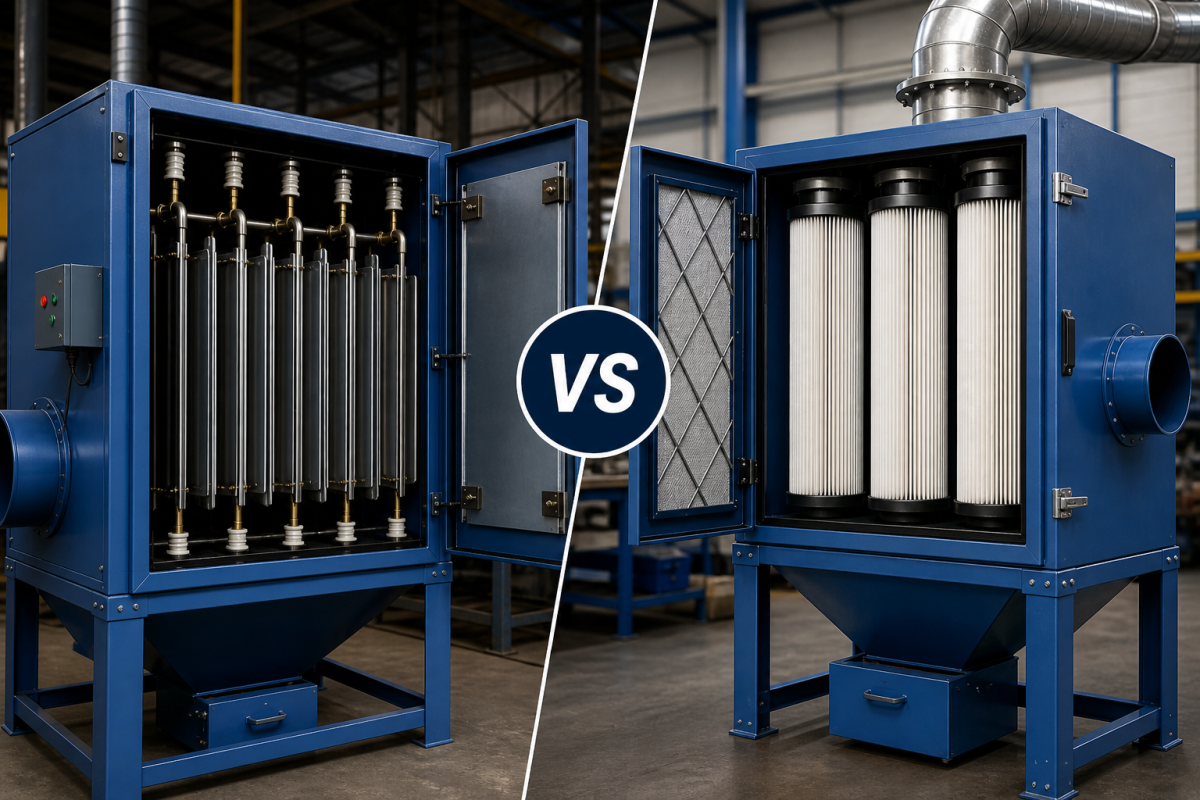
  • Electrostatic filtration (as used in Powertech’s FumeKiller®):  Electrostatic filters charge airborne particles and trap them on collector plates.
  • Mechanical filtration: Uses layered filters like HEPA or activated carbon to trap fine particles.

Used In:

  • Soldering, welding, and CNC machining
  • Processes generating oil mist, flux smoke, or chemical vapors

3. Activated Carbon Stage – Removing Odors and Gases

Purpose:

Activated carbon filters absorb odors and gaseous pollutants that other filters cannot capture. This makes the air safer and more comfortable for workers.

Used In:

  • Electronics manufacturing
  • Chemical soldering and coating applications\

4. Final Stage – Air Polishing and Recirculation

Purpose:

The last filtration stage ensures that the air released back into the workspace meets safety and environmental standards. Systems built by Powertech Pollution Controls, a leading fume extractor manufacturer in Bangalore, achieve CPCB-compliant air purity through multi-stage filtration.

Q&A: Common Questions About Filtration in Fume Extractors

Q1: How many filtration stages should a good fume extractor have?

A: Most industrial extractors have two to four stages, depending on the type of pollutant and industry requirements.

Q2: What’s the difference between electrostatic and HEPA filters?

A: Electrostatic filters are washable and reusable, while HEPA filters are disposable but capture even finer particles. Powertech’s FumeKiller® uses electrostatic technology for low-maintenance operation.

Q3: Do all extractors include activated carbon filters?

A: Not all. They’re mainly used when odor and gas removal are important, such as in soldering applications.

Q4: Who manufactures reliable multi-stage fume extractors in India?

A: Powertech Pollution Controls, a welding fume extractor manufacturer in Bangalore, designs advanced multi-stage extractors like the FumeKiller, MistKiller, and DustBag to meet various industrial needs.

Conclusion

The effectiveness of a fume extractor depends on how well its filtration stages work together. From pre-filters that catch larger particles to electrostatic and carbon filters that handle fine fumes and odors, every stage plays a crucial role in maintaining clean air.As a leading fume extractor manufacturer in India, Powertech Pollution Controls continues to provide reliable and CPCB-compliant air filtration systems for welding, soldering, and general manufacturing applications.