
Why Measuring Fume Extraction Efficiency Matters
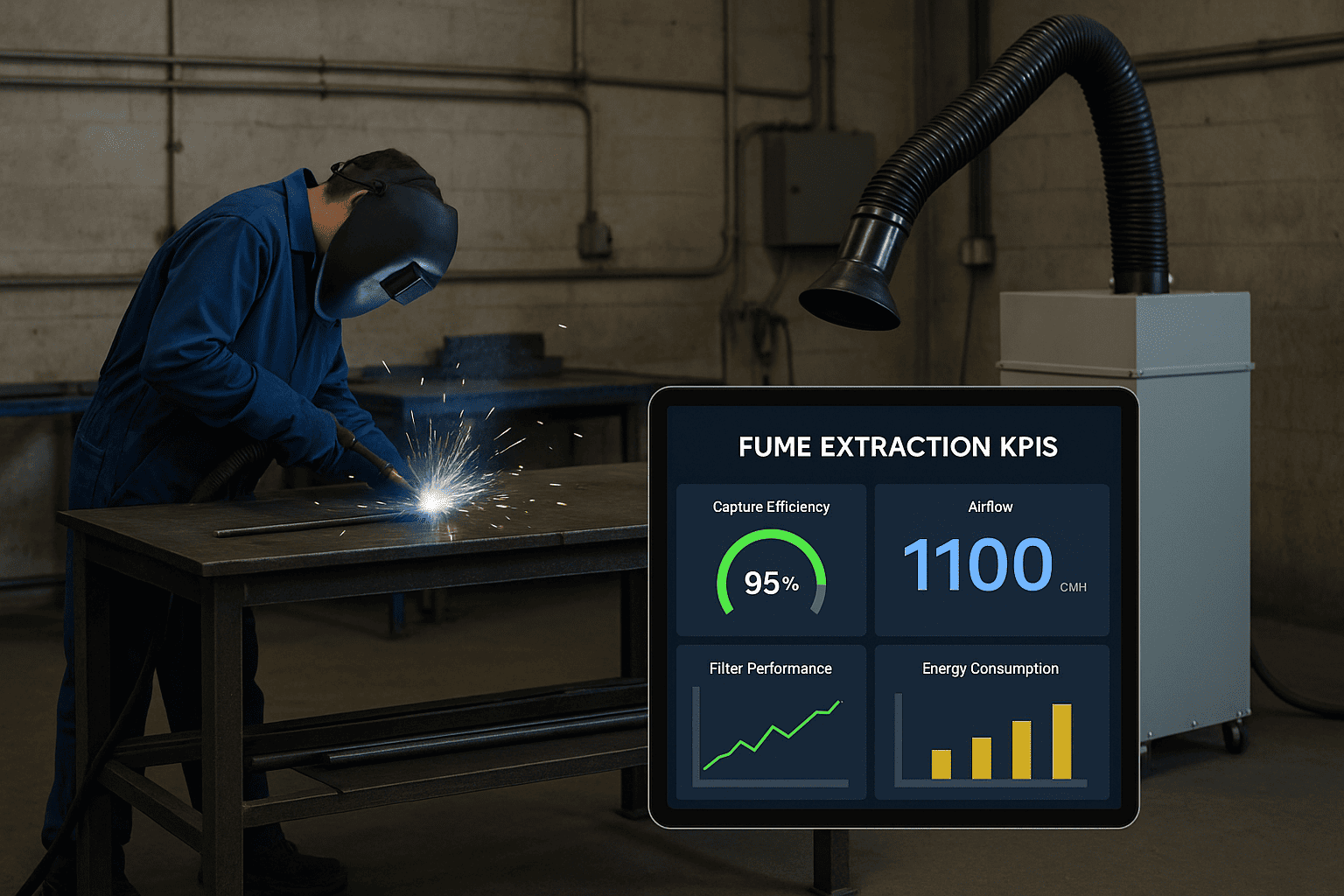
Installing a fume extraction system is only the first step in ensuring clean air in an industrial workspace. To maintain effective air quality control, it’s important to track specific performance indicators that show how well the system is working. These Key Performance Indicators (KPIs) help assess filtration efficiency, system reliability, and long-term cost-effectiveness.
Whether you’re using a welding fume extractor, soldering fume extractor, or mist collector, understanding these KPIs helps you ensure your system is operating at its best.
1. Capture Efficiency
What It Measures:
The percentage of fumes or contaminants captured at the source before they spread into the workspace.
Why It Matters:
A high capture efficiency means the fume extractor is positioned correctly and has adequate suction power. Poor capture rates often point to blocked filters, wrong hood placement, or undersized systems.
How to Improve It:
- Position suction arms closer to the emission point.
- Check for leaks or duct obstructions.
- Use properly rated airflow capacity for each process.
2. Airflow Velocity and Volume
What It Measures:
The speed and amount of air moving through the fume extraction system, usually measured in cubic meters per hour (CMH).
Why It Matters:
Stable airflow ensures consistent fume capture and filtration. Low airflow may indicate clogged filters, damaged fans, or incorrect system calibration.
How to Improve It:
- Perform regular airflow checks with an anemometer.
- Clean electrostatic plates or replace filters periodically.
3. Filtration Efficiency
What It Measures:
The system’s ability to remove fine particles, fumes, and mist from the air.
Why It Matters:
Filtration efficiency reflects how well your fume extractor cleans the air before it’s released back into the workspace. A lower reading suggests worn-out filters or damaged collection cells.
How to Improve It:
- Use high-quality filters or electrostatic units like Powertech’s FumeKiller.
- Clean or replace filter media as per maintenance schedules.
4. Energy Consumption
What It Measures:
The amount of electricity consumed by the fume extractor during operation.
Why It Matters:
Efficient systems maintain high suction and filtration without drawing excess power. Energy-efficient units, such as those designed by Powertech Pollution Controls, reduce long-term operational costs.
How to Improve It:
- Choose systems with optimized motor and fan design.
- Schedule regular cleaning to maintain steady airflow.
5. Maintenance Frequency and Downtime
What It Measures:
The number of hours spent on cleaning, servicing, or downtime due to system failure.
Why It Matters:
Frequent breakdowns or long maintenance periods reduce productivity. Tracking downtime helps identify whether filters, fans, or ducts are underperforming.
How to Improve It:
- Implement preventive maintenance schedules.
- Keep spare filters and parts readily available.
- Work with a fume extractor manufacturer in Bangalore that offers reliable service support.
Q&A: Common Questions About Measuring Fume Extraction Efficiency
Q1: How often should these KPIs be measured?
At least once every quarter, or more frequently in heavy-duty operations. Regular monitoring helps detect efficiency drops early.
Q2: Can data monitoring be automated?
Yes. Modern systems can include airflow and pressure sensors that send real-time data for analysis and preventive maintenance.
Q3: Which KPIs are most critical for compliance?
Capture efficiency and filtration performance are key for CPCB and occupational safety compliance.
Q4: Where can I find a reliable manufacturer to help monitor system efficiency?
Powertech Pollution Controls, a trusted fume extractor manufacturer in India, offers customized welding fume extractors, soldering fume extractors, and mist collectors with high-efficiency filtration and low maintenance needs.
Conclusion
Measuring and tracking KPIs ensures that you have installed an efficient fume extractor that performs at its best, protecting workers, machines, and the environment. By focusing on capture efficiency, airflow, filtration performance, and energy use, you can maintain compliance and reduce costs. Partner with Powertech Pollution Controls for custom designed air pollution control solutions.