
Introduction
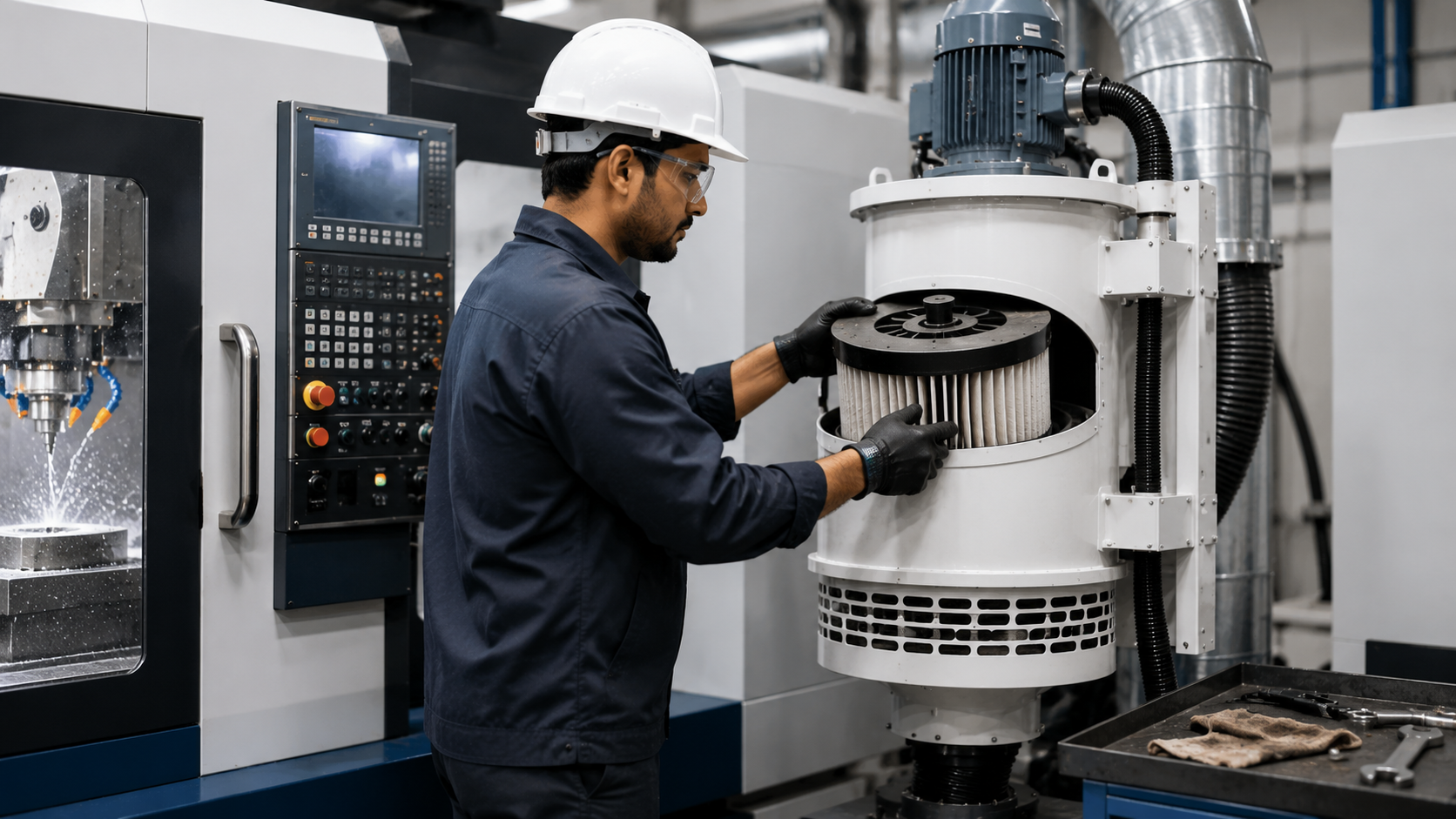
An industrial mist collector is a critical component of any CNC machining or metalworking facility, continuously removing airborne oil and coolant mist to maintain clean air and protect equipment. However, even the most advanced mist collection systems require regular maintenance to ensure consistent performance, maximum collection efficiency, and long service life.
Proper mist collector maintenance not only improves extraction efficiency but also reduces unexpected downtime, extends equipment life, and lowers operating costs. Whether your facility uses a centrifugal, mechanical, or electrostatic system, scheduled oil mist collector maintenance is essential for maintaining reliable operation.
Routine CNC mist collector service also helps prevent contamination from affecting machine controls, electrical components, and production equipment while supporting overall industrial mist filtration maintenance programs.
With over 30 years of experience in industrial air pollution control, Powertech recommends preventive maintenance practices that keep mist collection systems operating at peak efficiency throughout their service life.
Key Takeaways
- Regular mist collector maintenance ensures consistent mist extraction performance.
- Preventive servicing reduces downtime and extends equipment life.
- Routine inspections help identify issues before they affect production.
- Clean collection systems improve airflow and extraction efficiency.
- A structured maintenance schedule lowers long-term operating costs.
Why Mist Collector Maintenance Is Important
Mist collectors operate continuously in demanding industrial environments.
Over time:
- Oil residue accumulates
- Mechanical components wear
- Airflow may decrease
- Drainage systems may become obstructed
Without routine maintenance, collection efficiency gradually declines.
Components That Require Regular Inspection
Collection Chamber
Inspect for:
- Oil accumulation
- Sludge deposits
- Drainage blockages
Regular cleaning prevents reduced collection efficiency.
Drain System
Ensure collected oil drains freely.
Blocked drains may allow liquid to accumulate inside the collector.
Motor Assembly
Check for:
- Unusual vibration
- Excessive noise
- Bearing wear
- Secure mounting
Reliable motor operation is essential for continuous extraction.
Fan and Impeller
Inspect for:
- Residue build-up
- Imbalance
- Wear
- Damage
Clean rotating components maintain proper airflow.
Ductwork
Inspect for:
- Loose connections
- Oil deposits
- Air leaks
- Physical damage
Well-maintained ductwork supports efficient airflow.
Electrical Components
Check:
- Wiring
- Control panels
- Switches
- Safety devices
Ensure all electrical systems operate correctly.
Recommended Maintenance Schedule
Daily
- Visual inspection
- Check for unusual noise
- Verify proper operation
- Confirm drainage
Weekly
- Clean accessible surfaces
- Inspect duct connections
- Check airflow indicators
Monthly
- Inspect motor and fan
- Examine electrical components
- Verify mounting hardware
- Check for oil build-up
Quarterly
- Perform comprehensive inspection
- Clean internal components
- Inspect ductwork thoroughly
- Verify extraction performance
Annually
- Complete preventive maintenance
- Replace worn components if required
- Test overall system performance
- Review operating conditions
Common Signs That Service Is Required
Watch for:
- Reduced extraction performance
- Oil residue around machines
- Increased airborne mist
- Excessive vibration
- Unusual motor noise
- Visible oil leaks
- Increased maintenance requirements
Early intervention prevents larger problems.
Best Practices for CNC Mist Collector Service
Follow Manufacturer Recommendations
Always perform maintenance according to the equipment manufacturer’s guidelines.
Maintain Maintenance Records
Record:
- Inspection dates
- Cleaning schedules
- Repairs
- Component replacement
Historical records help identify recurring issues.
Train Maintenance Personnel
Ensure technicians understand:
- Safe shutdown procedures
- Inspection methods
- Cleaning techniques
- Basic troubleshooting
Use Genuine Replacement Parts
Original components help maintain system performance and reliability.
Schedule Preventive Maintenance
Avoid waiting for equipment failure.
Preventive maintenance is significantly more cost-effective than emergency repairs.
Powertech’s Maintenance Philosophy
Powertech designs MistKiller centrifugal mist collectors with low-maintenance operation in mind.
Key features include:
- No disposable filter media
- Robust centrifugal separation
- Simple mechanical design
- Easy access for inspection
- Reliable continuous operation
- Reduced maintenance requirements
This minimizes downtime while maintaining consistently high mist collection efficiency.
Expert Insight
From Powertech’s experience, most mist collector failures are not caused by major component defects but by neglected preventive maintenance.
Facilities that follow structured inspection and servicing schedules consistently experience:
- Higher extraction efficiency
- Lower maintenance costs
- Longer equipment life
- Reduced production interruptions
- Improved workplace cleanliness
A proactive maintenance program protects both the mist collector and the machining equipment it serves.
Routine visual inspections should be performed daily, with more comprehensive maintenance carried out monthly, quarterly, and annually depending on operating conditions.
Poor maintenance can reduce airflow, decrease collection efficiency, increase contamination, and lead to higher operating costs.
Collection chambers, drain systems, motors, fans, ductwork, and electrical controls should all be inspected regularly.
Yes. Clean components and unrestricted airflow help maintain optimal mist collection performance.
Generally, yes. Centrifugal systems like Powertech’s MistKiller require less routine maintenance because they operate without disposable filter media.
Preventive maintenance identifies minor issues before they become costly failures, reducing downtime and extending equipment life.
Regular mist collector maintenance is essential for maintaining reliable oil mist extraction in modern machining facilities. Through planned oil mist collector maintenance, routine CNC mist collector service, and comprehensive industrial mist filtration maintenance, manufacturers can improve extraction efficiency, reduce downtime, and extend equipment life. By implementing a structured preventive maintenance program, facilities can maximize the performance of their mist collection systems while creating cleaner, safer, and more productive manufacturing environments. Powertech’s MistKiller centrifugal mist collectors are engineered for dependable, low-maintenance operation, helping manufacturers achieve long-term operational efficiency.