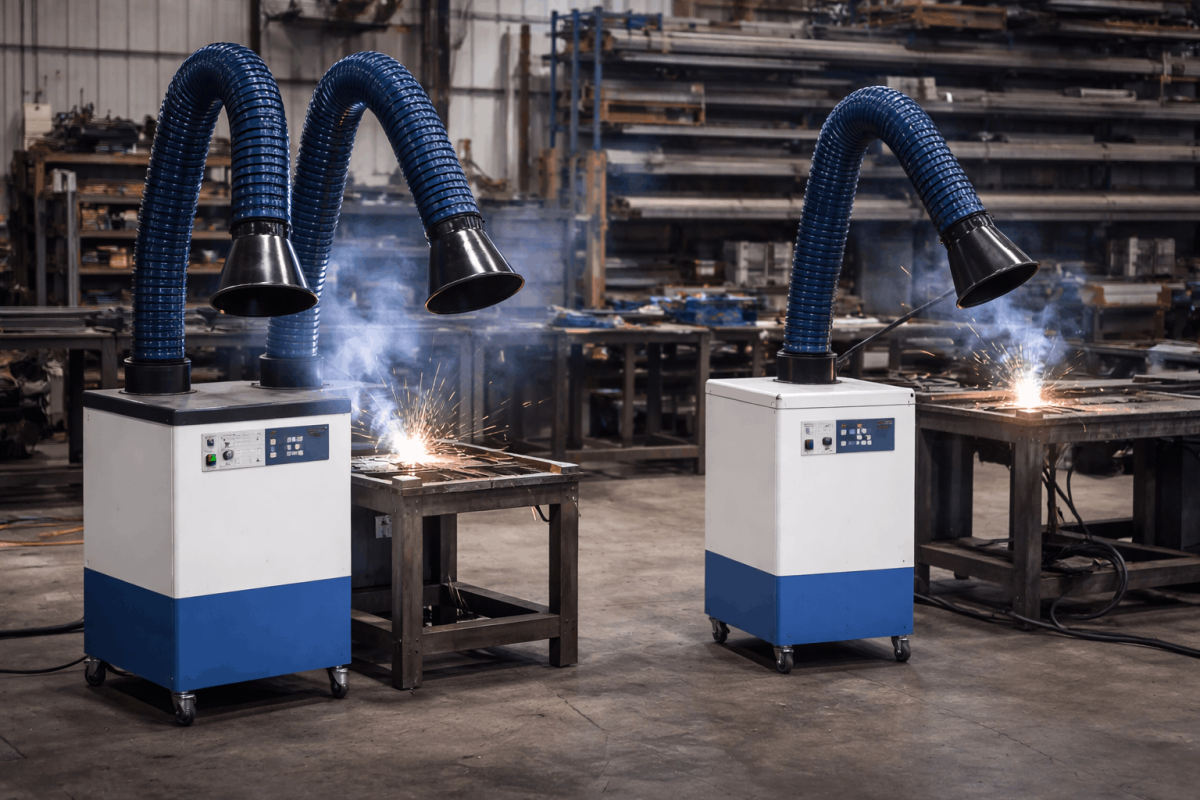
Twin-arm and single-arm welding fume extractors positioned beside welding stations in an industrial workshop.

Single-Arm vs Twin-Arm Welding Fume Extractors: Practical Use Cases

Why the Arm Configuration is Important for Welding Fume Extraction

A welding fume extractor needs to catch fumes at the source. The number of extractor arms affects how many welding stations a unit can serve and how well it works.

The layout, workload, and fume level will help you decide between a single-arm and twin-arm system.

What Is a Single-Arm Welding Fume Extractor?

Basic Configuration

A single-arm system has one flexible suction arm that is linked to the extractor unit. It can only work on one welding station at a time.

Best Suited for:

  • Separate welding stations
  • Work on repairs and upkeep
  • Welding load that is low to moderate
  • Shops with layouts that can change

Benefits:

  • Easy to set up
  • Less money up front
  • Simple to move around
  • Airflow that is focused on one source

Limitations:

  • Can’t serve more than one active station
  • Not as useful in busy workshops

What Is a Twin-Arm Welding Fume Extractor?

A twin-arm system has two flexible suction arms that are connected to a single extractor unit.

Depending on the amount of fumes, it can work at two welding stations at the same time.

Best Suited For:

  • Welding stations next to each other
  • Moderate levels of production floors
  • Workshops with a steady flow of work

Benefits

  • One unit serves two stations
  • Saves space on the floor
  • Lessens the number of tools

Limitations

  • Airflow divides between the arms
  • It may not be able to handle heavy welding at both stations at once.

Before suggesting a twin-arm setup, an experienced welding fume extractor manufacturer checks how the air flows.

Important Things to Think About When Choosing

Simultaneous Welding Intensity:

If both welders are working all the time and making a lot of fumes, the twin-arm unit needs to be the right size.

Distance Between Stations

Twin arms work best when stations are close to each other. Long distances make it harder to move around.

Available Floor Space

Twin-arm systems take up less space than two separate units.

Future Growth

Think about whether production might go up. Planning ahead keeps you from having to replace the system.

Real-Life Examples

Case 1: Small Repair Shop

A single-arm welding fume extractor works well when only one welder is working at a time.

Case 2: Medium Fabrication Unit

Twin-arm extractors help two welders work at the same time with moderate duty cycles.

Case 3: High-Volume Production

A twin-arm setup may not be the best choice for high-volume production. Instead, separate units or a central extraction system may work better.

Q&A: Single vs. Twin-Arm Welding Fume Extractors

Q1: Does a system with two arms make the suction weaker?

A: Airflow splits between the arms. The right size makes sure that capture works.

Q2: Is it possible for one twin-arm unit to take the place of two single-arm units?

A: Yes, if the welding is not too strong and the stations are close together.

Q3: Is a system with only one arm more efficient?

A: It directs the airflow to one source, which is great for single stations.

Q4: Who can help you choose the best configuration?

A: A qualified manufacturer of welding fume extractors can look at the layout and calculate the airflow needs.

Conclusion

Single-arm and twin-arm welding fume extractors are made for different purposes. Single-arm systems are good for single stations. Twin-arm systems are good for welders who work next to each other and have moderate workloads.

Choosing the right setup makes sure that fume capture works well, air quality stays stable, and equipment is used efficiently.

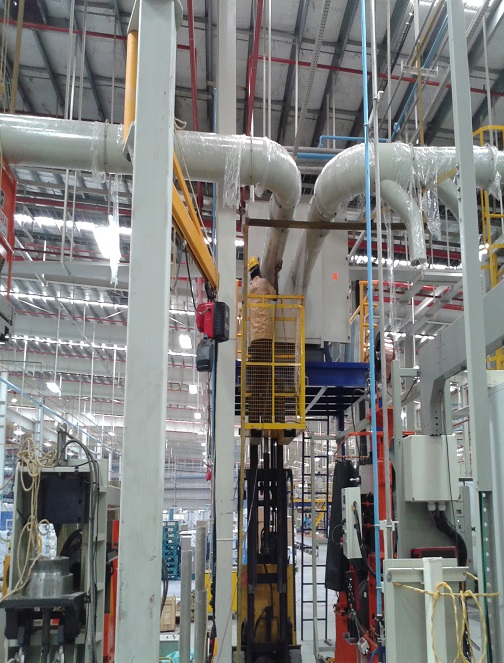
How to Choose the Right Air Pollution Control Equipment for Your Business

Choosing the right air pollution control equipment for your business is a critical decision that can significantly impact operational efficiency, regulatory compliance, and workplace safety. The right equipment not only ensures that your facility meets stringent environmental standards but also enhances the health and well-being of your employees. With various types of air pollution control systems available, it is essential to understand the specific needs of your business and select the most suitable solutions. Here, we outline key considerations and steps to help you make an informed decision.

Firstly, it is crucial to identify the types of pollutants generated by your industrial processes. Air pollution control equipment is designed to target specific contaminants, such as dust, fumes, smoke, and mist. For instance, if your operations involve welding or soldering you will need equipment capable of capturing and neutralizing fine particulate matter and harmful gases like a welding fume extractor or soldering fume extractor. On the other hand, processes like grinding and buffing may produce larger dust particles that require different filtration technologies like dust collectors or if the dust is fine or is generated in large volume, a self-cleaning dust collector which would be capable of handling the pollutants. Conducting a thorough assessment of the pollutants in your facility will guide you in selecting the appropriate equipment.

Understanding the volume and concentration of pollutants is also essential. High-volume operations that produce significant amounts of contaminants will need robust and high-capacity air pollution control systems. Conversely, smaller operations may be adequately served by more compact and lower-capacity units. Accurate measurements of pollutant levels can be obtained through air quality testing and monitoring, which provide valuable data for determining the necessary specifications of the equipment.

The layout and size of your facility play a significant role in the selection process. The physical space available for installing air pollution control equipment must be considered to ensure that the chosen systems can be integrated without disrupting existing workflows. In some cases, custom-built solutions may be required to fit the unique spatial constraints of your facility.

Energy efficiency is another crucial factor to consider. Air pollution control equipment can consume substantial amounts of energy, contributing to operational costs. Selecting energy-efficient systems not only reduces your environmental footprint but also lowers energy expenses. Look for equipment with advanced technologies that minimize energy consumption while maintaining high filtration efficiency.

Maintenance requirements and ease of operation should also influence your decision. Regular maintenance is essential for the continuous effectiveness of air pollution control equipment. Systems that are easy to maintain and operate can save time and reduce downtime, ensuring uninterrupted productivity. Choose equipment with accessible components and user-friendly interfaces to simplify maintenance tasks and allow your staff to manage the systems efficiently. Additionally, consider the availability of technical support and after-sales service from the equipment provider to address any issues promptly.

Compliance with environmental regulations is a fundamental consideration. Different industries are subject to various regulatory standards regarding emissions and air quality. Ensuring that your chosen air pollution control equipment meets these regulations is critical to avoid fines and legal complications. Reputable providers like Powertech Pollution Controls design their systems to comply with the latest environmental standards, giving you confidence that your operations remain within legal limits.

Cost is inevitably a key factor in the decision-making process. While it may be tempting to choose the least expensive option, it is important to consider the long-term value and return on investment. High-quality air pollution control equipment that is reliable, efficient, and durable can provide significant cost savings over time by reducing maintenance expenses, energy consumption, and downtime. Evaluate the total cost of ownership, including installation, operation, and maintenance costs, to make a well-rounded decision.

Customization options can greatly enhance the suitability of air pollution control equipment for your specific needs. Off-the-shelf solutions may not always address the unique challenges of your industrial processes. Custom-designed systems that are tailored to your requirements can offer superior performance and efficiency. Powertech Pollution Controls specializes in providing custom air pollution control solutions that are designed to meet the exact needs of each client, ensuring maximum effectiveness and compliance.

Consider the reputation and experience of the equipment provider. Established providers with a proven track record in the industry are more likely to offer high-quality products and reliable service. Research the provider’s history, read customer reviews, and ask for references to gauge their expertise and customer satisfaction levels. A reputable provider like Powertech Pollution Controls can offer valuable insights and recommendations based on their extensive experience in the field.

In conclusion, selecting the right air pollution control equipment for your business involves careful consideration of various factors, including the types and volume of pollutants, facility layout, energy efficiency, maintenance requirements, regulatory compliance, cost, customization options, and the reputation of the provider. By thoroughly assessing these aspects and involving key stakeholders, you can make an informed decision that enhances air quality, ensures compliance, and promotes a safe and productive work environment. Powertech Pollution Controls is committed to helping businesses find the most effective air pollution control solutions, offering expert guidance and customized systems tailored to your specific needs. For more information, please visit our product page or contact us here.

Air pollution control equipment

How Custom Solutions from Powertech Pollution Controls Benefit Your Business

In today’s industrial landscape, air pollution control is a critical concern for businesses across various sectors. Ensuring clean air within industrial environments is not only a regulatory requirement but also essential for the health and safety of workers, the longevity of equipment, and overall operational efficiency. At Powertech Pollution Controls, we understand that each industrial operation has unique challenges and requirements when it comes to managing air quality. This is why we specialize in providing custom solutions tailored to meet the specific needs of our clients.

Custom solutions in air pollution control offer several distinct advantages over standard, one-size-fits-all systems. These advantages stem from the ability to design and implement solutions that address the unique characteristics of each industrial process and environment. By focusing on customization, Powertech Pollution Controls ensures that our clients receive the most effective and efficient air pollution control systems possible.

One of the primary benefits of custom air pollution control solutions is the precise targeting of specific pollutants. Different industries generate different types of pollutants, ranging from dust and smoke to fumes and mist. A custom solution allows for the selection and combination of technologies best suited to capture and neutralize these specific contaminants. For instance, a welding shop may require an advanced welding fume extractor like our FumeKiller®, while a food production facility might need a high-efficiency dust collector such as the DustBag® Reverse-Pulsed-Jet. By tailoring the system to the exact pollutants present, we can ensure maximum effectiveness and compliance with environmental standards.

Another significant advantage of custom solutions is the optimization of system performance and energy efficiency. Standard systems often operate under suboptimal conditions because they are not specifically designed for the particular requirements of a given industrial process. Custom solutions, on the other hand, are engineered to match the exact airflow, pressure, and filtration needs of the operation. This results in more efficient capture and removal of pollutants, reducing energy consumption and operational costs.

Custom air pollution control solutions also offer enhanced flexibility and scalability. As industrial processes evolve and production demands change, the ability to modify and expand air pollution control systems becomes crucial. A custom-designed system from Powertech Pollution Controls can be easily adapted to accommodate new processes, increased production volumes, or changes in regulatory requirements. This flexibility ensures that your investment remains valuable and effective over the long term, providing a future-proof solution to air quality management.

At Powertech Pollution Controls, our commitment to providing custom solutions begins with a thorough understanding of our clients’ needs. Our process involves a detailed assessment of the industrial environment, including site visits, detailed study of the application and pollutants generated, and consultations with key personnel. This comprehensive analysis allows us to identify the specific pollutants and operational requirements that need to be addressed. Based on this assessment, we design a tailored solution that incorporates the most appropriate technologies and configurations.

Our custom solutions encompass a wide range of technologies, including electrostatic precipitators, baghouse filters, centrifugal mist collectors, and advanced fume extraction systems. Each technology is selected and configured to work seamlessly with the others, creating an integrated system that delivers superior air pollution control. We also provide complete installation and commissioning services, ensuring that the system is correctly implemented and fully operational from day one.

Post-installation, Powertech Pollution Controls offers ongoing support and maintenance services to ensure the continued effectiveness of our custom solutions. Regular maintenance, performance monitoring, and timely upgrades are essential for maintaining optimal system performance. Our dedicated service team is always available to provide technical support and address any issues that may arise, ensuring that your air pollution control system operates reliably and efficiently over its entire lifespan.

For more information on how Powertech Pollution Controls can develop a custom solution for your business, please visit our product page or contact us here.

Case Study: How FumeKiller® Improved Air Quality in a Welding Shop

In the industrial sector, maintaining air quality is a critical concern, especially in environments where hazardous fumes are prevalent. Welding shops, in particular, face significant challenges due to the production of toxic fumes and particulates during welding processes. Poor air quality not only poses health risks to workers but also affects overall operational efficiency. This case study explores how Powertech Pollution Controls’ FumeKiller® significantly improved air quality in a welding shop, enhancing both worker safety and productivity.

The client, a medium-sized welding shop specializing in the fabrication of automotive components, was grappling with severe air quality issues. The shop employed over 30 welders who worked in close proximity to each other, increasing the risk of exposure to harmful fumes. The management had received numerous complaints from employees about respiratory problems, eye irritation, and overall discomfort.

Recognizing the urgency of the situation, the team from Powertech Pollution Controls completed a comprehensive study of the application and it was decided that the FumeKiller®, due to its advanced technology, superior filtration capabilities, and proven track record in similar industrial settings, would be used as welding fume extractor to provide a solution for the issue.

The FumeKiller® is an electrostatic fume extraction system designed to capture and neutralize welding fumes at the source. It utilizes a combination of mechanical filtration and electrostatic precipitation to remove even the finest particulates and gaseous pollutants from the air. The system is equipped with high-efficiency filters that trap large particles, while the electrostatic precipitator charges and collects smaller particles, ensuring comprehensive air purification.

The entire system was designed such that each welding station would be equipped with a single portable FumeKiller® unit, which would be equipped with a flexible extractor arm to ensure that the fume extraction hood was placed as close as possible, ideally within 8 – 10 inches, from the fume generation point. This system would ensure that the FumeKiller® could be repositioned at any point of time in case the welding station is moved to a different location.

Within weeks of installation, the welding shop began to experience noticeable improvements in air quality. The FumeKiller® effectively captured and removed welding fumes, significantly reducing the concentration of airborne pollutants. Workers reported a marked decrease in respiratory issues and eye irritation, and overall comfort levels improved. The improved air quality also contributed to a more pleasant and productive working environment, boosting employee morale and satisfaction.

In addition to health benefits, the FumeKiller® provided substantial operational advantages. The reduction in airborne particulates minimized equipment malfunctions and maintenance requirements, leading to lower operational costs and increased efficiency

Moreover, the FumeKiller®’s advanced filtration system ensured that the welding shop complied with stringent environmental and safety regulations. By maintaining air quality standards, the shop avoided potential fines and legal issues, reinforcing its commitment to worker safety and environmental responsibility.

The success of the FumeKiller® as a portable welding fume extractor underscored the importance of investing in high-quality air pollution control solutions. The positive impact of the installed welding fume extractors in this welding shop serves as a compelling example for other industrial facilities facing similar air quality challenges. It demonstrates that with the right technology and expert support, it is possible to create a cleaner, safer, and more efficient work environment. For more information about the FumeKiller® and other air pollution control solutions, visit our product page or contact us today.

Mitigating Industrial Emissions with Effective Fume Extraction

In the modern industrial landscape, the growing concern over air pollution control has prompted businesses to adopt more environmentally friendly practices. One of the key solutions to mitigating industrial emissions is the implementation of effective fume extraction systems. In this blog post, we will explore the importance of fume extraction and how it can significantly contribute to reducing air pollution in industrial settings.

Understanding the Problem: Air Pollution Control

Air pollution control is a critical aspect of responsible industrial operations. The release of harmful airborne contaminants, such as welding fumes, soldering fumes, and other hazardous particles, can have detrimental effects on the environment and human health. It is imperative for industries to take proactive measures to minimize their emissions and comply with environmental regulations.

The Role of Fume Extraction Systems

Fume extraction systems, also known as fume extractors, play a pivotal role in addressing air pollution control challenges. These systems are specifically designed to capture and remove harmful fumes, gases, and particulates generated during industrial processes such as welding, soldering, and other manufacturing operations.

Key Benefits of Fume Extraction Systems

Health and Safety: The primary advantage of fume extraction systems is the protection of workers’ health. Exposure to welding and soldering fumes can lead to serious respiratory problems. By effectively removing these fumes at the source, employees can work in a safer environment.

Environmental Compliance: Compliance with environmental regulations is essential for every industrial facility. Fume extraction systems help businesses meet air quality standards and reduce their environmental footprint.

Enhanced Productivity: Clean air in the workplace leads to improved employee productivity. Workers can focus better on their tasks when they are not exposed to hazardous fumes.

Equipment Longevity: Fume extraction systems also contribute to the longevity of machinery and equipment by preventing the corrosive effects of certain industrial fumes.

Choosing the Right Fume Extraction System

Selecting the appropriate fume extraction system for your industrial application is crucial. Factors to consider include the type of contaminants generated, the size of the workspace, and the frequency of operations. Powertech Pollution Controls Pvt. Ltd. offers a wide range of fume extraction solutions, including welding fume extractors and soldering fume extractors, designed to meet various industrial needs.

Conclusion

Mitigating industrial emissions and ensuring air pollution control is a shared responsibility. Implementing effective fume extraction systems is a practical step toward reducing the environmental impact of industrial processes. By investing in the right fume extraction solutions, businesses can protect their workers, comply with regulations, and contribute to a cleaner and healthier planet.

In conclusion, the role of fume extraction systems in air pollution control cannot be overstated. Powertech Pollution Controls provides cutting-edge solutions to help industries effectively combat industrial emissions and create a safer, cleaner, and more sustainable future. Make the right choice for your business and the environment by investing in fume extraction technology today.